If you locked in a mortgage under 4% a few years back, congratulations, you’re holding one of the best financial deals of your life. And if you’ve outgrown that house, you already know the problem: the deal and the house come as a package. Giving up a low mortgage rate to move feels like burning money, so plenty of Memphis-area homeowners are still sitting in homes that stopped fitting years ago.
The honest answer to whether you should give it up is that it’s math plus life, and most people only run half of that equation. The rate math is real, but it’s smaller than the headline version in your head, and it shrinks further once your equity enters the picture. Meanwhile the cost of staying in the wrong house never shows up on a statement, which is exactly why it gets ignored.
This post walks through both halves: what trading your rate really costs in today’s market, what your equity does to that number, the workarounds that soften the jump, and the situations where keeping the rate is genuinely the right call.
The headline math overstates your real cost
Start with the scary version, because it’s the one keeping people frozen. Swap a 3% rate for one in the mid-6s on the same size loan and your payment on a $300,000 balance climbs by roughly $600 a month. Nobody shrugs that off. That number is why the lock-in effect froze the national market for three years.
But that comparison assumes you’d be borrowing the same amount again, and almost nobody who bought before 2022 is in that position. You’ve spent years paying the balance down while Memphis-area values climbed. The loan you’d need for your next house isn’t your old loan at a new rate. It’s a smaller-than-you-think loan shrunk by every dollar of equity you roll forward.
Run a realistic local example. Say you bought in Bartlett or Cordova for $280,000 in 2020, owe about $190,000 at 3%, and the home would sell around $360,000 today. After selling costs you’re walking with roughly $145,000 in equity. Put that toward a $450,000 house in Collierville and you’re financing about $305,000. Yes, the rate on that loan is higher. But you’re moving up $90,000 in house while your loan grows by $115,000, not by the full price of the new home. The payment jump is real money, often in the $700 to $900 range in a move like that one, but it buys a genuinely different house, not the same house at a worse price.
That’s the calculation worth doing with real numbers instead of dread. A home valuation tells you the equity half, and your current statement tells you the balance half. Most homeowners have never actually put the two side by side.
What staying put costs you
The other half of the equation has no monthly statement, so it hides.
If the house stopped fitting, you’re paying for that every day in some currency other than dollars. The commute that got longer when the job moved. The bedroom count that made sense before the second kid, or the twins, or the parent who moved in. The stairs that get harder every year. The four-bedroom you’re heating and cooling for two people because everyone else launched.
Sometimes the cost is in dollars after all. Keeping the wrong house can mean paying for storage, driving farther on gas and time, or maintaining a yard and square footage you no longer use. And a too-small house has a way of extracting renovation money that never fully comes back at resale.
None of this says move. It says weigh it. A 3% rate on a house that fits your life is a treasure. A 3% rate functioning as the reason you live somewhere that doesn’t work is a discount on the wrong product.
The workarounds that shrink the rate gap
Before you frame this as keep-the-rate versus pay-full-freight, know the middle paths, because several of them are underused.
A bigger down payment is the blunt one: every extra $10,000 of equity you put down saves you interest at the new rate for as long as you hold the loan, and shrinking the balance is the one lever fully in your control.
Temporary buydowns are back in a big way, especially on new construction around the Memphis suburbs. Builders and some sellers will fund a 2-1 buydown that cuts your rate roughly two points the first year and one the second, which turns the payment shock into a ramp while you settle in. On newly built homes, incentives like these are part of why the affordability picture locally is better than the headlines suggest.
Assumable loans are the sleeper. FHA and VA mortgages can often be assumed by a qualified buyer, meaning the buyer takes over the seller’s existing rate. If you’re selling a home with an assumable 3% loan, that’s a marketing asset worth real money to the right buyer. If you’re buying, it’s worth asking whether the loan on a home you love can be assumed, though you’ll need cash or a second loan to cover the seller’s equity.
And refinancing later remains a live option, not a fantasy. Forecasts have rates drifting in the high-5s to low-6s over the next year rather than crashing, so don’t buy on a payment you can only afford at some imagined future rate. But if rates do slide, you can chase the lower number then. You can refinance a rate. You can’t refinance a house into having another bedroom.
When keeping your low mortgage rate wins
Sometimes the frozen choice is the right choice, and it’s worth saying so plainly.
If your current house fits your life for the next five or more years, staying is probably right. The rate advantage compounds over time, and there’s no lifestyle deficit eating away at the other side of the ledger.
A lateral move rarely clears the bar either. Same size, same area, mostly a change of scenery: paying a higher rate plus selling and moving costs to end up in essentially the same house is the one scenario where the lock-in logic holds completely.
And if your time horizon is short or uncertain, a job that might relocate you again, a lease-versus-buy situation in flux, the transaction costs of moving twice will outweigh most other factors. Renting out your current home instead of selling can make sense for some owners in that spot, but go in clear-eyed: being a landlord is a job, and Tennessee’s landlord-friendly reputation doesn’t make 2 a.m. water heater calls answer themselves.
When moving wins even at today’s rates
The case for moving is strongest when three things line up: the house genuinely doesn’t fit, your equity is substantial, and the move changes something durable, like school zone, commute, or space for family.
Memphis-area sellers are in a better spot for this than most of the country. Homes here still close near asking when priced right, inventory has loosened enough that you can actually find your next house before listing, and the market conditions favor sellers who prepare over sellers who wing it. Buyers with equity to deploy also blunt the rate problem in a way first-timers can’t, which is why so much of the current market is equity-rich households trading with each other.
There’s also a quiet timing point. The homeowners most locked in are five or six years into loans they got in 2020 and 2021, which is right around the point Americans historically move anyway. Waiting another two years for a rate that forecasts say may not come, while the kids finish growing up in the wrong school zone, is a bet with a hidden price on it. If you want the market-level view of how this standoff has been easing, we covered it in the lock-in effect is finally breaking, and the buy-now-or-wait question gets its own treatment in is it better to buy now or wait for lower rates.
How to run your own numbers
Do this on one sheet of paper. On the left: your current balance, rate, and payment, plus what your home would realistically sell for. On the right: the price range of the house that would fix what’s wrong, the loan you’d need after your equity, and the payment at today’s rates. The gap between the two payments is the true monthly cost of moving.
Then put that gap next to what staying costs you. If the payment difference is $650 and the problem is you’d mildly prefer a bigger kitchen, keep your rate. If it’s $650 and you’re driving 90 minutes a day, sleeping in a converted dining room, or a decade past needing the stairs to go away, that’s not a hard question. It’s an uncomfortable one, which is different.
We’re happy to run the numbers side with you before you decide anything. A quick conversation about what your home would bring and what your target neighborhood costs turns this from a feeling into a decision. Reach out to our team and we’ll put your actual figures on that sheet of paper.
The rate is worth something. The right house is worth more, and now you know how to price the difference.
You’ll hear both terms in your first week of thinking about a move: buyer’s agent, seller’s agent. Same license, same MLS access, often the same brokerage. But the two jobs pull in opposite directions, and understanding the difference between a buyer’s agent and a seller’s agent tells you a lot about how your deal will go, who is fighting for your side of it, and what you should expect from the person you hire.
The short version: a seller’s agent works to get the seller the highest price and cleanest terms. A buyer’s agent works to get the buyer the right house at the lowest workable price. Everything else about the two roles flows from that split. The rest of this post covers what each one does all day, how they get paid, and the Tennessee-specific wrinkle that surprises a lot of people.
What a seller’s agent does
A seller’s agent, also called a listing agent, is hired by the homeowner. Their job starts weeks before the sign goes in the yard: walking the house and recommending which repairs and touch-ups will return more than they cost, pricing it against what has sold nearby in the last few months, and getting photography that makes a Bartlett three-bedroom stop a scrolling thumb.
Once the home is listed, the seller’s agent runs the selling machine. Marketing, showings, feedback calls, and then the part that earns the fee: fielding offers. Relaying numbers is the easy part. The judgment is in weighing a higher offer with shaky financing against a lower one with a strong pre-approval, pushing back on inspection repair lists that overreach, and keeping the deal glued together through appraisal and closing. When we’re selling a client’s house, most of the real work happens after the offer is accepted, where deals quietly fall apart if nobody is managing them.
One thing to be clear about: the seller’s agent is friendly to everyone, but works for the seller. When you call the number on the yard sign and ask questions, everything you reveal (“we need to move by June,” “we could go higher if we had to”) can inform the seller’s side of the negotiation.
What a buyer’s agent does
A buyer’s agent is hired by the buyer, and their day looks different. It starts with narrowing the map. Memphis isn’t one market: the same monthly payment lands you in very different houses in Cordova, Collierville, and Midtown, and a buyer’s agent’s real value early on is knowing which streets, school zones, and price bands fit what you’re trying to do. That’s especially true for people buying their first home in Memphis, who usually start with a neighborhood list built from rumor.
Then the job becomes protection. A buyer’s agent points out the foundation crack the photos didn’t show, pulls the sale history that says the house has been quietly relisted three times, and builds an offer strategy that fits the situation, whether that’s competing against multiple offers without overpaying or asking for concessions on a house that has sat for sixty days. After inspection, they negotiate repairs. Before closing, they chase down every document and deadline so your earnest money stays safe.
The buyer’s agent’s loyalty runs to you. What you tell them stays on your side of the table.
Who pays whom
For decades the standard answer was “the seller pays both agents,” and in practice that’s still common, but it’s worth understanding how it works now. Commissions have always been negotiable, and since the industry rule changes in 2024, buyers generally sign a written agreement with their agent up front that spells out what the agent’s fee is and where it can come from. Often the seller still covers it as part of the deal. Sometimes it’s negotiated as a seller concession. The point of the paperwork is that nobody’s fee is a mystery anymore.
For sellers, the commission conversation happens at the listing appointment, and it’s a legitimate thing to ask about plainly. For buyers, don’t let the agreement scare you off: it mostly formalizes what was already true, and it means your agent’s obligations to you are in writing. Fees and closing costs vary by deal, and we broke down the actual numbers in what buyers and sellers pay in closing costs in the Memphis area.
The Tennessee wrinkle
Here’s the part that surprises people. In Tennessee, an agent doesn’t automatically represent you just because you’ve been touring houses together. Without a written agency agreement, a licensee can work as a “facilitator,” helping the transaction along without owing exclusive loyalty to either side.
It’s simply the default setting under state law, and it’s why the paperwork matters more here than buyers expect. If you want an agent who is contractually on your side, in negotiations, with your confidential information, say so and sign the agency agreement that makes it official. Any agent worth hiring will be glad you asked. If you’re interviewing candidates, our guide on choosing a local real estate agent covers the questions that separate the pros from the license-holders.
One agent working both sides
Sometimes the listing agent offers to write up your offer too. It’s legal in Tennessee with disclosure, and on a simple deal it can work. But be honest with yourself about the geometry: one person cannot simultaneously get the seller the most money and get you the best deal. In those arrangements the agent typically shifts into a neutral role, which means nobody in the transaction is purely advocating for you.
Where this comes up most is new construction, where the builder’s on-site agent is warm and helpful and entirely the builder’s. We wrote about why having your own agent matters when buying new construction, and the logic extends to any deal: the friendly person at the model home or the open house already has a client, and it isn’t you.
When you’re doing both at once
Plenty of Memphis moves involve both roles at the same time: selling the Germantown house while buying in Arlington. This is where using one team for both sides genuinely helps, and the advantage is timing. Coordinating a sale and a purchase means sequencing two closings, and the order you do it in has real tradeoffs. We walked through those in sell before buying, or buy first?, and it’s the single conversation we’d most recommend having before you list anything.
Two jobs, one closing table
Buyer’s agent and seller’s agent are the same license doing opposite jobs, and the system works because each side has a professional whose loyalty is spelled out on paper. The practical takeaways are short: know who the agent in front of you actually works for, get your own representation in writing, and be careful what you tell the other side’s agent at the open house.
If you’re on either side of a Memphis move, or both sides at once, we’re happy to talk through what representation would look like for your specific situation. No pressure, just clarity about who’d be in your corner.
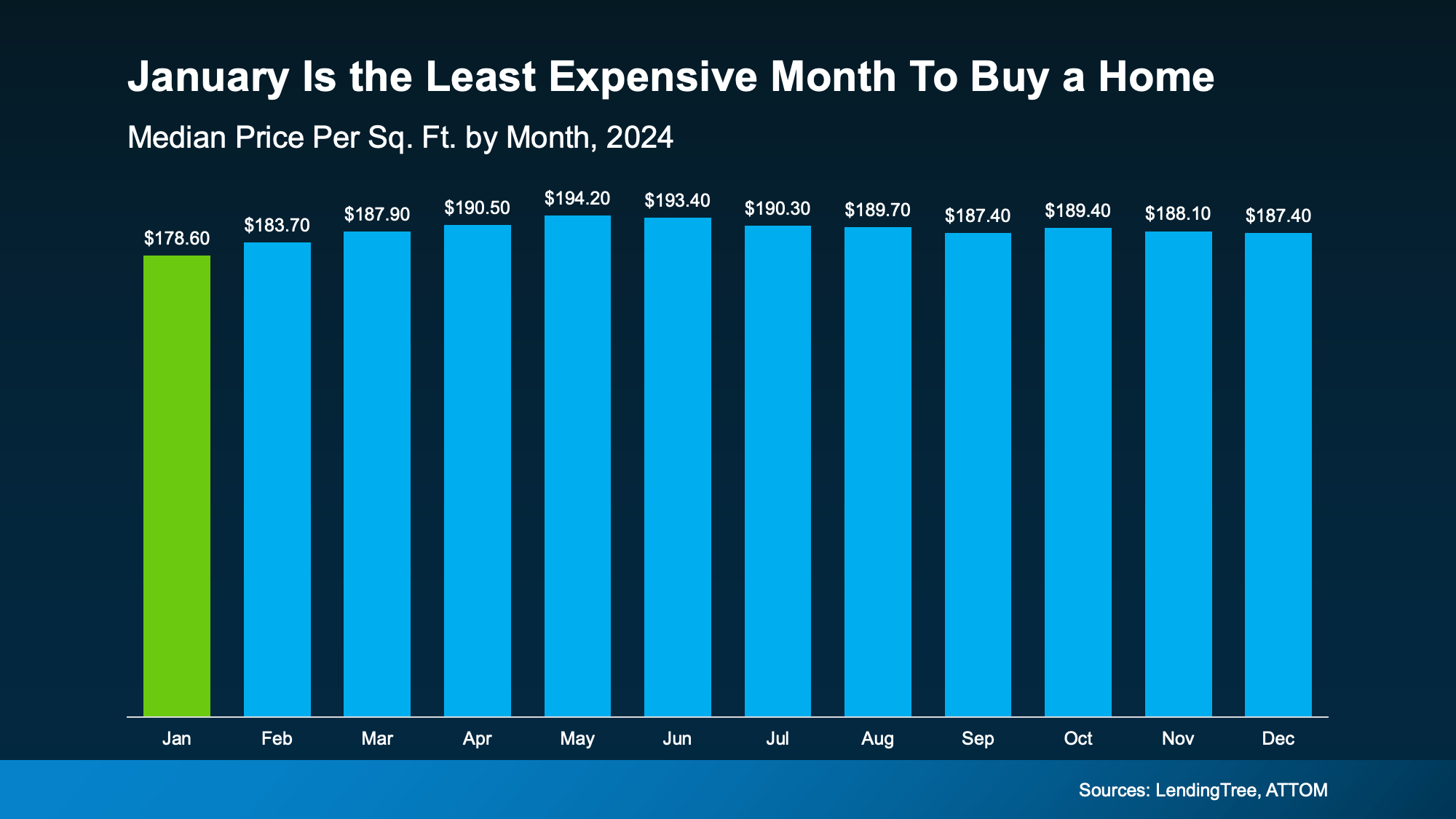
Ask ten people the best time to buy a house and you’ll hear ten confident answers. Spring, because that’s when the houses are. January, because that’s when the deals are. Whenever rates dip. Whenever you’re ready.
The honest answer for Memphis is that the calendar gives you real advantages, but different ones in different seasons, and the right month depends on which advantage you need. If your priority is price, winter is your friend. If it’s choice, spring. If you want a bit of both, fall is quietly the best-kept secret in the local market. We work all four seasons, and each one has a personality worth knowing before you start your search.
What the seasons do to the Memphis market
Memphis follows the national rhythm: listings swell in spring, peak in early summer, thin out through fall, and hit bottom around the holidays. Buyer traffic follows the same curve, and that’s the part people miss. The number of homes matters less than the ratio of buyers to homes, because that ratio is what decides whether you’re negotiating or competing.
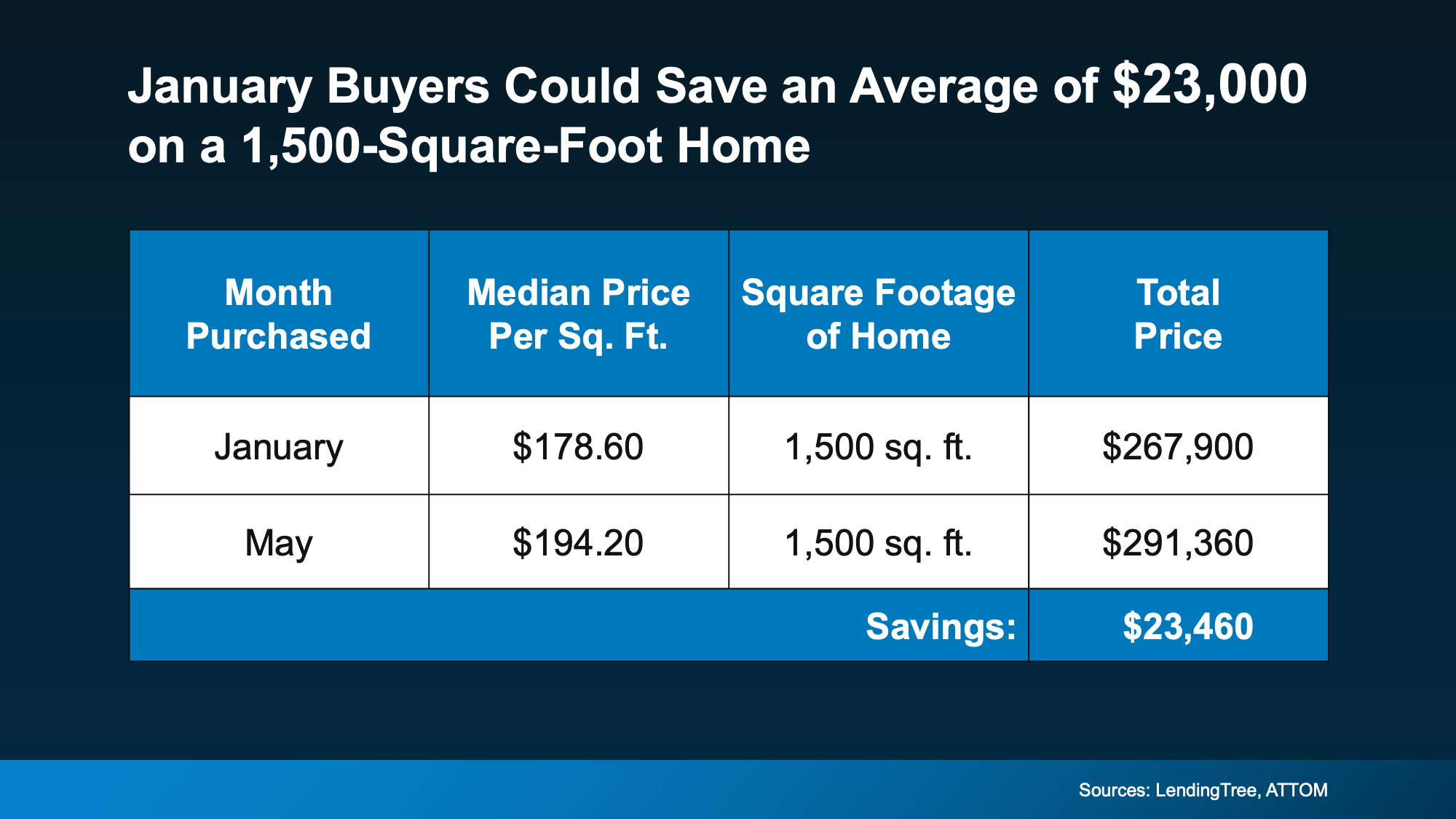
Seasonality is real, but it’s a thumb on the scale, not a magic discount. The gap between the best and worst month to close is typically a few percent on price, not twenty. What changes more dramatically is everything around the price: how many offers you’re up against, how willing sellers are to cover closing costs or repairs, and how much time you get to think before someone else buys the house.
Winter, when buyers hold the leverage
December through February is the quietest stretch of the Memphis market, and quiet is exactly what a price-focused buyer wants.
Most buyers disappear over the holidays and stay gone until spring. The sellers still listed in January are usually there for a reason: a job relocation, an estate, a house that didn’t move in the fall. Motivated sellers plus empty open houses is the best negotiating setup the calendar ever hands you. This is when we see closing cost credits, repair concessions, and below-ask offers accepted with the least resistance, the kind of terms that take a bidding war to get anywhere near in May.
The trade-off is selection. Winter inventory is the year’s thinnest, so you’re choosing from fewer homes and some compromise is likely. Showings in the cold have an upside people forget, though: you’re seeing every house at its worst. Drafty windows, a struggling furnace, and standing water in the yard all show themselves in January in a way they never will at a June open house.
Spring, when the market gives you choice
March through May is when Memphis inventory blooms. Families list so they can close before the next school year, and for a few months you’ll have the widest selection of the year in nearly every neighborhood and price point.
Spring is the right season for buyers with specific needs. If you’re set on a particular school zone or a floor plan that rarely comes up, your odds of finding it are simply better when the most homes are for sale. Our home buyer’s guide to Bartlett is a good example of the kind of targeted search where spring selection pays off.
The bill for that selection is competition. Every buyer who hibernated all winter shows up at the same open houses you do, and well-priced homes in popular areas draw multiple offers within days. You’ll pay closer to asking, sometimes over it, and you’ll have less room to ask for concessions. If you’re shopping in spring, go in prepared: we wrote a full playbook on winning against multiple offers without overpaying, and spring is the season it earns its keep.
Summer, the family-move window
June and July run on the school calendar. Inventory stays strong, closings peak, and families race to be unpacked before the first bell. Competition stays real but eases a notch from the spring frenzy, especially on homes that have been listed for a few weeks.
Late summer is where it gets interesting for bargain hunters. A house that hit the market in April and hasn’t sold by August has a tired seller behind it, and price cuts cluster in this stretch. Watching days-on-market becomes a strategy in itself: the longer a home has sat through the busy season, the more conversation there is to be had about price and terms.
Fall, the sweet spot most buyers skip
September through November might be the best overall value on the Memphis calendar, and it’s the season fewest buyers plan around.
The spring and summer crowds are gone, but the market hasn’t emptied out the way it does in December. You get a workable amount of inventory, including summer listings whose sellers are now genuinely motivated, with a fraction of the competition. Sellers who want to be done before the holidays negotiate like it. For buyers who want decent selection and real leverage at the same time, fall is the compromise season that doesn’t feel like much of a compromise.
A month-by-month cheat sheet
Months
What you get
What it costs you
Dec–Feb
Max negotiating leverage, motivated sellers
Thinnest selection of the year
Mar–May
Widest selection, new listings daily
Most competition, strongest prices
Jun–Jul
Strong inventory, school-calendar timing
Competition still real
Aug
Price cuts on stale summer listings
Selection starting to thin
Sep–Nov
Leverage plus workable inventory
Fewer brand-new listings each week
The best season for your situation
A first-time buyer with flexibility on timing gets the most from winter and fall, when there’s room to negotiate and time to think. Start with our guide to buying your first home in Memphis, and whatever season you choose, get pre-approved before you start the house hunt. In winter it makes you the serious buyer in a quiet market; in spring it’s the ticket that gets your offer read at all.
A family targeting a school district should lean spring, accept the competition, and win on preparation. And if you have a house to sell first, the seasons cut both ways, since the market you’re selling into is the same one you’re buying from. We covered how to sequence that in selling and buying at the same time.
Pick your season, then work it
The calendar deals every buyer a different hand, but any season works when you play it for what it offers: leverage in the winter, selection in the spring, tired listings in late summer, balance in the fall. What doesn’t work is waiting for a perfect month that the data says doesn’t exist.
If you tell us what you’re optimizing for, we can tell you when your market is, and what it looks like in the neighborhoods you care about right now. Reach out to the team and we’ll map it out together.
A $285,000 house in Germantown hits the market on a Friday. By Monday there are two offers. Neither is full price. The seller counters both. One buyer folds. The other negotiates $4,000 in closing cost credits and a home warranty, pays asking price, and closes in 30 days.
That back-and-forth is what the Memphis market looks like right now. Not a frenzy, not a drought. Inventory sits around two to three months of supply across the metro, and the median home price in Shelby County hovers near $270,000. Homes that are priced right move in 30 to 40 days. Homes that aren’t sit and collect price cuts.
In a market like this, real estate negotiation strategies matter more than they have in years. Neither buyers nor sellers hold all the leverage, which means the deals that close well tend to hinge on how you negotiate as much as what you offer. This guide covers how to negotiate a house price in Memphis right now, from Collierville subdivisions to East Memphis bungalows, whether you’re the buyer or the seller. And it goes past price into the terms where most of the real money changes hands.
Four rules that apply to every deal
Before the buyer-specific and seller-specific tactics, there are rules that hold no matter which side of the table you’re on.
Always ask. The worst answer you’ll get is no. We’ve watched buyers leave thousands on the table because they assumed a seller wouldn’t negotiate on closing costs and never brought it up.
Keep the conversation alive. Dead negotiations don’t close. Even when a counter seems unreasonable or an offer feels low, responding keeps options open. The moment communication stops, the deal is over.
Make every concession count. If you agree to something the other side wants, get something back. You’re not being difficult. You’re making sure both parties feel like they gained something, which is how deals close in a balanced market.
Keep your emotions in check. This is the hard one. Buying or selling a home is personal. But the moment frustration or excitement starts driving the decision, you’re negotiating from a weaker spot, and the other side can usually tell.
How buyers should negotiate in Memphis right now
Buyers in the Memphis metro have more room to negotiate than they’ve had since before the pandemic. But “more room” doesn’t mean sellers accept anything. You still need a strategy, and it needs to be built on data.
Get pre-approved first
This isn’t optional. A mortgage pre-approval letter tells the seller you’re financially qualified and ready to move. In neighborhoods like Bartlett and Arlington, where well-priced homes still draw multiple offers, a pre-approved buyer beats an unverified one every time.
Talk to your lender before you start browsing. Know your rate, know your ceiling. When the right house comes up, you want to write an offer that day, not scramble for paperwork. If you’re buying your first home in Memphis, this step alone puts you ahead of half the competition.
Negotiate beyond the price tag
The purchase price gets all the attention, but experienced buyers know the real savings often come from other terms. In a balanced market, a seller who won’t budge on price may be open to:
Seller-paid closing costs, saving you 2 to 3% of the purchase price upfront
A rate buydown, where the seller contributes toward lowering your mortgage rate
Personal property like appliances, window treatments, or outdoor equipment
Home warranty coverage for the first year
We closed a deal in Cordova earlier this year where the buyer paid full asking price but got $8,000 in seller concessions toward closing costs and a two-year home warranty. The seller was happy with the price. The buyer kept more cash in their pocket. That’s the kind of closing cost negotiation that works when both sides feel like they won.
How a rate buydown works
Rate buydowns have become one of the most useful negotiating tools in this market, and a lot of buyers don’t fully understand them. There are two common types.
A temporary buydown, like a 2-1 buydown, drops your rate by two points the first year and one point the second year before settling at the note rate. The seller funds it at closing. It lowers your payment while you settle into the house, which helps if you expect income to rise or plan to refinance if rates fall.
A permanent buydown uses seller money to buy down the rate for the life of the loan through discount points. It costs more upfront but lowers your payment for as long as you own the home. When a seller is stuck on price but motivated to sell, asking them to fund a buydown instead of cutting the price can be worth more to you than the price reduction would have been. Run both scenarios with your lender before you decide which to ask for.
Target homes that have been sitting
A home listed for 50 or 60 days in this market is sending a signal. Maybe the price is off. Maybe the photos don’t do it justice. Whatever the reason, that seller is more motivated than someone who listed yesterday.
Average days on market across the metro in 2026 runs 30 to 40 days depending on the neighborhood. Germantown and Collierville tend to move faster. Anything sitting well above 40 days gives you leverage to negotiate harder on price, terms, or both. You can explore how these suburbs compare to get a feel for what’s normal in each area.
Build your offer on comparable sales
Your offer should come from data, not a gut feeling. What did similar homes in that subdivision sell for in the last 90 days? What’s the price-per-square-foot trend? Are homes in that zip code selling above or below list?
When you work with an agent who knows these neighborhoods, they’ll pull those numbers before you write. Comparable sales data is the strongest negotiating tool you have because it takes emotion out of the conversation. You’re not saying “I think this is overpriced.” You’re showing what the market paid for similar houses.
Winning a multiple-offer situation without overpaying
Even in a balanced market, the best homes still draw competing offers. A move-in-ready house in a good school district, priced near market value, can pull three or four offers in a weekend. The trick is competing hard without wrecking your own budget. Our full guide on winning a multiple-offer situation goes deeper, but a few negotiation levers matter most.
An escalation clause lets you automatically beat competing offers up to a cap. You might offer $300,000 and agree to top any verified competing offer by $2,000, up to a ceiling of $315,000. It keeps you in the running without forcing you to guess high from the start. Use it carefully, because some sellers and agents dislike them, and they reveal your maximum.
Clean terms often beat a higher number. A seller choosing between a $305,000 offer with a financing contingency and a 60-day close, and a $300,000 offer with strong pre-approval and a 30-day close, frequently takes the lower, cleaner one. Shortening your contingency windows, being flexible on the closing date, and putting down a larger earnest money deposit all signal you’re serious without raising your price.
If you lose, ask about backup position. Deals fall apart regularly. Financing fails, inspections turn up problems, buyers get cold feet. A clean backup offer can turn into the winning one a week later.
Negotiating the appraisal gap
This is the part of the deal that catches buyers off guard most often. You agree on a price, then the appraisal comes in below it. The lender will only finance against the appraised value, which leaves a gap between what you offered and what the bank will lend.
Say you’re under contract at $310,000 and the appraisal lands at $300,000. That $10,000 difference has to be resolved before the deal closes, and there are a few ways to handle it.
The seller can lower the price to the appraised value. This is most likely when the market has cooled and the seller knows the next buyer’s appraisal will probably come back the same. You can meet in the middle, with the seller dropping the price part of the way and you covering the rest in cash. Or you can cover the full gap yourself with cash on top of your down payment, which only makes sense if you have the funds and really want the house.
If you’re a buyer worried about this, talk to your agent about an appraisal contingency, which lets you renegotiate or walk if the number comes in low. If you’re a seller, pricing accurately from the start is your best defense, because a home priced at the market rarely has appraisal problems. When you’re competing as a buyer, offering limited appraisal gap coverage (agreeing to cover up to a set amount) can make your offer stronger without exposing you to an unlimited risk.
Negotiating after the home inspection
Plenty of deals are won or lost in the days after the inspection report comes in. The buyer signs a contract, the inspector finds issues, and a second round of negotiation begins. How you handle it matters as much as the original offer.
For buyers, resist the urge to send a laundry list of every cosmetic flaw. Sellers tune out a 30-item repair request, and you lose credibility on the things that count. Focus on what’s material: the HVAC system at the end of its life, the active roof leak, the electrical panel that won’t pass insurance. Ask for those to be repaired, or ask for a credit so you can handle them after closing.
For sellers, a repair request isn’t an attack. It’s a continuation of the deal. You can agree to the work, offer a credit instead, or counter with a partial fix. A buyer asking for $3,000 in repairs after a smooth inspection is usually still a buyer who wants the house. Countering at $1,500 keeps the deal alive far more often than refusing outright.
The repair-credit-versus-repair decision comes up constantly. A $200 electrical fix is easy to handle before closing. A $6,000 foundation concern is often better as a credit, where the buyer picks their own contractor and controls the scope. Your agent will know which approach fits the situation and your local market.
Seller negotiation tactics that close deals
Selling in a balanced market means you can’t plant a sign and wait for a bidding war. You need a plan. These seller negotiation tactics separate homes that sit from homes that sell on good terms.
Price it right on day one
This is the single most important decision you’ll make, and it shapes every negotiation that follows. Overprice by even 5% and you’ll watch the listing go stale while buyers negotiate aggressively on competing homes nearby.
With the Memphis median near $270,000 and buyers having access to real-time sales data, there’s no room to test the market with an inflated number. Price your home off recent comparable sales and you negotiate from strength. Price it above the market and you’re playing defense from the start.
Your listing agent should walk you through a comparative market analysis built from actual closed sales in your neighborhood. Not a Zestimate. A real analysis from someone who has sold homes on your street.
Always counter, even low offers
Sellers make this mistake out of emotion. A low offer comes in and the instinct is to ignore it or decline outright. But a low offer is still an offer. Someone wants your house. They’re testing.
Counter it. Even if the opening number is way off, a counter keeps the conversation alive. Some of the best deals we’ve closed started with offers that looked insulting on day one and turned into solid contracts after two rounds.
Think about the full picture when you counter
Don’t just drop your price by $2,000 and send it back. Consider what the buyer is really asking for.
If they want closing cost credits, can you offer a smaller amount rather than rejecting the request? If they want a fast close, can you accommodate that in exchange for a higher price? If their offer depends on selling their current home, how does that affect your timeline? Our post on whether to sell before buying or buy first walks through those timing trade-offs. Strategic counters show the buyer you’re engaged, and they reveal what the buyer actually cares about, which is information you can use.
Get inspected before you list
A pre-listing inspection costs $300 to $500 and takes one of the buyer’s strongest negotiating tools off the table. When a buyer’s inspection turns up surprises, they’ll use those findings to renegotiate, sometimes aggressively.
If you already know about potential issues and have either fixed them or priced accordingly, there’s nothing for the buyer to come back with. You control the story instead of reacting to it.
Document every upgrade
Replaced the roof in 2024? New HVAC? Updated kitchen? Keep the receipts, warranties, and permits ready.
When a buyer tries to talk your price down, documented upgrades give you concrete reasons to hold firm. “The roof is two years old with a transferable 30-year warranty” is a much stronger position than “we think the roof is fairly new.”
Deal terms that don’t involve the price
Some of the best negotiation in Memphis real estate right now happens around terms that have nothing to do with the number on the contract.
Closing cost credits
Instead of lowering the sale price, the seller offers a credit toward the buyer’s closing costs. This keeps the sale price intact, which matters for the appraisal and future comps, while cutting the buyer’s cash needed at closing. For a buyer in the $250,000 to $350,000 range common across Bartlett and Arlington, a 2 to 3% credit means $5,000 to $10,500 less out of pocket at the table.
Contingency timelines
Most offers include contingencies for inspection, appraisal, and financing. Those timelines are negotiable. A seller might agree to a longer inspection window in exchange for a higher price. A buyer might shorten their contingency periods to make an offer stand out. In a balanced market, these adjustments can be the difference between winning a deal and losing one.
Closing date flexibility
If a buyer needs to close in 21 days, or needs 60 because they’re selling another property, a seller willing to flex on the date adds value without giving up a dollar. Closing date flexibility is free leverage that many sellers underuse, and it often matters more to the other side than a small price change.
Leasebacks and possession dates
When a seller needs time to move, a post-closing occupancy agreement (a leaseback) lets them stay in the home for a set period after closing, sometimes rent-free as a concession. For a buyer who isn’t in a rush, offering a free two-week leaseback can win a deal against a higher offer that demands immediate possession. It costs you very little and solves a real problem for the seller.
Negotiating new construction is a different game
If you’re touring new builds, throw out some of the resale playbook. Builders negotiate differently, and understanding why saves you from leaving money on the table. With new construction prices down across the Memphis suburbs, there’s real room to work right now, but it usually isn’t in the base price.
Builders protect the base price because cutting it lowers the comps for every other home in the community. What they will do is pile on incentives: covering closing costs if you use their preferred lender, funding a rate buydown, throwing in upgrades like finished basements, appliance packages, or design center credits. A builder might not knock $10,000 off the price but will happily give you $10,000 in upgrades and another $5,000 toward closing.
Standing inventory is where the price itself moves. A finished spec home the builder is carrying at quarter’s end, or the last few lots in a closing-out phase, gives you the most leverage. Builders have sales targets, and a completed house sitting on their books costs them money every month. Bring your own agent to the first visit, because the on-site sales rep works for the builder, and you want someone negotiating for you.
Walking away is a real strategy
Not every deal is worth saving. Sometimes the other side’s demands are unreasonable. Sometimes the inspection changes the math. Sometimes the appraisal comes in low and nobody wants to bridge the gap.
Walking away isn’t losing. When you’re genuinely willing to walk, and the other side can tell, you negotiate from strength. The worst deals in real estate happen when someone feels stuck and agrees to terms they shouldn’t have.
For buyers, there will be another house. Memphis has solid inventory right now across Collierville, Germantown, Bartlett, East Memphis, Arlington, and Cordova, especially as more sellers list now that the lock-in effect is loosening. For sellers, if a buyer’s demands stay unreasonable after multiple rounds, the next buyer might be easier to work with. A week back on the market beats a bad deal.
Common questions about negotiating in this market
Can you still negotiate price in 2026? Yes. With two to three months of supply and homes averaging 30 to 40 days on market, most sellers expect some negotiation. The exception is a well-priced, move-in-ready home in a top school district, where you may need to compete closer to asking and win on terms instead.
How much should you offer below asking? There’s no fixed rule. On a home priced right that just listed, 2 to 3% under is a reasonable opening. On a home that’s sat 60-plus days, 5 to 10% under with documented comps to back it up is defensible. Your agent’s comparable sales analysis should set the number, not a percentage you read online.
What’s the most overlooked negotiation tool? Terms. Buyers fixate on price and ignore closing cost credits, rate buydowns, leasebacks, and closing date flexibility, which is often where a seller has the most room to move.
Your agent is your biggest advantage
Real estate negotiation isn’t just about knowing the tactics. It’s about reading people, understanding what the other side is really after, and knowing which neighborhoods appraise tight and which have room.
An agent who has closed hundreds of deals in the metro picks up on signals that data alone won’t tell you. They can read a buyer’s motivation from how an offer is structured. They know whether a seller’s counter is firm or has room. They know which builders are sitting on standing inventory and which lenders fund the cleanest buydowns.
At Reid Realtors, we negotiate Memphis real estate deals every week, from established Germantown communities to the growing neighborhoods around Arlington. If you’re getting ready to buy or sell in the Memphis area this year, we’d like to be your advantage at the table.
Most homeowners who call us start with the same question: is it a good time to sell? It’s a reasonable thing to ask, and it’s the wrong place to start.
The better first question is what you’re standing on. Because for a lot of Memphis-area homeowners, the honest answer to “should I move?” changes completely once they see the actual equity number instead of the vague sense that they probably have some. People who bought in Germantown in 2011 or Cordova in 2004 tend to guess low. Sometimes dramatically low.
That number decides more than you’d expect. It decides whether a higher mortgage rate on the next house is survivable. It decides whether you can compete against a cash offer. It decides whether you can buy before you sell instead of scrambling to do both in the same week. So before you make any decision about moving, get the number.
Equity, briefly
Your equity is what the house is worth today minus what you still owe on it. That’s the whole formula.
It grows two ways at once, which is why it compounds faster than people expect. Every mortgage payment shaves a little off the loan balance, and the share going to principal instead of interest gets bigger every year you stay. Meanwhile the home itself appreciates. One force pushes the debt down while the other pushes the value up, and the gap between them widens quietly in the background while you’re living your life and not thinking about it.
This post is about what that gap can do for a move. If you’re staying put and wondering how to tap equity without selling, through a HELOC, a home equity loan, or a cash-out refinance, we covered that separately in our guide to how home equity can work for you.
Most homeowners have been in place a long time
The reason so many people are sitting on more than they think is time. According to Realtor.com’s 2025 analysis of homeowner tenure:
“Nearly half (45.2%) of today’s homeowners have lived in their home for more than 15 years, and 1 in 4 for over 25 years.”
Fifteen years is a long stretch of paying down a loan while the market did its thing. Twenty-five years is longer than most people stay in a job.
We see this constantly around here. Longevity is normal in the Memphis suburbs. Families move into a Collierville or Bartlett house for the school zone and then never leave, because the schools stay good and the house keeps working. That’s a nice way to live. It also quietly builds a balance sheet that most of those families have never sat down and looked at.
What that looks like in dollars
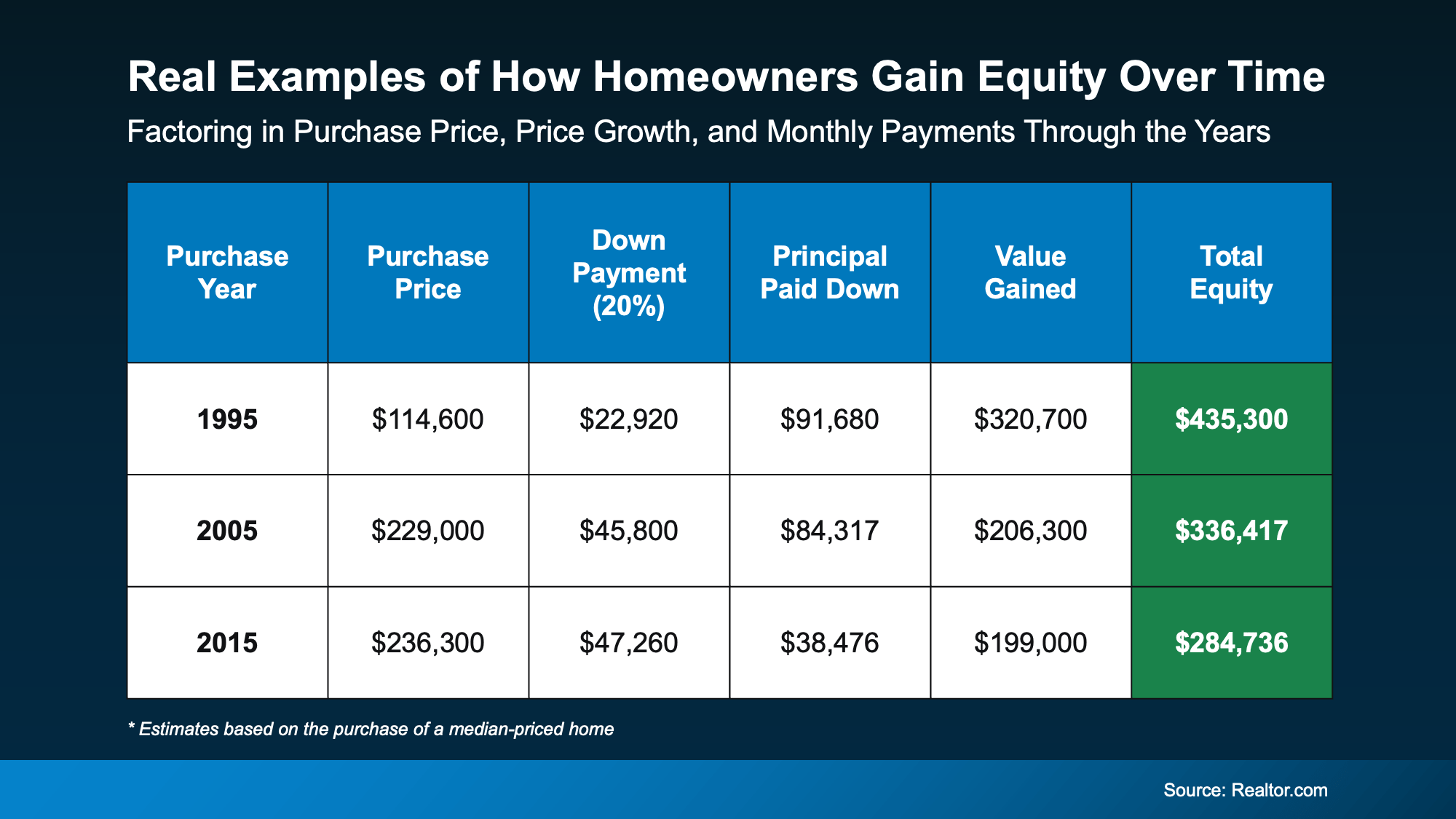
Realtor.com’s research put numbers to it by taking a median-priced home and tracing what a buyer in different years would be sitting on now.
The pattern in that data:
Buy in the mid-1990s and you could be sitting on more than $400,000 today. Buy in the early 2000s, and even after owning straight through the 2008 crash, you’d be north of $330,000. Buy as recently as 2015 and a ten-year hold still lands near $285,000.
Two honest caveats before you get excited. These are national figures built on a median-priced home, and Memphis is not a median-priced market. Our entry prices have always run below the national number, so the raw dollar gains here are generally smaller than those examples. The percentage growth story holds up better than the dollar story does.
The second caveat is that this data is from Realtor.com’s 2025 work, so treat it as the shape of the trend rather than a live quote for this month. What hasn’t changed is the mechanism: long tenure plus steady appreciation plus loan paydown produces a number most owners underestimate.
Four things that move your actual number
Your equity is personal, and four variables do most of the work.
Your purchase price and year set the baseline. Someone who bought in Midtown in 2013 and someone who bought the same-sized house in Arlington in 2021 are in very different positions, even with identical incomes and identical payments today.
Your original down payment matters more than people remember. Twenty percent down means you started with equity before a single payment posted. Three and a half percent down through an FHA loan means you started nearly flat and built from there.
Anything you’ve already pulled out counts against you. A cash-out refinance in 2021, a HELOC for the kitchen, a second mortgage during a hard year. All of that is real, and all of it reduces what’s left.
And improvements help, though not dollar-for-dollar. A kitchen or a bath usually returns a solid chunk of its cost at resale. A pool in Shelby County usually doesn’t. We went through which projects hold their value in our post on the home improvements worth doing before you sell.
What equity does for your next move
This is where the number stops being trivia and starts being leverage.
It offsets the rate you’re afraid of
The most common reason people don’t move right now is the mortgage rate waiting on the next house. Equity is the direct counterweight. Every dollar you carry over as a down payment is a dollar you never finance at today’s rate.
Move $250,000 of equity into the next purchase and the loan you’re paying interest on gets small enough that the rate stops being the deciding factor. The rate applies to the balance, not to the house.
It can make you the strongest offer on the table
Depending on your number and your target price, you may be able to buy in cash or close to it. Sellers take cash offers seriously because financing is the thing that kills deals at the last minute. Even a very large down payment reads as low-risk to a listing agent, and it buys you room to negotiate on the things that aren’t price.
It pays for the move itself
Closing costs, agent commissions, repairs the inspection turns up, movers, the deposit on the next place. These are the expenses people forget to budget and then panic about halfway through. We broke down what buyers and sellers actually pay in closing costs around Memphis if you want to run your own math.
It solves the sequencing problem
The hardest part of moving is rarely finding a house. It’s the timing of selling one while buying another. Real equity gives you options there, whether that’s a bridge loan, a stronger contingency, or the ability to carry two payments briefly without losing sleep. We laid out the tradeoffs in sell before buying, or buy first.
The 3% mortgage question, answered honestly
Plenty of you are reading this with a rate in the low threes and thinking none of it applies.
That’s a fair instinct and it deserves a real answer instead of a sales pitch. Giving up a 3% rate is a genuine cost, and for some households the math simply doesn’t work. We wrote a whole post on why you’d move with a 3% mortgage rate precisely because the answer isn’t automatic.
The short version: the low rate only wins the argument if the loan you’d take on next is large. If your equity covers most of the next purchase, you’re comparing a big cheap loan against a small expensive one, and those can land closer together than the headline rates suggest. Run it on your own numbers before deciding. Plenty of people who assumed they were locked in find they aren’t, which is part of why the lock-in effect is finally loosening.
The tax question long-tenure owners should ask
If you’ve owned for fifteen or twenty-five years, there’s a question worth raising with your accountant before you list, and the source articles on this topic almost never mention it.
When you sell a primary residence, federal rules let you exclude a large chunk of the gain from capital gains tax: up to $250,000 if you file single, up to $500,000 if you’re married filing jointly. The general test is that you owned the home and lived in it as your primary residence for at least two of the five years before the sale.
For most Memphis sellers that exclusion covers the entire gain and the question never comes up. But if you bought in the mid-1990s, or you’ve done substantial work on the house, or the property was a rental for part of the time you owned it, the math gets more interesting and the answer stops being automatic. Your basis, your improvement records, and any depreciation you claimed all matter.
We’re agents, not accountants, so treat this as a flag rather than advice. The point is that a very large equity number is exactly the situation where a conversation with a CPA before you list is worth the hour. Our overview of the tax side of owning a home in Memphis covers the ownership years; the sale year is its own conversation.
What equity won’t do
Being straight about the limits matters as much as the upside.
Equity isn’t cash until you sell or borrow against it. It’s real wealth, and it’s illiquid wealth. You can’t spend it from your kitchen table.
It also won’t rescue a bad listing price. Having $300,000 in equity doesn’t mean the market will pay you $30,000 over what comparable homes in your neighborhood are selling for. Overpricing costs sellers real money regardless of how much equity is underneath, which is the whole subject of the pricing mistake that costs sellers the sale.
And a big number is not by itself a reason to move. If the house still fits your family, staying is a perfectly good decision. Equity is information, not instruction. It tells you what’s possible, and you decide whether any of it is something you want.
How to find your real number
Three steps, and the whole thing takes about a week.
Start with what you owe. Log into your mortgage servicer and get the current payoff amount, not the original loan balance and not last year’s statement. If you have a second mortgage or a HELOC, get that balance too and add it in.
Then get a serious opinion on value. This is where people go wrong, because they check an automated estimate online and treat it as gospel. Those tools work from public records and broad averages, and they don’t know that your street backs up to a greenbelt or that the house two doors down sold cheap because of a foundation issue. In neighborhoods with varied housing stock, which describes most of Memphis, the automated numbers can miss badly in both directions. A real comparative market analysis from an agent who has walked houses in your zip code will be closer. You can start with our home value tool and then have someone check it against the actual comps.
Then subtract the cost of selling. Agent commissions, closing costs, any repairs you’d need to make. What’s left is your net proceeds, and that’s the number that matters. Gross equity feels great; net proceeds are what shows up at the closing table and what you’d carry into the next house.
You don’t need to sell anything to find out what you’re worth on paper. You just need to stop guessing.
Most people we walk through this end up somewhere between surprised and slightly stunned, and a meaningful share of them discover that the move they’d written off as financially impossible has been sitting there available for a couple of years. Some of them move. Plenty of them don’t, and that’s a fine outcome too, because now it’s an actual choice instead of an assumption.
If you’d like a straight read on what your house would sell for today and what you’d walk away with after costs, get in touch. No pressure to list, and no obligation. Just the number, and an honest conversation about what it could do.
Three generations under one roof used to sound like a story your grandparents told about the old days. In the Memphis area right now, it’s one of the most practical answers to a market that keeps asking buyers for more than one household income can give.
Maybe you’re helping a parent who shouldn’t live alone anymore. Maybe your daughter and her kids need a landing spot that doesn’t drain her savings. Or you’ve run the numbers on a mortgage and daycare in the same month and concluded, reasonably, that something has to give. Families all over Germantown, Bartlett, and Collierville are arriving at the same answer from different directions: buy one bigger home together, and split everything about it.
This guide covers the whole decision, because it’s a bigger one than a normal home purchase. The numbers behind the trend, how the math works when you pool resources, how the loan and the title work with multiple names on them, the Tennessee-specific breaks that help, what the house itself needs, where to look around Memphis, and the family conversation that should happen before any of it.
A trend with real numbers behind it
The National Association of Realtors has tracked multi-generational buying for years, and the recent numbers are the strongest they’ve recorded. In NAR’s latest buyer profile, about one in seven home buyers purchased a multi-generational home, hovering near the record share. More striking is why. A decade ago, cost savings was a minor reason, cited by about 15% of these buyers. That figure has more than doubled since.
And for the first time, NAR’s report broke out two new reasons on the list: grandchildren living in the home, and reducing the cost of childcare. Childcare, as its own named reason for how families buy houses. That says as much about the last few years as any price chart.
None of this is hard to believe from inside the Memphis market. Prices ran up, rates bounced around, and wages didn’t keep pace. Buyers who would have qualified comfortably five years ago now come up short on the same houses. Some wait. A growing number stop trying to solve it alone.
Why families are combining households
Caregiving used to be the main driver, and it’s still a big one. Adult kids want aging parents close enough to help, and a parent who needs a little support today may need a lot more of it in five years. Under one roof, “checking in” stops being a drive across town.
But affordability has moved to the front. For many families it’s the whole reason the conversation starts, and then the other benefits show up after move-in: the built-in babysitting, the kids who eat breakfast with their grandmother. A year in, the money is rarely the part families talk about most. It’s just the part that got them to consider it.
There’s a version of this that’s purely defensive, families doubling up because they have to. But most of the multi-gen buyers we’ve worked with describe it differently once they’ve lived it. It stops feeling like a compromise and starts looking like the plan they wish they’d made sooner.
The math when you pool resources
Buy a home on one income, or even two, and your lender caps you at what those earnings support. Sometimes that cap lands well short of what a family-sized home in a good Memphis-area school zone costs.
Add another generation and the picture changes. You and your spouse plus a parent with retirement income. You and an established adult child. Pooled incomes make a stronger application, and lenders can approve an amount none of you would reach alone.
Qualifying is only half of it. The monthly cost of owning is where sharing really shows up. Take a $3,000 monthly housing cost, which around here buys a serious house. Carried alone, that’s heavy. Divided among four working adults, it’s $750 each, less than most one-bedroom apartments in the area. Property taxes, insurance, utilities, and the water heater that dies on a Sunday all divide the same way.
Then there’s childcare, the line item that’s been quietly breaking budgets. Full-time care in the Memphis area can easily top a thousand dollars a month per child. A grandparent home during the day can shrink that number or erase it, and NAR’s data now shows families buying multi-gen homes for exactly this reason. For a lot of households, childcare savings alone are the difference between a payment that works and one that doesn’t.
How the loan works with multiple generations on it
This is the part most articles skip, and it’s where families have the most questions.
There’s no special “multi-generational mortgage.” What you’re doing is applying with co-borrowers. Everyone whose income counts toward qualifying goes on the loan, and everyone on the loan is fully responsible for the payment. Not their share of it. All of it, if it comes to that. Lenders don’t split blame in thirds, which is one reason the family conversation later in this guide matters so much.
A few useful things to know going in. Some loan programs allow a relative’s income to help you qualify even if that relative won’t live in the home, and others are designed with exactly this kind of household in mind. The rules differ by program and lender, so this is a conversation to have early, not after you’ve fallen for a house. Getting pre-approved before the house hunt matters even more with three or four incomes in the mix, because the pre-approval is where you learn what the combined application supports.
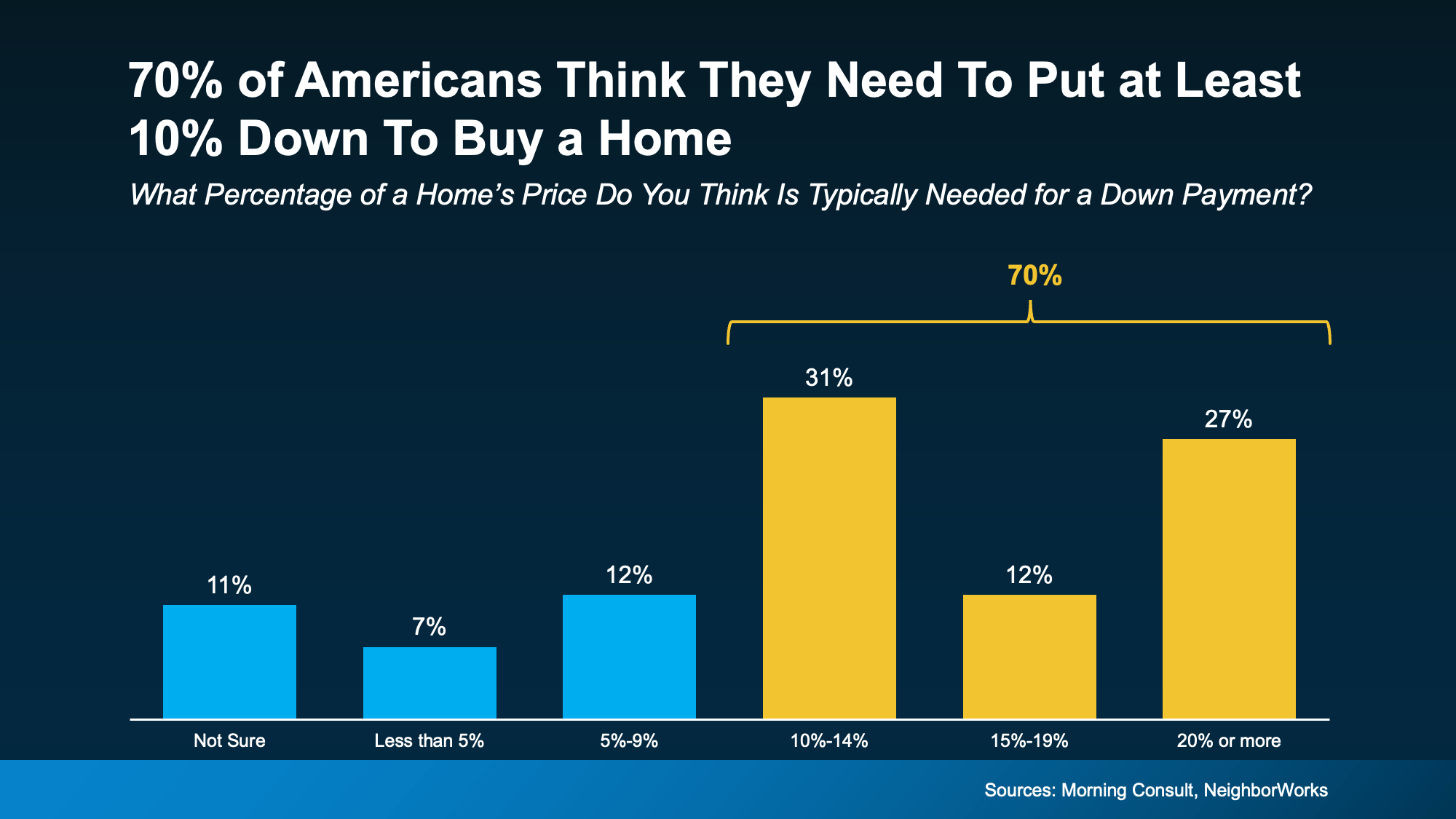
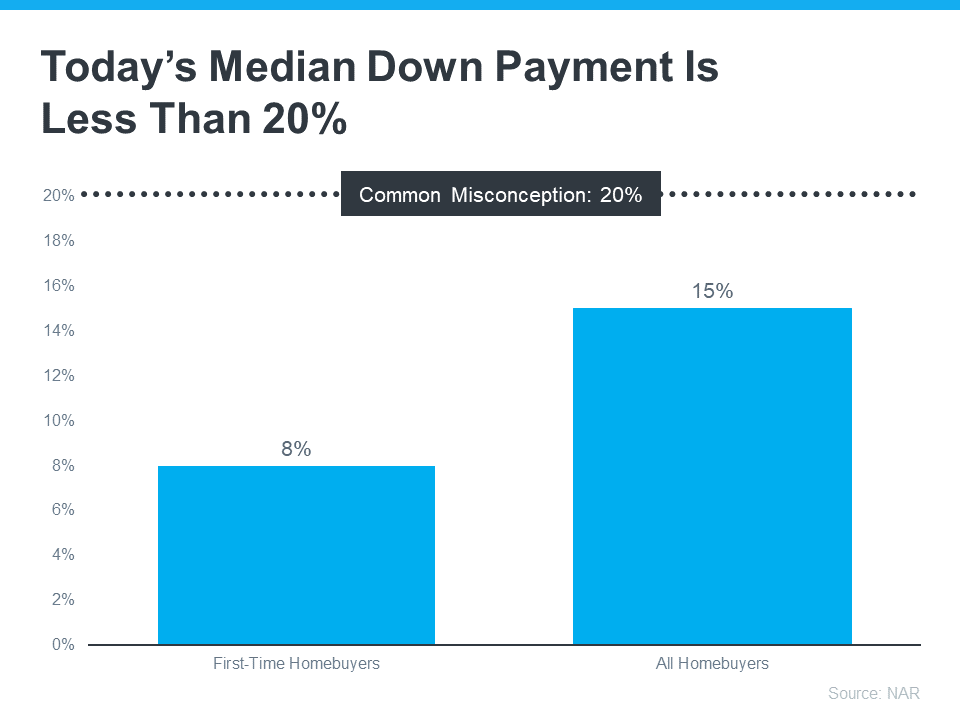
Down payments get more interesting with more contributors, too. A parent selling their current home may bring substantial equity, while the younger generation brings income strength but thinner savings. That’s a normal shape for these purchases, and there’s flexibility in how it comes together, though lenders document where funds come from. Our post on the truth about down payments covers the basics, including why the 20% figure scares more people than it should. And budget together for what closing costs run in the Memphis area, since that’s a shared bill as well.
Whose name goes on the house
The loan decides who pays. The title decides who owns, and with multiple generations it deserves real thought instead of a default checkbox at closing.
Broadly, co-owners in Tennessee can hold a home in a couple of ways. In one arrangement, when an owner dies, their share passes automatically to the surviving owners. In another, each owner’s share is theirs to leave through their will, which matters when a parent has other children who aren’t part of the purchase. Which structure fits depends on your family, and this is one of the places where spending a few hundred dollars on a real estate attorney before closing can prevent a five-figure family dispute later.
While you’re at it, put the informal stuff in writing. Who pays what each month. What happens if someone wants out in five years. What happens if a parent’s care needs eventually exceed what the family can provide at home. How the equity splits if the house sells. Nobody enjoys drafting this document, and every family that has one is glad they do. Treat it like a business agreement between people who love each other, because that’s exactly what it is.
The Tennessee-shaped advantages
A few local wrinkles work in your favor here, and they’re worth knowing even though the details depend on your situation.
Tennessee has no state income tax, which includes retirement income. For a parent moving from a state that taxes their pension or retirement withdrawals, relocating to Memphis to join the household can come with a raise nobody had to ask for.
For homeowners 65 and older, Tennessee runs a property tax freeze program that participating counties, including Shelby, have adopted. Qualifying seniors can have the tax amount on their principal residence frozen, so it doesn’t climb as assessments rise. There’s also a separate property tax relief program for lower-income seniors and disabled veterans. Income limits and paperwork apply to both, and the county trustee’s office is the place to confirm eligibility, but for a multi-gen household where a parent is on the deed, these programs can take a real bite out of the ongoing cost of owning.
None of this decides the purchase on its own. Stacked together with the shared expenses, it’s part of why the Memphis area is a genuinely good place to run this playbook.
What the house itself needs
Here’s where a multi-gen search gets more involved than a normal one. More people means more opinions, and a floor plan that has to do more work.
Bedroom placement usually sorts itself into a pattern: aging parents want a bedroom and full bath on the main floor, away from stairs, and everyone wants at least one buffer between their door and someone else’s. Bathrooms are the real pinch point. Two full baths for five adults is a morning traffic jam with no exit. Three is livable. A private bath for the senior generation is the single upgrade families say mattered most.
The gold standard is a true in-law suite: bedroom, bath, sitting area, ideally a kitchenette and a separate entrance. Something close to an apartment within the home, so togetherness stays a choice. Short of that, look for the bones of one: a finished basement, a bonus room over the garage, a split floor plan with a bedroom wing that can close off.
Think a decade ahead on accessibility while you’re touring, not after a fall makes it urgent. A step-free entrance, wider doorways, a shower without a lip. Retrofitting these costs multiples of what buying them does. If the parent joining you is a spry 68, buy the house that will still work when they’re 80.
Also worth checking: whether the lot and the local zoning would allow adding a detached suite or accessory dwelling later. Rules differ meaningfully between Memphis proper and the suburbs, and each city has its own code and process, so don’t count on building until you’ve checked. A property with that option holds flexibility your family may want in ten years, whether or not you ever use it.
Where to look around Memphis
Now the local reality check: most Memphis-area housing stock was not built with a second master suite in mind. There’s a lot of single-story ranch and two-story traditional, and true multi-gen layouts are scarcer here than in Sun Belt metros where builders have been pouring them out for years. They exist. Finding them is the skill.
The suburbs are the natural hunting ground, because square footage is the raw material and the suburbs have it. Germantown offers larger established homes and top-rated schools, at the area’s higher price points, though a pooled budget is exactly the kind that can reach them. Collierville has much of the area’s newer large-format construction, where bonus rooms and flexible suites are more common. Bartlett tends to deliver the most square feet per dollar of the three, which matters when the whole point is stretching a shared budget; our home buyer’s guide to Bartlett goes deeper. For a side-by-side, the Collierville vs. Germantown vs. Bartlett comparison breaks down where a family-sized home stretches furthest.
Two more ideas that fit multi-gen searches specifically. Further east, buyers are increasingly looking at Eads, where larger lots open options the inner suburbs can’t match: room for a detached suite, space for two households’ worth of vehicles, and privacy measured in acreage. And don’t rule out new construction. Several national builders now offer floor plans designed for multi-gen households, with a semi-private suite built in from the slab up, and some local builders will modify a plan if you ask early enough. If you’re touring models, ask specifically which plans offer a suite option; they don’t always advertise it.
The timing is also better than it’s been in a few years. As affordability improves into 2026 and the lock-in effect loosens, more of the larger homes these searches need are reaching the market, and sellers of big houses are negotiating again.
The family conversation that has to come first
Every multi-gen purchase that goes wrong goes wrong the same way: the family bought the house before they talked through the household. The house hunt is the easy part. Have these conversations first, while everything is still hypothetical and nobody’s ego is attached to a specific address.
Money first. Who pays what share of the mortgage, taxes, utilities, groceries? Is it split evenly, by income, or by space? Who funds the repair account, and how much lives in it? If a parent contributes a large down payment, does that buy them a bigger ownership share, or is it a gift, or a loan? Say the numbers out loud. Vague generosity today is resentment with interest later.
Then daily life. Who cooks, and does everyone eat together or is that a Sunday thing? How do you handle noise, guests, and the thermostat wars? What does privacy look like, concretely: is a closed door a wall or a suggestion? If grandparents are providing childcare, how many hours a week is sustainable for them, and what happens when they’d rather not anymore? That last one needs a real answer, because “Grandma loves it” is a plan with an expiration date.
And the exits, the part nobody wants to raise. What happens if an adult child gets a job offer in Denver? If a parent’s health needs grow beyond what home care can handle? If someone dies, or divorces, or just wants out? Deciding these things in advance, in writing, is the kindest thing a family can do for its future self. Awkward now beats litigated later.
Be realistic about personalities, too. Some families genuinely thrive in close quarters. Others love each other best from a fifteen-minute drive away, and there’s no wrong answer there. The only mistake is pretending you’re one kind of family when you’re the other.
Where an agent fits in all this
A multi-gen search is a different job than a standard one, and it rewards an agent who’s done it before. Someone who can walk a listing and spot the workable layout in the first five minutes, who knows which neighborhoods and builders have the inventory, and who can keep a purchase moving when it has three decision-makers instead of one. That last skill gets underrated. When parents, adult kids, and grandparents all have a vote, a neutral professional keeping everyone pointed at the shared priorities is worth a lot.
There’s often a second transaction hiding inside these purchases, too. If part of the plan is a parent selling their current home to fund the shared one, sequencing matters: knowing what that home is worth and what selling involves shapes the whole budget, and coordinating the sale with the purchase keeps anyone from living in a moving truck between the two.
A Reid Realtors agent can run both sides of that and has walked families through the whole arc, from the first “what could we afford together?” conversation to a closing table with three generations of signatures on it. Reach out whenever you’re ready, even if the idea is still just something you’ve floated at dinner.
One house, one team
A multi-generational home is not a smaller version of a normal purchase. It’s a different one: more incomes, more opinions, more paperwork, and, when it’s done right, more of what people buy houses for in the first place. The families who make it work don’t stumble into it. They talk first, put the agreements in writing, buy the layout that protects everyone’s privacy, and treat the whole thing as one team making one decision.
If that sounds like a conversation your family is edging toward, have it. The market around Memphis has finally started cooperating, and you might be one honest dinner-table talk away from a house none of you could buy alone.
There’s a version of this question we used to hear all the time: “Is it safe to buy a home during a recession?” Lately we’re hearing the opposite one. Buyers who could purchase today are sitting on the sidelines on purpose, waiting for a recession to arrive so they can buy at a discount. The logic sounds sensible. Recessions mean falling prices, falling prices mean deals, so the patient buyer wins.
If that’s your plan, this article is for you, because the plan rests on one assumption that deserves a hard look: that a recession would push Memphis home prices down far enough, for long enough, to reward the wait. History says that assumption is shakier than it feels. And while you’re waiting for a discount that may never come, the meter is running on some very real costs.
Let’s walk through what recessions have historically done to home prices, what one would mean for you as a buyer, and how to tell the difference between waiting for the market and waiting for the right moment in your own life.
The waiting strategy, spelled out
The plan usually goes something like this. A recession hits sometime in the next year or two. Home prices drop hard, maybe 20 or 30 percent like they did after 2008. Mortgage rates fall as the Federal Reserve cuts. You swoop in with your saved-up down payment, buy the same Germantown or Bartlett house for tens of thousands less, and lock a low rate while everyone else is too scared to act.
Every piece of that plan can be found in a real historical moment. The trouble is that they all come from one moment, 2008 to 2011, and that stretch was the exception, not the pattern. Building a housing strategy around a rerun of 2008 is like planning your commute around the one day the bridge was out.
What recessions have historically done to prices
Go back through the recessions of the last several decades and a surprising pattern shows up: home prices usually held steady or kept rising. The early-1980s recessions, the early-90s downturn, the dot-com bust in 2001, the brief but severe 2020 pandemic recession, none of them produced a national collapse in home values. In 2020, prices accelerated straight through the recession. The 2008 crash stands nearly alone, and it was caused by something specific: a mortgage system that had spent years handing out loans to people who couldn’t repay them.
What recessions do reliably affect is mortgage rates, which tend to fall as the economy weakens and the Fed cuts. So the historically grounded version of the waiting strategy isn’t “wait for cheap houses.” It’s “wait for cheaper money.” And that’s a much weaker reason to wait, because you don’t need a recession to get it. If rates fall after you buy, you refinance and reset your payment downward. You can’t go back and buy the house you passed on. We dug into that math in our post on whether it’s better to buy now or wait for lower mortgage rates.
Why a 2008 rerun isn’t on the menu
The reason 2008 got so ugly is that forced sellers flooded the market. Millions of homeowners held loans they could never afford, and when the music stopped, foreclosures poured supply onto a market with no buyers. Price collapses need forced sellers, and today’s market is remarkably short of them.
Lending standards have been strict for over a decade now. Today’s homeowners documented their incomes, and the overwhelming majority are sitting on fixed rates below 5 percent with near-record equity cushions. Foreclosure activity is still running below historical norms, and a homeowner with 40 percent equity doesn’t get foreclosed on; they sell, pocket the difference, and move on. On top of that, the country has underbuilt housing for most of fifteen years, and the lock-in effect that froze inventory is only now starting to loosen. Tight supply is the opposite of the 2008 setup, and it puts a floor under prices even in a soft economy.
None of this means prices can’t dip in a recession. They can, and in some overheated Sun Belt markets they might. It means the specific thing the waiting strategy needs, a deep and lasting discount, requires a foreclosure wave that today’s lending math makes very hard to produce.
What a recession would give you as a buyer
Being fair to the other side: a recession wouldn’t give you nothing. Rates would likely fall. Some sellers would get nervous, and negotiating room would open up. Fewer buyers would compete for each listing, at least at first.
But look at how that plays out in practice. The moment rates drop meaningfully, the buyers who were priced out come flooding back, and they’re joined by everyone else who was “waiting for rates.” We’ve watched this movie in Memphis before: a rate dip turns a quiet listing into a multiple-offer situation in a single weekend. The discount window a recession opens tends to be narrow, crowded, and gone before the news stories about it finish running.
There’s also a quieter irony. Most of the negotiating power buyers are waiting for already exists in today’s market. Homes are sitting longer, sellers are covering closing costs and buying down rates, and inspection credits are back on the table. The balanced market you’d be waiting a recession to create is, in large part, already here.
What waiting costs while you wait
Waiting feels free. It isn’t.
Start with rent, which doesn’t pause for economic uncertainty. A renter who waits two years might be paying $200 to $300 more a month by then, with exactly zero equity to show for the outlay. We laid out the net worth gap between renting and buying, and it’s the single most lopsided number in this whole conversation: the average homeowner’s net worth runs many times a renter’s, and the gap is built one mortgage payment at a time.
Then there’s the appreciation on the house you didn’t buy. If prices in your target neighborhood rise even modestly while you wait for a crash, the “discount” has to beat that gain plus the rent you paid just to break even. And the affordability picture you’re waiting on may improve without any recession at all: forecasts already point to affordability improving in 2026 through a combination of easing rates, rising incomes, and more inventory. If that’s the fix, the waiting buyer pays two years of rent for a market they could have had anyway.
The timing problem nobody prices in
Suppose the recession does come, and prices do soften. Now ask the uncomfortable question: is that the moment you’ll be able to buy?
Recessions don’t just discount houses. They discount job security, and yours is part of the purchase. The moment prices finally dip is the same moment layoffs peak, and no discount makes buying wise when your own paycheck feels shaky. It’s also the moment lenders get stingy. Credit tightens in downturns, and the same bank that would approve you comfortably today may want a bigger down payment and a cleaner file right when the “deal” appears. The recession discount is real for the small group of buyers who are still fully employed and fully confident at the bottom. That’s a hard group to guarantee your way into two years ahead of time.
Worth keeping in perspective: even in the worst stretch of 2008-09, unemployment peaked around 10 percent, which means roughly nine out of ten workers stayed employed. The recession that wrecks everyone is mostly a headline creature. But you don’t need a national catastrophe for tightened credit and a nervous employer to wreck your personal window.
The Memphis wrinkle
One more problem with waiting for a national crash: you wouldn’t be buying the national market. You’d be buying in Memphis, and the Memphis area has a long record of not swinging the way coastal boomtowns do. Our prices didn’t inflate like Austin’s or Boise’s on the way up, which leaves less air to come out on the way down. The local economy leans on healthcare, logistics, FedEx, and education, sectors that keep functioning through downturns.
The established suburbs are steadier still. Places with strong schools, Collierville, Germantown, Bartlett, Arlington, Lakeland, hold their value through soft stretches because there’s a permanent line of families who want in. Those are exactly the neighborhoods recession-waiters are hoping to buy into at a discount, and exactly the ones least likely to offer it. The deep-discount scenario, if it ever arrives, tends to show up in the housing nobody was fighting over to begin with.
When waiting really is the smarter move
Everything above is an argument against waiting for the market. It is not an argument against waiting until you’re ready, which is a different thing entirely.
Wait if you don’t have an emergency fund that could cover several months of expenses, including a mortgage payment. Wait if your credit needs a year of repair work that would meaningfully drop your rate. Wait if there’s a real chance you’d relocate within two years, because the transaction costs of buying and selling that fast usually eat any gains. And wait if your job genuinely feels unstable, not headline-nervous but your-department-is-shrinking unstable. That signal outranks anything an economist says on television.
Notice that every item on that list is about your life, not the business cycle. That’s the point. A first-time buyer who’s financially solid in a so-so economy is in a far better spot than a shaky buyer in a booming one. If you’re not sure which one you are, our first-time Memphis buyer guide walks through the readiness checklist in detail.
Ready beats perfectly timed
Here’s the honest summary. Recessions reliably lower rates, unreliably lower prices, and reliably raise the odds that something in your own financial life gets complicated. A buyer who waits for a recession is betting on the least likely part of the package while exposing themselves to the most likely one. Meanwhile, today’s market is quietly offering much of what they’re waiting for: negotiating room, seller concessions, and time to think, with a refinance available if rates fall later.
So buy when your finances are ready, your timeline is five years or longer, and the payment works at today’s rates without heroic assumptions. Then let the economy do whatever it’s going to do. If you want to pressure-test your own situation against the current Memphis market, honestly and without a sales pitch, reach out and let’s talk it through. The right time to buy has a lot more to do with you than with the business cycle.
Be honest with yourself for a second. Have you already started scrolling listings at night, saving the ones with the kitchen you like? If so, you’re past the point where mortgage pre-approval is a someday task. It’s a right-now one.
Something almost nobody tells first-time buyers early enough: if buying a home in the Memphis area is anywhere on your radar, even if it’s more of a next-spring plan than a next-month one, you don’t want to leave pre-approval for later in the process. It belongs at the very front.
And it’s worth clearing up the biggest misunderstanding right away. Pre-approval isn’t a commitment. Getting pre-approved doesn’t obligate you to buy anything, to buy now, or to use that exact lender forever. What it gives you is clarity, a real number, and the ability to act when the right house shows up. Those are the two things that separate buyers who win homes in this market from buyers who keep watching them get away. Let’s walk through why.
Pre-qualification and pre-approval are not the same thing
People use these two words like they mean the same thing. They don’t, and the gap between them matters.
A pre-qualification is a quick estimate. You tell a lender your income, your debts, and roughly what you’ve got saved, and they hand back a ballpark of what you might be able to borrow. Nobody verifies anything. It’s a napkin-math starting point, useful for a gut check and not much else.
A pre-approval is the real one. The lender actually pulls your credit, looks at your documented income, checks your debts, and verifies your assets, then issues a letter stating what they’re prepared to lend you. It carries weight because it’s backed by paperwork instead of your best guess. When a Memphis seller is weighing offers, a pre-approval letter tells them you’re a real buyer who can close. A pre-qualification tells them you filled out a form.
If you only do one, do the pre-approval. It takes a bit more effort up front and it’s worth every minute.
You know your real numbers before you fall in love
During the pre-approval process, a lender walks through your finances and tells you what you can actually borrow based on your income, your debts, your credit, and your down payment. Once you have that number, your whole search sharpens.
This is the part that saves you from heartbreak. If you just start browsing and guessing at your price point, one of two things usually happens. Either you fall for a house that’s a stretch you can’t really make, and every other listing feels like a letdown afterward. Or you shop too low out of caution and miss homes you could have comfortably afforded. A real pre-approval number keeps you out of both traps.
It also helps you plan the money around the mortgage. Your monthly payment isn’t just principal and interest, it’s taxes and insurance too, and Shelby County property tax rates run higher than some of the surrounding areas, which nudges the payment on the same-priced house depending on where it sits. Knowing your borrowing number lets you back into a realistic price range for the suburb you actually want. If you’re still sorting out the cash side of this, our breakdown of how much you really need for a down payment clears up a lot of the myths, and our guide to what buyers actually pay in closing costs around Memphis covers the upfront money beyond the down payment that catches people off guard.
You want this number clearly defined before you shop, not after you’ve emotionally committed to a house. That order matters more than it sounds.
What a lender actually looks at
Pre-approval can feel like a black box, so it helps to know what’s really being weighed. Four things carry most of the load.
Your income is the starting point, and lenders want to see it’s steady and documented. Pay stubs, W-2s, and tax returns if you’re self-employed. Consistency matters as much as the amount.
Your debts come next, through a number called your debt-to-income ratio. The lender adds up your monthly debt payments, car loans, student loans, credit card minimums, and compares them to your gross monthly income. The lower that ratio, the more room you have for a mortgage. This is why paying down a card before you apply can meaningfully bump what you qualify for.
Your credit score shapes both whether you’re approved and the interest rate you’re offered. You do not need perfect credit to buy a house, and this is where a lot of would-be buyers count themselves out too early over a myth. Plenty of people buy with mid-range scores. A real conversation with a lender beats assuming you won’t qualify. If you’re not sure you’re financially ready at all, our honest checklist on how to tell if you’re ready to buy is a good gut check before you even call.
Your down payment and savings round it out. The lender wants to see the funds for your down payment and closing, plus a little cushion, and they’ll want to know where that money came from. A big, unexplained deposit the week before you apply raises questions, so keep your accounts boring and traceable in the months before you buy.
The documents worth gathering now
One reason to start early is that pre-approval runs on paperwork, and hunting it down at the last minute is where people stall. Get ahead of it.
Most lenders will ask for recent pay stubs, the last two years of W-2s or tax returns, a couple of months of bank statements, and a list of your debts. If you’re self-employed or have income beyond a salary, expect to document more. Having this in a folder before you start doesn’t just speed things up, it means when a house you love hits the market, you’re not scrambling for a two-year-old tax return while another buyer’s offer is already on the table.
You can move fast when you find the one
This is how a lot of Memphis home searches go now. You scroll listings just to see what’s out there, telling yourself you’re only looking. Then it happens: the right house, the right street, the right price, and it’s real.
If you’re already pre-approved, you’re in great shape. You can make a strong offer that same day.
If you’re not, you’re stuck. Now you have to find a lender, gather all those financial documents, and push a pre-approval through, all while the clock runs. And in a market where good homes in the sought-after school zones can draw more than one offer, the buyer who’s ready wins. As Bankrate puts it:
“The best time to get a mortgage preapproval is before you start looking for a home. If you find a home you love but don’t have a preapproval in hand, you likely won’t have time to get preapproved before you need to make an offer . . .”
That’s an avoidable loss. You can’t control when the right house appears, but you can control whether you’re ready for it. Think of it like showing up to the starting line with your shoes already tied while everyone else is still looking for parking. When you’re up against competing bids, being prepared is half the battle, and we get into the rest of it in our guide to winning against multiple offers without overpaying.
None of this is about rushing your timeline. It’s about removing the delay between finding the right home and being able to act on it.
Why a pre-approval makes your offer stronger
Put yourself in the seller’s chair for a minute. Two buyers offer the same price on your house. One attaches a pre-approval letter from a lender. The other says they’re “sure they can get financing.” Who are you signing with?
A pre-approval letter tells the seller and their agent that a lender has already vetted you and is prepared to fund the loan. It lowers the odds the deal falls apart three weeks in over financing, and sellers care enormously about that. In a competitive situation it can be the difference-maker even when your offer isn’t the highest dollar, because a clean, likely-to-close offer is worth real money to a seller who doesn’t want to relist. A good agent knows how to present that letter to make your offer land, which is one of many reasons working with the right local agent pays for itself.
Does getting pre-approved hurt your credit?
This worry stops more people than it should, so let’s put it to rest. Yes, a pre-approval involves a hard credit inquiry, and a single hard inquiry might ding your score by a handful of points, temporarily. That’s it. It’s minor and it recovers.
There’s also a built-in protection for shopping around. If you’re comparing lenders to find the best rate, the credit bureaus generally treat multiple mortgage inquiries within a short window, usually somewhere around 14 to 45 days, as a single inquiry. So you can get pre-approved with two or three lenders to compare offers without stacking up separate dings. The small, temporary hit is nothing next to the cost of walking into the biggest purchase of your life without knowing your number.
Pre-approvals come with an expiration date
One practical thing to know: a pre-approval doesn’t last forever. Ask your lender how long yours is good for, because the letter has a shelf life. As The Mortgage Reports explains:
“Mortgage preapproval letters are typically valid for anywhere from 30 to 90 days. However, a preapproval can be updated and extended if the lender re-checks your information.”
That window is another reason not to treat pre-approval as a one-and-done errand you run a year out. If your search stretches past the expiration, your lender can usually refresh it with updated documents. Just don’t let it quietly lapse right when you find the house.
A pre-approval isn’t a blank check, so protect it
Getting pre-approved is a green light, not a guarantee. The lender’s final approval still depends on your finances staying roughly the same between the letter and the closing table, and this is where excited buyers trip themselves up.
Between your pre-approval and your closing, keep things steady. Don’t finance a new car, don’t open a store credit card for the new-house furniture, and don’t make a big career change if you can help it. Any of those can shift your debt-to-income ratio or your income picture enough to shrink, or sink, your loan right before closing. Lenders often re-check your credit and employment near the finish line. The rule of thumb: once you’re pre-approved and shopping, keep your financial life boring until the keys are in your hand.
You don’t have to be ready to buy to be ready to buy
Read that twice, because it’s the whole point. Getting pre-approved doesn’t mean you’re committing to buy right now. It means you’ve done the homework to understand your numbers, so that when a home catches your eye, you’re prepared instead of paralyzed.
Plenty of people get pre-approved months before they seriously shop, just to know where they stand. Some find out they’re readier than they thought. Others learn they need six more months to pay down a card or pad their savings, which is incredibly useful information to have early instead of discovering it the week you fall for a house. If you’re brand new to all of this, our start-to-finish guide to buying your first home in Memphis lays out where pre-approval fits in the bigger picture, and if you’re stuck on whether now is even the right time, we walked through the buy-now-or-wait question too.
Start with the number
Ask yourself one question: if your perfect Memphis home popped up tomorrow, could you move on it? If the answer is no, and you know you want to buy at some point, pre-approval is where you start.
It costs you a little paperwork and a few points off your credit for a minute. What it buys you is clarity on what you can afford, a stronger offer when it counts, and the freedom to act the day the right house appears instead of watching a more-prepared buyer take it. You don’t have to feel behind before your search even officially begins. Get the number first, and everything after it gets easier. When you’re ready to line it up, reach out to a Reid agent and we’ll point you toward a solid local lender and help you build the plan.
So you’re relocating to Memphis. Maybe a job brought you here, maybe family did, or maybe you’re a remote worker who ran the math on your rent and realized your paycheck would stretch a lot further somewhere with a river view. Whatever got you looking, you probably have the same questions everyone has before a big move: is this a good place to actually live, what will my money buy, and where should I plant myself once I get there.
Those are fair questions, and this guide answers them the way we’d answer them for a friend. We help people land in the Memphis metro every week, and a lot of them are doing it sight unseen from another state. The short version: Memphis is one of the more affordable metros of its size in the country, the metro is bigger and more varied than the city name suggests, and the right spot for you depends on what you’re trading for what. Let’s walk through it.
Is Memphis a good place to live?
For most people who move here, yes, though it helps to know what you’re getting.
Memphis has real character. Music, barbecue, the river, and an unpretentious feel that people from pricier metros tend to exhale into. The pace is slower than the coasts. Summers are hot and humid, spring and fall are genuinely lovely, and winters are mild with the occasional ice day that shuts everything down for 48 hours.
The thing that surprises most newcomers isn’t the culture, though. It’s the money. Your income goes considerably further here than it does in most large metros, and for a lot of families that single fact reshapes what daily life feels like. A house with a yard stops being a fantasy. That part deserves a closer look.
The cost of living in Memphis
The cost of living in Memphis sits below the national average, and it’s dramatically below what you’d pay in a coastal or big-Sun-Belt metro. Housing is the biggest driver. What a mid-size house costs here would often be a down payment somewhere like Denver, Austin, or anywhere in California.
Two things make the difference for newcomers. First, home prices. Without quoting you a hard median that’ll be stale by the time you read this, buyers moving from higher-cost metros are regularly startled by how much square footage, yard, and school zone their budget covers here. Money that bought a starter condo back home tends to buy a family house in Memphis.
Second, and people forget this one, Tennessee has no state income tax. None on wages. For someone relocating from a state that takes a real bite out of every paycheck, that’s not a rounding error. It’s a raise you keep every month. We wrote more about how that plays out for local homeowners in our breakdown of the tax benefits of owning a home in Memphis, and it’s one of the quieter reasons remote workers and retirees keep choosing Tennessee.
The trade-offs are honest ones. Property tax rates in Shelby County run higher than in some neighboring areas, which is part of why the suburbs and outlying counties are so popular. And “affordable” doesn’t mean everywhere is equal. Memphis is a city of neighborhoods with a wide spread, so where you land matters as much as the metro-wide average.
The city versus the suburbs
This is the part out-of-towners most need to understand before they start browsing listings at midnight.
“Memphis” the metro is far bigger than Memphis the city. Inside the city limits you’ll find everything from historic districts with real charm to areas still working through decades of disinvestment. There are wonderful pockets, established, walkable, full of character, and there are blocks a mile away with a completely different story. This is normal for an older American city, but it catches newcomers off guard, and it’s exactly why buying remotely without local eyes is risky.
Most families relocating from out of state end up looking hard at the suburbs and the eastern edge of the metro, where the newer housing, the sought-after schools, and the bigger lots are. That’s where the rest of this guide spends its time. If you want to weigh the front-runners side by side, our comparison of Collierville, Germantown, and Bartlett is the piece newcomers reach for most.
The best Memphis suburbs, and who each one fits
There’s no single best Memphis suburb. There’s a best one for your budget, your commute, your kids’ schools, and how much land you want. A quick, honest tour of the main options.
Germantown
Germantown is the established, leafy, top-of-the-market pick. The schools are excellent, the neighborhoods are mature with big trees, and it carries a certain prestige in the metro. You pay for all of that. Germantown tends to run at the higher end of suburban pricing, so your dollar buys less house here than a few zip codes over. For buyers who want the address and the schools and have the budget, it’s hard to beat. You can get a feel for what’s available on our Germantown homes page.
Collierville
Ask a Memphis family where they’d raise kids and Collierville comes up fast, and it’s earned that. The schools are top-tier, the historic town square is genuinely charming, and the whole place is built around raising kids. It sits a bit further east, so you’re trading a longer commute toward downtown for a strong sense of community and newer housing stock. Pricing is comparable to Germantown in many pockets. If you’re relocating with school-age children and want the “we’re staying put for fifteen years” kind of town, start here. Browse homes in Collierville to calibrate.
Bartlett
A lot of newcomers find their sweet spot on value in Bartlett. You get more house for the money than in Germantown or Collierville, it has its own well-regarded Bartlett City Schools system, and it’s closer in, which helps the commute. It doesn’t carry the same prestige-name premium, and honestly that’s the point, buyers who care more about square footage and a solid school district than a marquee address do very well here. Our buyer’s guide to Bartlett goes deeper, and you can scan current Bartlett listings too.
Cordova, Arlington, and Lakeland
These three round out the eastern options. Cordova is a large, established suburban area with a wide price range and lots of inventory, which makes it a practical landing spot while you learn the metro. Arlington and Lakeland sit further northeast and have grown fast, drawing families who want newer construction, more space, and a small-town feel, with the trade-off of a longer drive to the core. If you don’t need to be downtown five days a week, these are worth a serious look.
Eads
Eads is the pick for people who want land. Think large lots, rural quiet, room for a shop or a few animals, and neighbors you can’t quite see. You give up walkability and quick errands for space and privacy, and the housing is a different animal, more acreage, more custom builds. It’s not for everyone, but for the buyer picturing elbow room, it’s a real option. We laid out the case in why buyers are looking at Eads.
Schools, and why they drive Memphis real estate
If you’re moving with kids, schools will probably steer your search more than anything else, and in the Memphis metro that’s tightly bound to which municipality you’re in.
The suburban districts, Germantown, Collierville, Bartlett, Arlington-area, and the others, run their own municipal school systems, and their reputations are a big reason those areas hold their value. This is why two similar houses a few miles apart can carry very different prices: you’re often paying for the school zone as much as the drywall. If schools are your priority, decide on the district first and let that narrow the map, rather than falling for a house and discovering the zoning afterward.
What the commute really looks like
Coming from a major metro, Memphis traffic will feel like a gift. There’s rush hour, but it’s measured in minutes, not the soul-flattening hours you might be used to.
Roughly speaking, closer-in suburbs like Bartlett and Cordova put you within a reasonable drive of downtown and the medical district. Germantown is a moderate commute. Collierville, Arlington, Lakeland, and Eads sit further out, so budget more time if you’ll be heading toward the core daily. The upside of the far suburbs is space and schools; the cost is windshield time. If you’re remote or hybrid, that math changes completely and the outer areas open right up. Figure out your actual commute pattern before you fall for a location, because it quietly shapes daily life more than almost anything else.
Practical first steps for moving to Memphis
Once you’ve got a sense of the map, moving to Memphis TN goes smoother if you handle a few things in order.
Rent first if you’re unsure. There’s no shame in leasing for six months to learn the metro from the inside before you buy. Plenty of newcomers do exactly that, and if you’re weighing it, the rent-versus-buy net-worth comparison is worth reading so you go in clear-eyed about what waiting costs.
Line up your money early. Talk to a lender and get pre-approved before you’re serious about listings, so you know your real budget and can move fast when the right house appears. Relocation timelines are tight, and a pre-approval in hand is the difference between winning a house and watching it go.
Learn the geography from someone who lives it. Maps and listing photos don’t tell you that one street floods, or that the “10-minute commute” is 35 in traffic, or that the school zoning changed last year. That local read is the whole reason to work with an agent who actually knows these neighborhoods.
Time your two moves. If you’re selling a home in your current city and buying here, the choreography matters. Get that sequence planned early so you’re not carrying two mortgages or scrambling for a rental in between.
Buying a Memphis home from another city
A good share of the people we help are buying from hundreds of miles away, and it works fine when it’s set up right.
The key is having someone on the ground you trust to be your eyes. A local agent can tour homes with you over video, walk the street and the yard, tell you what the photos are hiding, and steer you away from the areas that look great online but won’t hold up in person. That last part matters more in a metro like this one, where quality varies block to block. If you’re not sure how to vet someone from afar, our guide to choosing a great local real estate agent is built for exactly this situation.
From there, the mechanics are routine. Remote closings, electronic signatures, and video tours are standard now, and a good agent-and-lender team keeps the whole thing moving while you finish out your life in the old city. If this is your first purchase on top of being a relocation, buying your first home in Memphis walks through the process start to finish.
Your soft landing starts with a conversation
Relocating anywhere is a lot, and doing it to a metro you’ve never lived in adds a layer. The good news is that Memphis rewards the move for most people who make it. Your money goes further, the tax picture is friendly, the traffic is humane, and once you sort out which suburb fits your budget and your kids’ schools, the rest tends to fall into place.
The one thing you can’t do well from a distance is read the neighborhoods, and that’s the part where a local really earns their keep. When you’re ready to start mapping your options, reach out to a Reid agent and tell us what you’re moving for. We’ll help you figure out where you fit, even if your move is still months away and you’re just starting to look.
Saving for a down payment can feel like the hardest part of buying a home. And with affordability as tight as it’s been, it’s fair to wonder how anyone pulls it off right now. So here’s something that might surprise you.
Down payments are actually getting smaller.
According to Realtor.com, the typical buyer put down about $23,400 in early 2026. That’s roughly $5,000 less than a year earlier, a 19% drop, and the lowest down payments have been since 2021.
The typical down payment fell about 19% year over year to roughly $23,400, its lowest point since 2021. Source: Realtor.com.
That runs against almost everything people think they know about buying a home. Most of what you’ve heard about down payments is outdated, exaggerated, or just wrong, and believing the wrong number is what keeps a lot of would-be buyers renting longer than they need to. Let’s fix that. We’ll cover why down payments are shrinking, how much you actually need, and where the rest of the money tends to come from.
Why down payments are shrinking
A few things are driving the trend at once.
There’s less competition between buyers. In a more balanced market, you’re not going up against ten other offers the way buyers were a couple of years ago, so there’s less pressure to throw a huge sum down just to look serious.
Prices have cooled off, too. Your down payment is a percentage of the purchase price, so when price growth slows or dips, the dollar amount you need follows it down. A lot of markets have leveled off, and Memphis is more affordable than most of them to begin with.
And more buyers are choosing loans built for smaller down payments. Government-backed loans like FHA and VA often need little or nothing up front, and buyers are leaning on them hard. FHA loans have made up more than 24% of purchase mortgages for five straight quarters, and VA loans recently hit their highest share in over a decade. When more of the market runs on low-down-payment financing, the typical down payment drops.
The 20% myth that won’t die
The belief that does the most damage is that you need 20% down to buy a house.
You don’t. You never really did. But the idea is stubborn. When people were surveyed, about 70% thought they needed at least 10% down, and roughly a quarter assumed the number was 20% or higher.
Around 70% of Americans think they need at least 10% down. The real numbers are a lot lower.
Reality looks nothing like that. The typical first-time buyer has put down somewhere in the 6-9% range since 2018, and plenty put down less.
The median down payment has sat well below 20% for years, not the figure most people picture.
So where did 20% come from? It was never a law. It’s the point at which lenders stop requiring private mortgage insurance on a conventional loan. That’s it. Twenty percent became shorthand for “the responsible amount” over the years, but it was always a threshold, not a rule. If you’ve been holding off because you’re chasing that number, you may already be in better shape than you assumed. That’s worth knowing before you decide to keep waiting for the timing to feel perfect.
How much do you actually need?
The honest answer is that it depends on your loan. The real floor for the common ones is a lot lower than 20%.
Conventional loans start around 3-5% down. FHA loans go down to 3.5% if your credit score is roughly 580 or higher. VA loans, for eligible veterans and service members, can require zero down and carry no monthly mortgage insurance. USDA loans, for homes in qualifying rural areas, also allow zero down within certain income limits, and a chunk of the land around greater Memphis qualifies.
On a $300,000 home, 3.5% down is $10,500, not $60,000. That’s a very different mountain to climb. The right loan for you depends on your credit, your service history, where you’re buying, and your budget, which is exactly the kind of thing to sort out early with a lender and a buyer’s agent who knows the Memphis market.
What PMI is, and why people fear the wrong thing
Since the 20% number comes down to mortgage insurance, it’s worth understanding what that insurance is.
Private mortgage insurance, or PMI, protects the lender if you stop paying. You cover the premium, usually around 1% of the loan balance a year, folded into your monthly payment. On a conventional loan, PMI isn’t forever. Once you build about 20% equity, through payments or rising home values, you can request to have it removed, and it drops off automatically at 22%.
FHA loans work differently. Their mortgage insurance typically stays for the life of the loan unless you refinance out of it later. That trade-off, an easier entry now for a longer insurance cost, is often worth it, especially when a smaller down payment lets you stop renting years sooner. Paying PMI for a while beats waiting half a decade to save a 20% down payment while home prices and rent keep climbing.
Where the rest of the money comes from
Even a smaller down payment is real money, and saving it is hard. So for a lot of buyers, the gap gets closed two ways: programs built to help, and a hand from family.
Assistance you might already qualify for
Down payment assistance is one of the most overlooked tools in the whole process. Looking at the ten largest U.S. metros, the Urban Institute and Down Payment Resource found that nearly 44% of recent buyers already qualified for a down payment program, and many of them closed without ever using it.
Nearly 44% of recent buyers already qualified for down payment help, but many never tapped it.
The options are broader than most people assume:
There are more than 2,600 down payment assistance programs nationwide.
About 62% are aimed at first-time buyers, and the average benefit runs around $17,000.
38% have no first-time-buyer requirement, so you may qualify even if you’ve owned before.
62% are open to buyers earning $100,000 or more, so don’t count yourself out on income.
And the number of programs keeps growing, which matters most in exactly the kind of market we have now, where every dollar of help counts.
The number of down payment assistance programs has been climbing year over year.
The catch is that eligibility rules vary by program, and they’re not always easy to find on your own. This is where a good agent and loan officer earn their keep. They know which local and state programs are active and can point you to the ones you actually fit. Don’t assume you make too much or bought too long ago. A lot of solidly middle-class buyers qualify and never find out.
Help from family
For a growing number of buyers, the help comes from closer to home. Research from Veterans United found that about 59% of parents have given or plan to give financial support to help a child buy a home.
That support most often goes straight toward the down payment. Chris Birk, VP of Mortgage Insight at Veterans United, put it this way:
“For many families, helping a child buy a home has become less of an optional gesture and more of a practical response to today’s affordability challenges.”
If your family is in a position to help, gift money is allowed on most loan types, but it comes with rules. Lenders want a gift letter stating the money is a gift and not a loan you have to repay, and they usually want it to have “seasoned” in your account for 30 to 60 days before closing. Sort that out early so a generous gift doesn’t turn into a paperwork scramble at the finish line. When family money isn’t on the table, some buyers get there another way, like teaming up with a co-buyer to split the upfront cost.
Should you put more down if you can?
Low down payments open the door, but that doesn’t automatically mean you should put down as little as possible. It’s a real trade-off.
A bigger down payment shrinks your loan, lowers your monthly payment, and can help you skip PMI on a conventional loan. If you’ve got the cash and stability, that’s a lighter payment for the life of the loan.
The other side is liquidity. Draining your savings to hit 20% can leave you house-rich and cash-poor, with nothing left for a new roof or a stretch without income. There’s also opportunity cost. Money sunk into a larger down payment is money that isn’t in an emergency fund, an employer 401(k) match, or growing somewhere else. And buying sooner with less down means you start building equity instead of paying rent years earlier. For a lot of buyers, a moderate down payment with a healthy cushion behind it beats an all-in 20%.
Don’t forget the other upfront costs
The down payment isn’t the only cash you bring to closing, and this trips people up. Budget for the rest so nothing surprises you.
Closing costs usually run about 2-5% of the purchase price and cover things like the appraisal, title work, and lender fees. Earnest money, typically 1-2%, shows the seller you’re serious and gets applied to your costs at closing. Then there’s moving, immediate repairs, and a reserve so you’re not starting homeownership with an empty account. A useful rule of thumb is to plan for closing costs on top of your down payment and keep some cushion beyond that. Our Memphis-area closing cost breakdown walks through the real line items for our market.
How to save for it
Once you know the target is smaller than you feared, saving for it gets a lot less scary. A few things that actually move the needle:
Set a real number. Pick your price range, your likely loan, and work backward to the down payment plus closing costs. A vague “a lot” is paralyzing. A specific figure is a goal.
Automate it. Move a set amount into a separate savings account the day you get paid, before you can spend it. Out of sight does most of the work.
Point windfalls at it. Tax refunds, bonuses, and a side gig here and there add up faster than daily penny-pinching, without making your life miserable.
Check for employer help. Some companies offer homebuyer assistance and don’t advertise it. It costs nothing to ask HR.
Your credit score matters too
One more piece that quietly affects the whole thing: your credit score shapes both your interest rate and which low-down-payment loans you can use.
Buyers with scores around 740 and up tend to see the best rates. From roughly 620 to 740 you’ve still got solid options, just at a higher rate. Below 620, choices narrow but don’t disappear, and FHA in particular is built to work with lower scores. The encouraging part is that small improvements pay off. Nudging your score up a tier before you apply can save real money every month for the life of the loan, so it’s worth checking your credit early and cleaning up what you can.
You might be closer than you think
Down payments are smaller than they’ve been in years, the 20% rule was never a rule, and between assistance programs and family help there are more paths in than most people realize. The barrier is usually the belief, not the math.
If you’re wondering what any of this looks like for your budget in Memphis, that’s a conversation worth having before you decide you can’t buy yet. Reach out and let’s run your real numbers together. You may be a lot closer than the headlines have led you to believe.