
Remember a few years back, when sellers held all the cards and buyers were waiving inspections and throwing money over asking just to have a shot at a house? In a lot of the country, those days have eased up. The market has been drifting back toward something more even, and depending on where you’re standing, it might already feel like a two-way street again.
It varies by area, and that part matters a great deal, especially around here. Nationally, more metros are slowly tilting toward buyers. But whether that’s true on your street in Germantown, Collierville, or Bartlett is a separate question, and it’s the one that actually affects your move.
That balance, where neither side has all the leverage, is something we haven’t really had in a while. Whether you’re buying or selling, here’s what’s changing, where Memphis fits, and what it means for you.
The most buyer-friendly market in years
The national numbers tell an interesting story right now. According to Realtor.com:
“The national housing market is balanced but gradually loosening as the cycle moves in a more buyer-friendly direction . . .“
That’s because, over the past few years, more and more metros have flipped back toward buyer-friendlier terms as inventory has grown. When you look at the Realtor.com data for the top 50 metro markets over time, the trend gets hard to miss.
Back in 2021, almost every major metro was a seller’s market. By the end of 2025, only about one in three still favored sellers. That’s a real shift, and you can see it in the graph below.
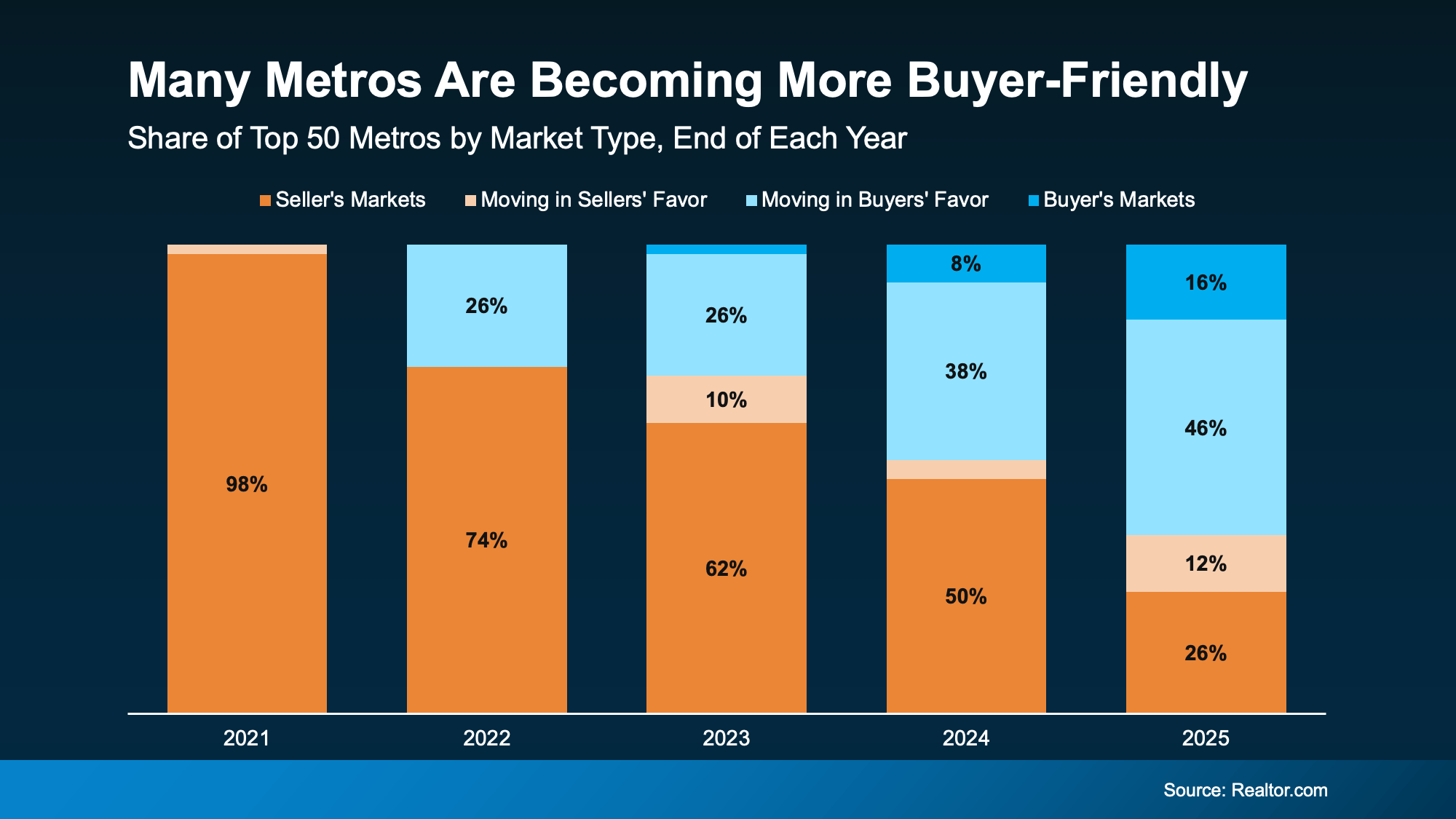
That changes how the market feels for everyone. Sellers shouldn’t expect 2021 conditions anymore, but buyers shouldn’t assume they’re suddenly in charge either. Generally speaking, the country has landed somewhere in the middle, which is healthier than the frenzy we came out of.
It’s not the same story everywhere
Who holds the leverage really comes down to where you live. While more metros are leaning buyer-friendly lately, there are still plenty of strong seller’s markets out there too. It depends on how much housing supply and demand your area has, and that varies enormously from one region to the next.
Sun Belt cities like Austin, Tampa, and San Antonio went through major building booms in recent years, which handed buyers more options and more room to negotiate. Cities in the Northeast and Midwest, places like Rochester, Hartford, and Buffalo, never saw that wave, so inventory stayed tight and competition stayed fierce. As Jeff Ostrowski, a housing analyst at Bankrate, puts it:
“The formerly hot Sun Belt markets have cooled, while the Northeast and Midwest have stayed hot. The big driver here is construction activity. The softest markets now [have] experienced big booms that spurred new building, and that has led to a large supply of new and existing homes on the market in those places.”
So the national headline and your local reality can point in different directions. Which brings us home.
Where Memphis fits in all this
The national stories skip the part that matters most for us: Memphis never had a Sun Belt building boom like Austin or Tampa. We didn’t put up tens of thousands of new homes that later flooded the market, so we haven’t seen the same swing toward buyers that those overbuilt metros have. That tends to keep our market steadier and, in the more in-demand areas, still friendly to sellers.
The flip side is affordability. Because prices here never ran up the way they did in the boom markets, Memphis remains one of the more affordable metros in the country, which keeps buyer demand healthy even as mortgage rates stay where they are. A lot of that demand has been waiting on the sidelines, and as the lock-in effect finally loosens and more homeowners list, both sides are getting a little more room to operate.
But “Memphis” is really a dozen different markets. A well-priced home in a sought-after Germantown or Collierville school zone can still draw multiple offers in a weekend, while a home that needs work in a softer pocket of the county might sit for a month and take a price cut. Bartlett and the other suburbs each have their own rhythm. We get into how these areas stack up in our Collierville, Germantown, and Bartlett comparison, and the short version is that the right strategy on Poplar Avenue isn’t the same as the right strategy ten miles away. That’s exactly why a national average can’t tell you what to do.
What it means if you’re buying
If the wider market is loosening, that’s good news for buyers, and even better here, where affordability is already a strength. You may have more homes to choose from and more willingness from sellers to negotiate on price, closing costs, or repairs than you would have a few years ago. Lean into that where you can.
That said, in the strong-demand suburbs you may still be competing, so it pays to be ready:
- Get pre-approved before you start shopping. It shows sellers you’re serious and lets you move fast.
- Be ready to act when the right home hits the market, especially in the popular school zones where good listings don’t last.
- Consider offering a clean, simple deal: a flexible closing date or fewer contingencies can win over a slightly higher price.
- Work closely with your agent to read the specific listing. A home that’s been sitting three weeks is a very different negotiation than one that listed Thursday.
What it means if you’re selling
If your area has softened, you’re not out of luck, but you do have to adjust your expectations from the peak years. Buyers have more options and more patience now, so the days of naming a number and waiting for a bidding war are gone in much of the market.
The fundamentals matter more than they did when everything sold itself:
- Price it right from day one. Overpricing is the single most expensive mistake a seller can make, and we wrote a whole post on the pricing mistake that can cost you the sale. The first two weeks on the market are when you get the most attention; waste them with a high price and you lose your best buyers.
- Make the home show well. Curb appeal and staging stand out more when buyers have other homes to compare yours to.
- Be open to incentives. Covering some closing costs or offering a home warranty can seal a deal without dropping your price.
- Expect a little back-and-forth. Buyers are negotiating again, so go in ready to be flexible on terms.
A good listing agent will also help you read whether your particular home, in your particular zip code, is in the part of the market that still favors you or the part that doesn’t. If you’re weighing a sale, it’s worth understanding what the numbers look like on your end before you list. Our overview of what it actually takes to sell your house is a good place to start.
How to read your own local market
You don’t need an MLS login to get a feel for which way your area is leaning. A handful of signals tell you most of what you need to know, and your agent can pull the exact figures for your zip code and price range.
Start with days on market. When homes like yours are going under contract in a few days, sellers still have the upper hand. When that stretches toward a month or more, buyers have gained ground. Watch the homes most comparable to yours, not the metro-wide average, because a starter home in Bartlett and a luxury build in Germantown can be in completely different markets at the same time.
The list-to-sale ratio is the next thing to watch. If homes in your area are routinely closing at or above asking, that’s a seller’s market. If most are settling below list, with sellers taking less than they hoped, leverage has shifted toward buyers. Right alongside that, keep an eye on price cuts: a pocket where listings sit a few weeks and then drop their price is softening, while one where homes get scooped up before a reduction is ever needed is still tight.
Underneath all of it is inventory, meaning how many homes are for sale versus how quickly they’re selling. More choices for buyers means more room to negotiate; scarce listings mean competition and less wiggle room. When you understand where your slice of the market sits on that scale, you know whether to come in aggressive or hold firm, which is the whole foundation of a smart negotiation strategy on either side of the deal.
Your market is the only one that matters
National trends make for good headlines, but you don’t buy or sell a house in the national market. You buy and sell one in a specific neighborhood, in a specific price range, in a specific month. The country might be loosening while your street is still tight, or the other way around.
So if you want to know which way your local market is leaning and what that means for your move, talk to an agent who works your area every day. We’re happy to tell you straight where your home or your target neighborhood stands right now, and how to play it. Reach out anytime, and we’ll walk you through it.