

We keep hearing the same thing from buyers who tour new construction in Collierville and Arlington: “I love these houses, but I assumed they were out of my budget.” Six months ago, they might have been right. The numbers have shifted.
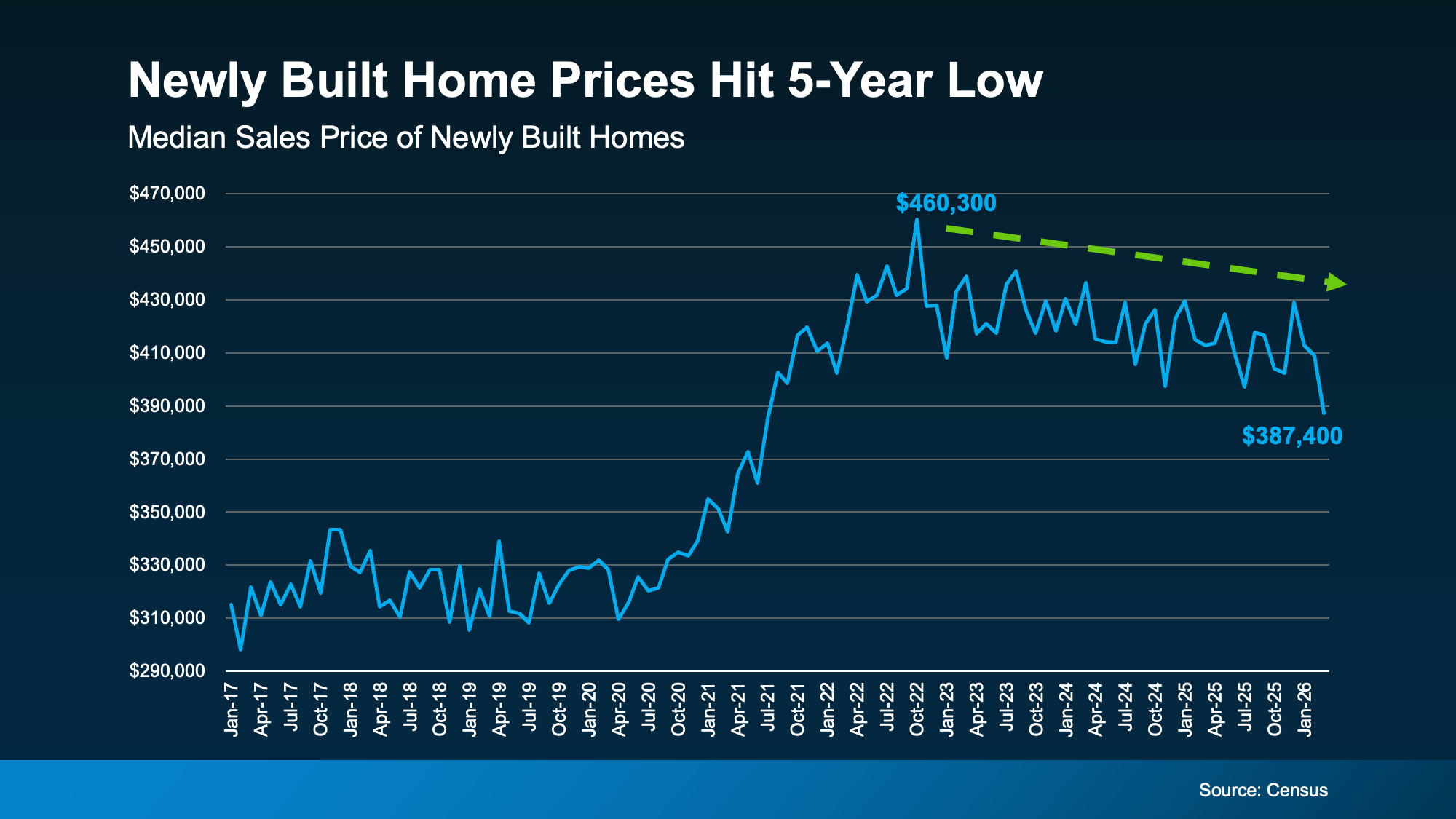
The median sale price of a newly built home has dropped to about $387,400, according to the latest Census data. That’s the lowest it’s been since 2021. And builders aren’t just lowering prices. They’re layering on incentives that make the real cost even lower than the sticker suggests.
If you’ve been watching new construction from the sidelines, the math has gotten better than it’s been in years. We’ll break down what’s changed with new construction home prices in 2026 and what it means if you’re shopping right now.
Prices on newly built homes have come down
After the run-up during the pandemic years, new home prices peaked at $460,300 in late 2022. They’ve been working their way back down since. The current median of $387,400 is a real correction from that peak, and for the first time in a while, the trend line is clearly moving in buyers’ favor.
[IMAGE 1: Census line graph showing median new home prices from 2017-2026, peaking at $460,300 and currently at $387,400]
Local markets vary, but the national data is directionally useful. Entry-level new construction (the price range where most first-time buyers are shopping) has dropped about 2.7% over the past 12 months, according to Zonda. That’s a bigger decline than any other price tier, which means the segment with the most buyer demand is also getting the most price relief.
If you look at that graph, notice where prices were before the pandemic. Even after this correction, new home prices are still above pre-pandemic levels. That’s an important detail for reasons we’ll get to in a minute. But the direction of the trend line, coming down from that 2022 peak, is real. And it’s creating opportunities that didn’t exist a year ago.
Builder incentives are stacking up
Lower sticker prices are only part of what’s happening. According to the National Association of Home Builders, 60% of builders are currently offering some form of incentive to attract buyers. That’s six out of every ten builders willing to give you something beyond the list price.
The common incentives we’re seeing in the Memphis area and nationally:
- Closing cost assistance, where the builder covers several thousand dollars in fees that would otherwise come out of your pocket at closing
- Mortgage rate buydowns, where the builder pays upfront to lower your interest rate and reduce your monthly payment
- Upgrade packages thrown in at no extra cost: premium finishes, appliance bundles, flooring upgrades
- Straight price reductions
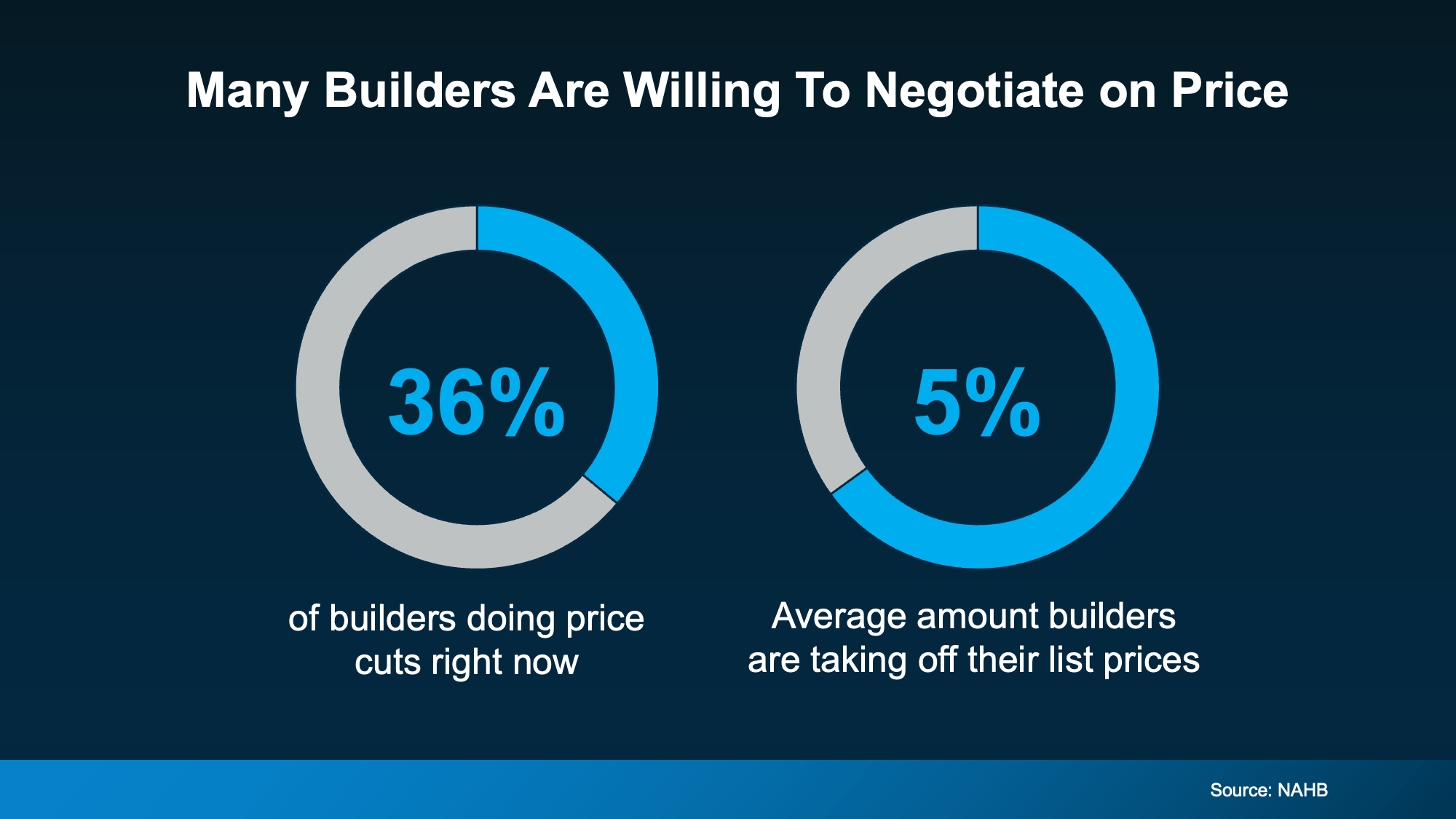
That last one is more common than most buyers expect. Over a third of builders (36%) are cutting prices right now, and the average discount runs about 5% off list price.
[IMAGE 2: NAHB graphic showing 36% of builders doing price cuts, averaging 5% off list prices]
To put 5% in perspective: on a $400,000 new build, that’s $20,000 off the price. Combine it with a rate buydown or closing cost assistance, and the total value of builder concessions can be significant. If you’ve been researching down payments and worried about upfront costs, builder incentives can cover a real portion of what you’d need to bring to closing.
Most buyers assume builders won’t budge on price the way a traditional seller might. But builders operate differently. A homeowner who doesn’t get the price they want can just take the house off the market and wait. A builder with 14 finished homes sitting in a subdivision has carrying costs on every single one. They’re paying interest on construction loans, HOA fees on unsold lots, and insurance. Every month a house sits empty, it costs them money.
Joel Berner, Senior Economist at Realtor.com, put it well: “many existing-home sellers resort to taking down their listing instead of taking less than their desired price, but builders are more motivated to sell their inventory than owner-occupants.”
That motivation works in your favor. Especially if you bring your own agent to the table and negotiate on your behalf.
Why this isn’t a repeat of 2008
Whenever home prices drop, the 2008 comparison comes up. It came up after the pandemic surge, and it’s coming up now. If you lived through the crash (or watched your parents live through it), any downward price movement triggers the same alarm.
But what’s happening with new construction prices in 2026 is nothing like 2008. The situations have almost nothing in common.
In 2008, builders had massively overbuilt. Subdivisions sat half-empty. Speculative buyers had purchased homes they couldn’t afford using loans they never should have qualified for. When the lending market seized up, those homes flooded the market as foreclosures and the entire pricing structure collapsed.
None of those conditions exist right now. Lending standards are strict. Every mortgage requires documented income, verified employment, and proof the borrower can handle payments. Foreclosure rates remain well below historical averages, not spiking above them. And builders learned the hard lesson from 2008 about overbuilding.
Look at the price graph one more time. Even with the correction from the 2022 peak, current prices are still well above where they were in 2017, 2018, or 2019. The pre-pandemic median hovered around $310,000 to $330,000. Today’s $387,400 is lower than the peak but still roughly 20% above where prices sat before the pandemic began. This is a market adjustment, not a collapse.
Builders today are managing their inventory deliberately. They’re slowing starts, adjusting prices, and offering incentives to keep homes moving at a steady pace. That’s the opposite of the 2005-2007 playbook, where builders kept building regardless of demand. The current price decline isn’t panic. It’s a business decision to keep inventory turnover healthy.
For buyers, the takeaway is straightforward: you’re buying into a market where prices have room to grow from current levels, not one where they’re falling off a cliff. The correction has brought pricing back to something more sustainable, which is better for long-term value than buying at a peak and hoping the line keeps going up.
What this looks like for Memphis-area buyers
National data tells you the direction. Local conditions tell you what you’ll find when you start shopping.
The Memphis metro has seen steady new construction in areas like Arlington, Collierville, and the northern suburbs. Builders with active communities in these areas are competing for the same pool of buyers, which gives you leverage even beyond the national incentive trends.
First-time buyers are in the best position we’ve seen in a while. The 2.7% decline in entry-level new construction prices is directly relevant if you’re looking at homes in the $280,000 to $375,000 range. Pair that with builder incentives and the math has changed enough that a new build might fit your budget where it didn’t before.
If you’re currently renting and running the numbers on buying, the combination of lower new home prices and builder concessions is worth factoring in. A rate buydown from the builder, for example, can make a significant difference in your monthly payment for the first few years of the loan, and you can refinance later if rates drop further.
And many of the myths about new construction don’t hold up right now. The idea that builders won’t negotiate, that you can’t get a deal on new builds, that incentives are marketing gimmicks. In this market, with inventory to move and buyer traffic down from the frenzy years, builders are genuinely flexible. We’ve seen it firsthand in negotiations with local builders over the past several months.
How to make the most of this market
If you’re going to shop new construction right now, a few things will help you get the best deal.
Have your own agent. The builder’s on-site sales agent works for the builder. They’re helpful and knowledgeable, but their job is to sell you that builder’s homes at the best price for the builder. Your agent’s job is to get you the best deal. Builders expect buyers to have representation, and in most cases, they pay the buyer’s agent commission, so it doesn’t cost you anything extra.
Get pre-approved before you walk into a model home. Builders take pre-approved buyers more seriously, and when you’re asking for concessions (rate buydowns, closing cost help, upgrades), having financing in order gives you credibility. It also speeds up the process if you find something you want to move on.
Compare the total package, not just the sticker price. A home priced $15,000 higher but offering a 2-1 rate buydown and $8,000 in closing cost credits might actually cost you less per month than the cheaper home with no incentives. We run these numbers with buyers all the time, and the “best deal” isn’t always the lowest list price.
Ask what’s negotiable. Builders won’t always volunteer everything they’re willing to do. Some have corporate incentive programs that the on-site agent can offer. Others have flexibility on specific upgrades or lot premiums that only come up if you ask. Your agent should know which questions to push on.
And don’t assume you’ve missed the window. Affordability forecasts for 2026 suggest the buyer-friendly trend has more room to run. Builder inventory is still elevated, and the incentive environment isn’t going away overnight.
The bottom line for new construction in 2026
Builder incentives and the lowest new home prices since 2021 are working in buyers’ favor in a way they haven’t in years. If you’ve wanted a newly built home but the numbers never quite worked, this is the best stretch of pricing and flexibility we’ve seen since before the pandemic run-up.
We’re working with buyers in Germantown, Collierville, Arlington, and across the Memphis area who are taking advantage of this market right now. If you want help figuring out what’s available and what kind of deal a builder might put together for you, reach out to our team and we’ll walk through it with you.