
No Comments

50 days to pending in Germantown

Germantown homes are sitting on the market for about 50 days before going under contract. That number comes from Zillow’s most recent data (February 2026), and it tells you something useful about the pace of this market right now.

Fifty days isn’t slow. It isn’t fast either. It’s a market where good homes sell at a reasonable pace and overpriced or under-prepared homes sit. If you’re a seller, that distinction matters, because the difference between a 30-day sale and a 90-day listing usually comes down to decisions you control.

What the Germantown numbers look like right now

The February 2026 snapshot from Zillow puts Germantown’s median days to pending at 51. That’s the midpoint, half of listings go under contract faster, half take longer.

The median sale price in January 2026 was $456,167. The median list price in February was $516,317. That gap between list price and sale price suggests that some sellers are pricing high and negotiating down, while others are landing close to asking. Inventory sits at 185 active listings with 42 new ones added in the most recent period.

What these numbers don’t tell you is whether the market favors buyers or sellers overall. They tell you something more practical: there’s steady activity, enough inventory for buyers to be selective, and enough demand for well-priced homes to move within a reasonable window.

Why 50 days is a useful benchmark

Days to pending measures the time between a listing going live and a seller accepting an offer. It’s the clearest signal of market pace because it strips out the closing process, which is mostly paperwork and lender timelines that have nothing to do with demand.

In a hot market, this number drops into the teens. During the 2020-2021 frenzy, some Germantown homes went pending within a week of listing. In a sluggish market, it stretches past 90 days or longer, and sellers start making price cuts.

At 51 days, Germantown sits in a zone where buyers are active but not frantic. They’re looking, they’re touring, and they’re making offers, but they have enough options that they won’t overpay for a home that doesn’t check their boxes. For sellers, that means pricing and presentation carry more weight than they did when inventory was razor-thin.

If you’re curious where your home fits in this picture, getting a home valuation before you list gives you a realistic starting point instead of a guess.

What separates 30-day sales from 90-day listings

In a 50-day market, the spread between the fastest and slowest sales is wide. Some homes in Germantown go under contract in three weeks. Others linger for three months. The patterns in what moves quickly are consistent enough that you can learn from them.

Pricing that reflects the market, not your mortgage

The biggest factor is price. Homes priced at or just below market value generate the most early interest and the strongest offers. Homes priced 5-10% above comparable sales lose showings in the first two weeks, which are the most important weeks of any listing.

That $60,000 gap between Germantown’s median list price and median sale price is a signal. Some of that reflects normal negotiation. But some of it reflects sellers who listed too high, sat for weeks, and eventually dropped their price to where they should have started. Those extra weeks cost more than the price difference; they cost momentum.

Condition and first impressions

Buyers in this market are comparing your home against 184 other active listings. They’re scrolling through photos before they ever schedule a showing. If your home’s first impression online doesn’t stand out, you lose showings you never know about.

Fresh paint, clean landscaping, updated light fixtures, and decluttered rooms aren’t glamorous upgrades. But they’re the ones that get people through the door. Low-cost improvements that help sell your house can make a measurable difference in how fast your listing moves, especially in a market where buyers have options.
Timing within the season

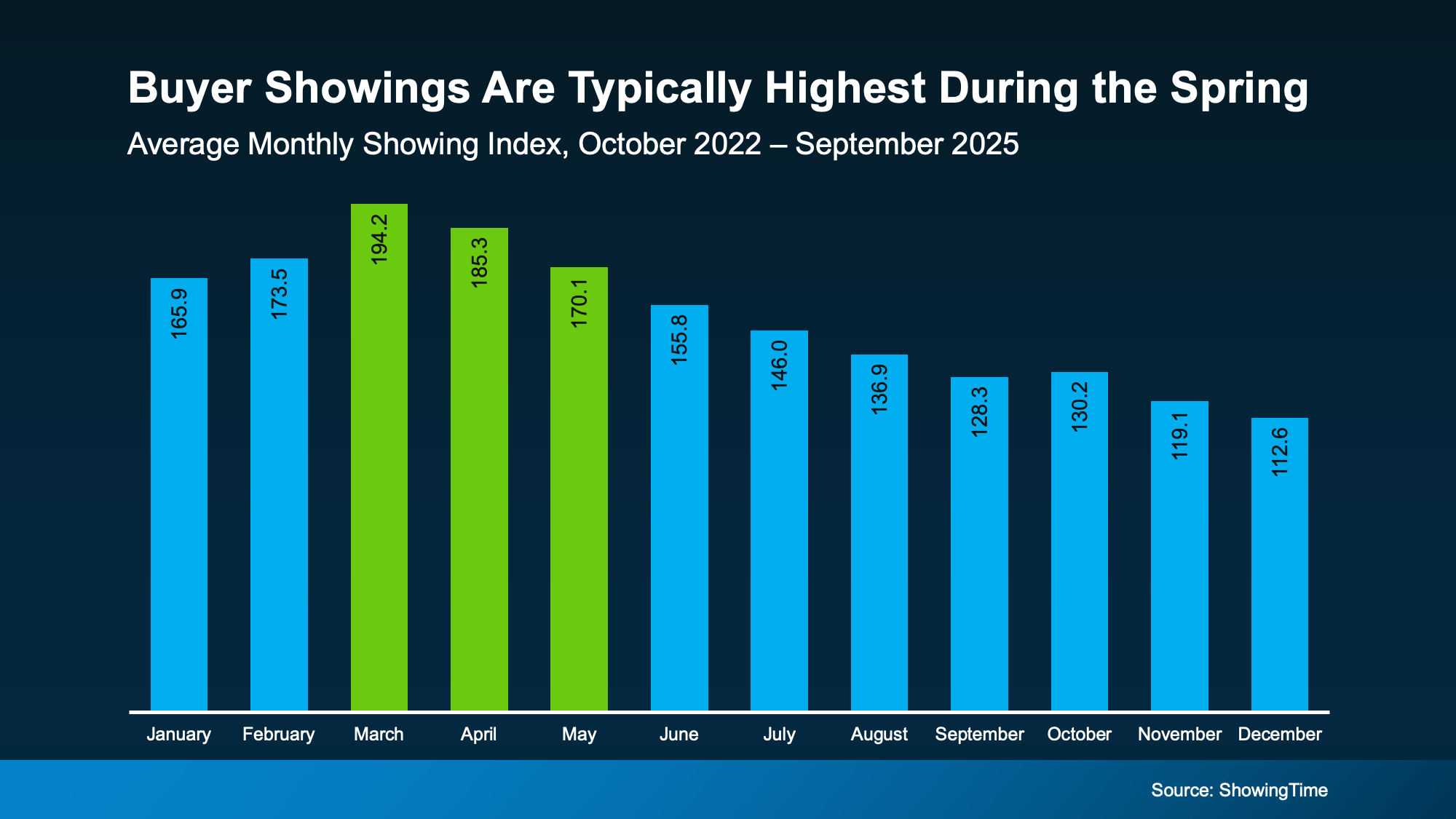
Spring consistently delivers more buyer activity than any other time of year. ShowingTime data shows the same curve year after year: activity climbs through March, peaks in April and May, and drops off in the second half. If you’re already thinking about selling, getting your listing up before that spring wave crests gives you the best shot at landing on the shorter side of that 50-day median.

Who’s buying in Germantown right now

Germantown draws a specific mix of buyers, and understanding who they are helps you position your home.

Families with school-age kids make up a large share. Germantown’s school district is a consistent draw, and spring is when these families make their move so kids can start the new school year settled. These buyers care about bedrooms, yard space, proximity to schools, and neighborhood feel. They’re less likely to compromise on location and more likely to pay fair market value for a home that fits.

Relocating professionals are another steady segment. Memphis attracts corporate transfers, medical professionals, and logistics industry workers, and Germantown is where many of them land. These buyers often work on compressed timelines and make decisions quickly once they find something that works.

Empty nesters looking to downsize also move through Germantown’s market. Some are leaving larger homes in the area for something easier to maintain. Others are coming from East Memphis or Cordova for Germantown’s walkability and amenities.

Knowing who’s likely to tour your home helps you stage it, price it, and market it to the right audience.

What sellers get wrong in a 50-day market

The most common mistake is treating 50 days like it’s slow. It’s not. Fifty days is a healthy, functioning market. The problem is that sellers who expect a 10-day sale (because that’s what they heard happened two years ago) get anxious when their phone doesn’t ring in the first week. That anxiety leads to bad decisions: premature price drops, accepting low offers too early, or pulling the listing and relisting later at a worse time of year.

The second mistake is ignoring the data. Germantown’s numbers are public and updated regularly. You can see what similar homes sold for, how long they took, and whether they sold above or below asking. Sellers who price based on what they need to get out of the home, rather than what the market supports, consistently take longer to sell.

The third is underestimating the competition. At 185 active listings, buyers have choices. Your home isn’t competing against the concept of Germantown real estate. It’s competing against the specific other homes in your price range, your school zone, and your square footage bracket. If three of those homes show better than yours, you’re fourth in line.

If you’re also buying

Most sellers are also buying their next home, and that creates a timing puzzle. Do you sell first and risk being homeless for a stretch? Do you buy first and carry two mortgages? Or do you try to close both on the same day and hope nothing falls apart?

The cleanest approach is usually selling first, or at least getting your home under contract before you make an offer on the next one. In a market where homes take roughly 50 days to go pending, you can start your search while your home is listed and have a realistic sense of your timeline. Sellers on the other end of your purchase want to see a buyer who can close, not one who’s still waiting on their own sale.

Working with an agent who handles both sides of that transaction in Germantown and the Memphis area makes the logistics manageable. Coordinating closing dates, managing contingencies, and keeping both deals on track is where experienced local agents earn their fee.

The bottom line on Germantown’s market

Fifty-one days to pending means the market is working. Buyers are active, homes are selling, and pricing is landing in a range that makes sense for both sides. It’s not the frenzy of a few years ago, and that’s fine. A steady market rewards sellers who do the work: price correctly, present the home well, and list during the window when buyer activity is highest.

If you’ve been waiting for the “right time” to sell in Germantown, the spring window is open and the market data supports making a move. Reach out to the Reid Realtors team to talk through what the numbers look like for your specific home and neighborhood.

No Comments

Spring Sellers Have an Edge. Here’s Why.

Most homeowners who want to sell are looking for the same combination: enough interested buyers, competitive offers, and a timeline that doesn’t drag on for months. Spring tends to deliver all three, and the data backs that up year after year.

If you’ve been thinking about listing your Memphis or Germantown home this year, this is the window where the market is most likely to work in your favor. Not because of hype or wishful thinking, but because buyer behavior follows predictable seasonal patterns, and spring sits at the top.

Buyer activity peaks in spring

There’s no mystery about when people start house hunting. ShowingTime data going back years shows the same pattern: showing activity climbs through March, peaks in April and May, and tapers off in the second half of the year. It happens with enough consistency that you can almost set a calendar by it.

This year, the seasonal bump has a tailwind behind it. Mortgage rates are sitting near three-year lows, which means monthly payments are more manageable for buyers who were priced out over the past couple of years. When rates were hovering near 7-8%, a lot of people hit pause. With rates coming down, those buyers are starting to re-engage.

More buyers in the market plus better affordability equals more traffic through your front door. That’s not speculation. Redfin reported that homebuying demand has been improving and that mortgage purchase applications are sitting near their highest level in three years.

Nobody is saying we’re going back to the pandemic-era frenzy. We’re not. But you don’t need a frenzy to sell well. You need enough interested, qualified buyers to create competition for your home. Spring gives you the best shot at that.

If you’re considering selling in the Memphis or Germantown area, getting your listing up before that wave of activity crests is the move.

a graph of numbers and a number of months

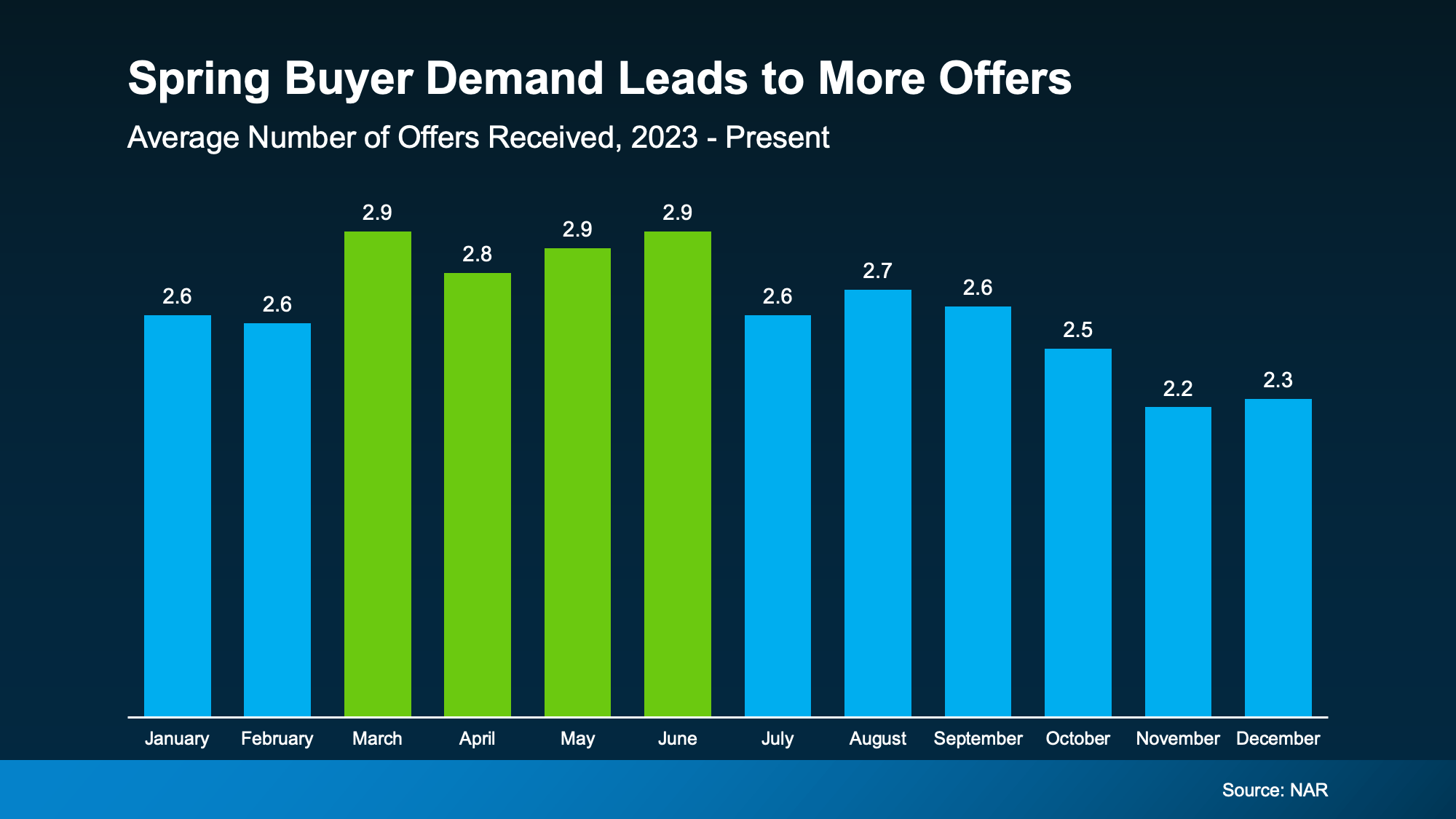
Spring sellers tend to get more offers

More buyer activity doesn’t just mean more showings. It typically translates into more offers.

National Association of Realtors (NAR) data averaged over the past three years shows a clear pattern: sellers who list in spring receive more offers per listing than those who list in other seasons. The numbers aren’t dramatic, but they’re consistent.

This won’t look like the bidding wars of 2020 and 2021, when homes routinely drew 10, 15, or 20 offers. Those conditions were driven by pandemic-era inventory shortages and record-low interest rates that probably won’t repeat. But getting two or three solid offers instead of one changes your negotiating position. It gives you leverage on price, on contingencies, on closing timelines.

Realtor.com put it plainly: spring typically brings out more buyers who are ready to make a move before summer, and listings see more views, showings, and offers during this season.

If you’re trying to figure out where your home fits in the current market, getting a home valuation before you list gives you a realistic baseline to work from. That way, when offers come in, you know whether they’re strong or whether you should hold.

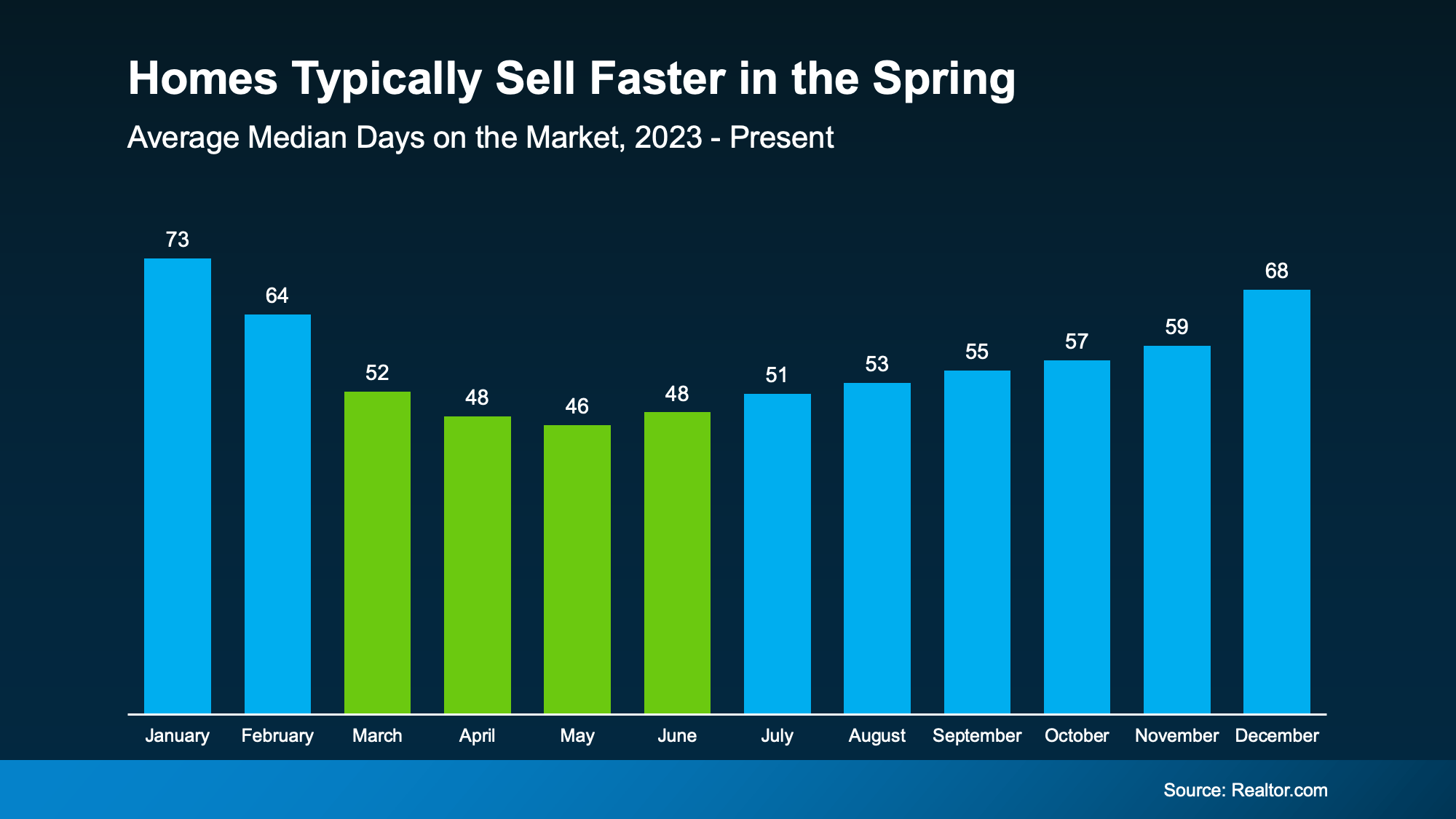
a graph of sales

Homes sell faster in spring

Alongside more buyers and more offers, spring also brings shorter time on market. Realtor.com research shows that homes sell an average of 20 days faster in spring compared to winter. That’s close to three weeks off your timeline.

Twenty days might not sound like much on paper, but anyone who has lived through a listing that sat for two or three months knows how it feels. You’re keeping the house show-ready at all times, rearranging your schedule for showings, and watching the days-on-market counter tick up while wondering if you priced too high.

Listing during the most active season stacks the odds toward a quicker sale. That’s especially relevant right now, because homes across the market have been taking longer to sell compared to a couple of years ago. If speed matters to you, timing your listing to coincide with peak buyer activity is one of the simplest things you can do.

Some small upgrades can also help your home move faster. Things like fresh paint, updated fixtures, and solid curb appeal make a difference in how quickly buyers make decisions. Low-cost improvements that help sell your house can shave days off your timeline without a big investment.

Why Memphis and Germantown sellers should pay attention

The spring advantage applies nationally, but it’s particularly relevant for the Memphis metro and Germantown. These markets benefit from a steady flow of relocating buyers, families moving up, and empty nesters looking to downsize. That activity concentrates in spring when school-year timing drives family moves.

Germantown’s housing stock, with its mix of established neighborhoods and newer construction, attracts buyers who are willing to compete for the right property. East Memphis sees similar demand from buyers looking for proximity to jobs, schools, and amenities.

Pricing correctly for these submarkets matters as much as timing. Overpricing in any season costs you showings and extends your timeline. But pricing correctly during the spring window, when buyer activity is at its peak, gives you the best chance of hitting your number without leaving money on the table.

What if you’re also buying?

A lot of sellers are also buyers, and that creates a natural hesitation. You want to sell, but you’re worried about finding your next home in a competitive market.

The spring market works both ways. Yes, you’ll face more competition as a buyer. But selling first (or at least getting your home under contract) puts you in a stronger position when you go to make an offer on your next place. Sellers on the other side of your purchase want to see buyers who can close, not buyers who are still waiting on their own home to sell.

Working with an agent who knows the Memphis and Germantown markets well enough to coordinate both sides of that transaction makes the overlap manageable instead of stressful.

Spring gives you momentum, not a guarantee

Nothing about the season guarantees a sale. Pricing still matters. Condition still matters. How you market the home still matters. A poorly priced or poorly presented home will sit in April just like it would in November.

But spring gives you something you can’t manufacture the rest of the year: a concentration of motivated, qualified buyers who are actively looking. The seasonal data on showings, offers, and days on market all point in the same direction.

If selling has been on your list for this year, doing it now means working with the market’s natural rhythm instead of against it. The buyers are out there. The rates are cooperating. The question isn’t whether spring is a good time to sell. It’s whether you’re ready to take advantage of it.Talk to the Reid Realtors team about what selling this spring could look like for your home and your timeline.

No Comments

Why Buyers are ChoosingTownhomes in Collierville TN

The median home price in Collierville is around $565,500. That buys a lot of house in most Tennessee markets, but in Collierville, it’s become the baseline. New single-family construction here often starts well above that number, especially in neighborhoods with the school zones and walkability that draw people to the area.

So what do you do if you want to live in Collierville but you’re not interested in maintaining a big house and a big yard? Or if you’d rather put your money into the lifestyle instead of the mortgage?

Townhomes in Collierville TN are filling that gap. And they’re attracting buyers you might not expect: downsizers from larger homes in the area, professionals who travel and don’t want to worry about the lawn while they’re gone, young families who want the school district without stretching their budget to the breaking point.

One new community, The Towne, is a good example of what this kind of living looks like when it’s done well. But before we get into specifics, it’s worth talking about why the townhome model works for so many people and where it doesn’t.

What you get with a townhome

Someone else handles the exterior. The HOA takes care of landscaping, common areas, and exterior maintenance. You mow nothing. You rake nothing. You spend Saturday mornings doing whatever you want instead of edging the driveway.

That trade-off is what pulls most buyers in. You pay HOA dues, and in return, you get a yard that always looks good and a list of weekend chores that shrinks considerably. For people coming out of a 2,500-square-foot house with a big lot, that shift feels less like a compromise and more like a promotion.

The other practical benefit is cost. Townhomes generally price lower than comparable single-family homes in the same area. In a market like Collierville, where entry points for new construction keep climbing, that price difference opens the door for buyers who’d otherwise be priced out of the zip code.

There are trade-offs, and they’re worth being honest about. You share walls. Your outdoor space is smaller. HOA rules limit what you can do to the exterior of your home. If you’ve always wanted a big backyard garden or a detached workshop, a townhome probably isn’t your move. But if those things aren’t on your list, the math and the lifestyle tend to work out well.

Why Collierville keeps attracting buyers

Collierville has been one of the most popular suburbs east of Memphis for years, and the reasons haven’t changed much.

The school district runs its own municipal system, separate from Shelby County Schools. Collierville High School posts a 90% graduation rate and an average ACT score of 24.1. The elementary and middle schools maintain strong reputations across the board. For families making a housing decision based on schools, Collierville is usually on the short list.

Safety is another factor. Collierville ranks as the 4th safest city in Tennessee, which matters when you’re choosing where to put down roots. The town’s award-winning police and fire departments are a big part of that.

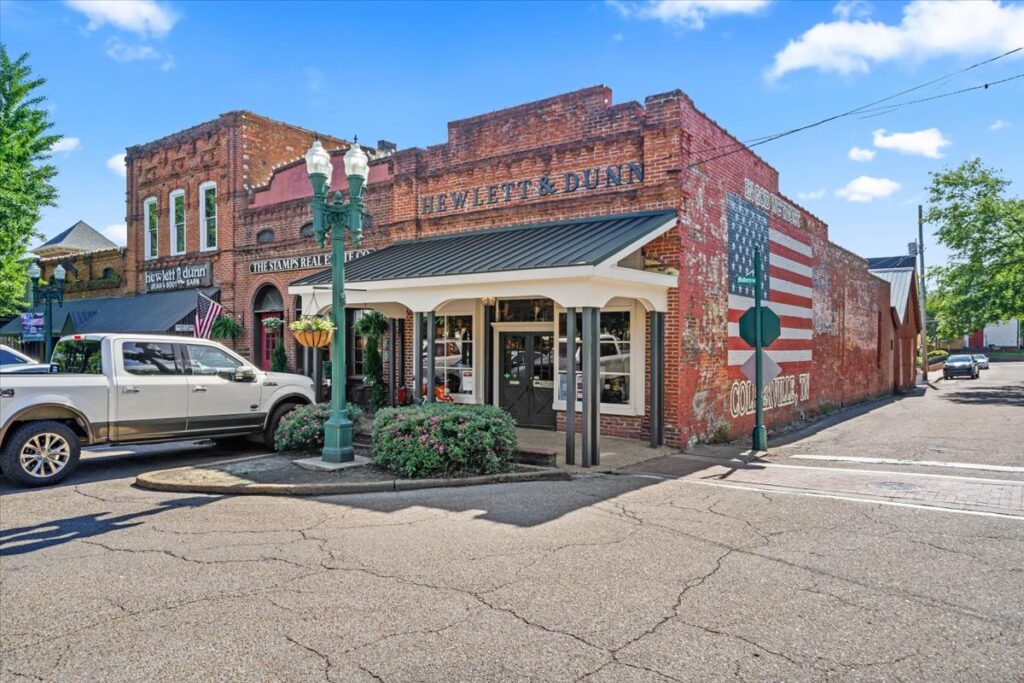
Beyond the practical stuff, the town has genuine character. The Historic Town Square, which Parade Magazine named “America’s Best Main Street,” hosts year-round community events, local shops, and restaurants that give the area an identity most suburbs don’t have. It’s the kind of place where you run into people you know at the grocery store, and Friday night football draws a real crowd.

The town maintains over 800 acres of parkland, 30 athletic fields, and 18 miles of greenbelt trails for biking, jogging, and walking. Carriage Crossing gives you shopping and dining without driving into Memphis. And at roughly 52,000 residents, Collierville is big enough to have everything you need but small enough to feel like a community.

All of that feeds into the decision when you’re evaluating a townhome community in Collierville. You’re not just buying a floor plan. You’re buying into a town, and this is one of the strongest options in the Memphis metro.

A closer look at The Towne

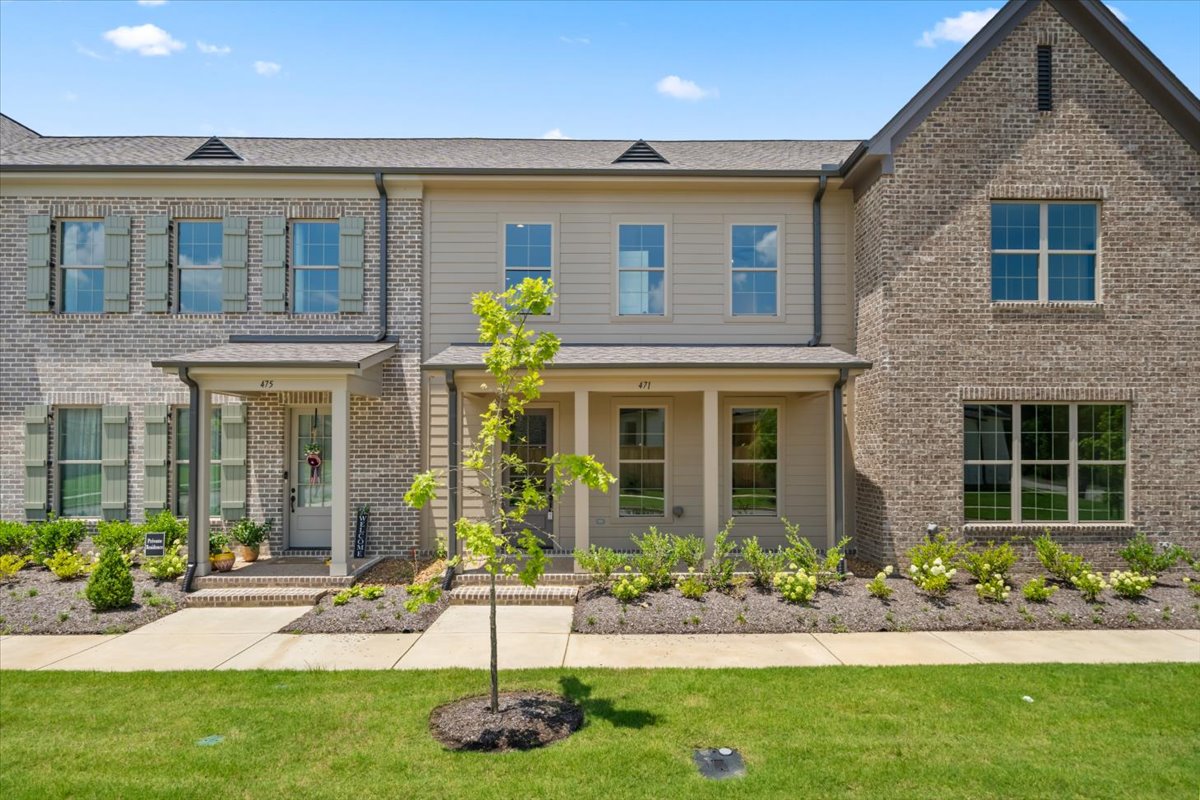
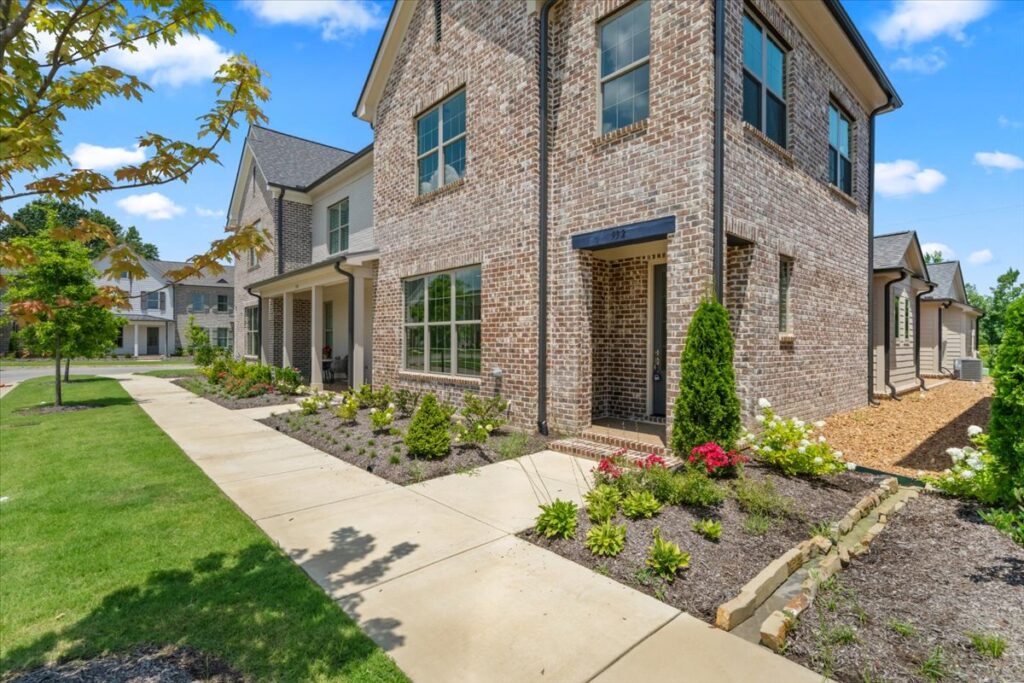
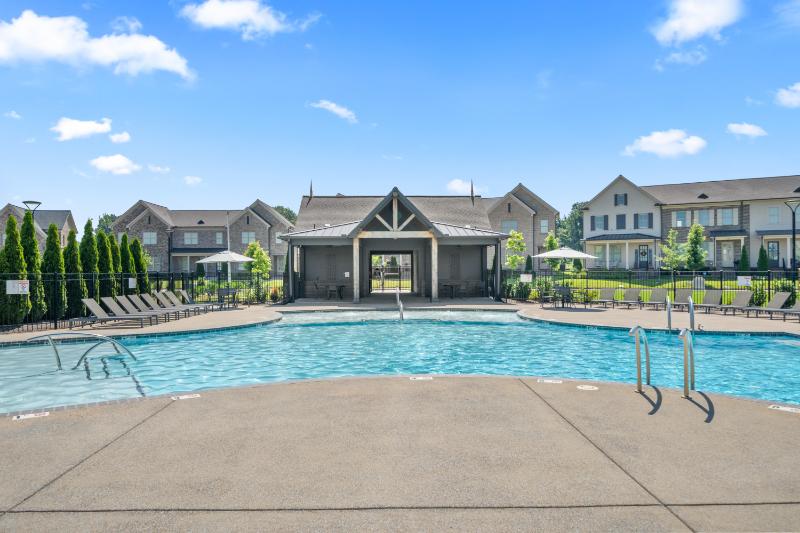
The Towne is a new construction townhome community in Collierville built by Eagle Builders and developed by Crews Development. When complete, the community will have 167 townhomes spread across common green spaces with a private gunite swimming pool and pool house.

The build quality and design set it apart from most townhome projects in the area.

Each unit runs over 2,000 square feet with three bedrooms and two and a half bathrooms. The floor plans are open concept with 9-foot ceilings on both floors, which is unusual for townhomes. Most builders cut ceiling height on the second floor to save costs. The primary bedroom is downstairs, and if you’re downsizing or planning to age in place, that layout changes how you use the home. You could effectively live on the first floor and use the upstairs bedrooms for guests or a home office.

The finishes are a step above what you typically see in townhome construction. Engineered oak hardwood flooring. Custom wood cabinetry. Granite or quartz countertops. Stainless steel Whirlpool appliances. Moen bath fixtures. These are details that would normally be upgrade packages in a production build, and at The Towne they come standard.

On the exterior, Eagle Builders went with Hardie cement board siding, which carries a 30-year warranty and holds up considerably better than vinyl in Memphis humidity. The architectural roof shingles have a 50-year warranty. Windows are argon-filled for energy efficiency, and each home has professionally designed landscaping that the HOA maintains.

The energy efficiency package is worth paying attention to. The units include Carrier HVAC systems with heat pump zoning, R-30 ceiling insulation, and radiant barrier roof decking. In a Memphis summer, that combination makes a real difference on your utility bills. Zoned HVAC lets you cool the downstairs during the day without running AC to empty upstairs bedrooms, and that saves money every single month.

Every home also includes a covered patio, which gives you outdoor space without the upkeep of a full yard. During Collierville’s long stretches of warm weather, that patio and the community pool are where a lot of living happens.

The financial picture

New construction townhomes in Collierville aren’t cheap, but they typically come in well below what you’d pay for a comparable single-family new build in the same area.

The Towne is currently offering a 2-1 rate buydown with a $30,000 builder credit. That structure gives you an interest rate of 2.99% in the first year, 3.99% in the second year, and 4.99% for years three through thirty. For buyers concerned about today’s mortgage rates, that first-year payment can make the transition more manageable while you settle in.

Beyond the mortgage itself, the ongoing cost picture for a townhome tends to favor the buyer. You pay HOA dues, but you eliminate the costs you’d normally handle yourself: lawn care, exterior painting, landscaping, and common area upkeep. When you add those individual line items up for a single-family home, the HOA fee often comes out close to even.

There’s also the insurance side. Townhomes typically cost less to insure than detached single-family homes, partly because fire suppression systems (which The Towne includes in every unit) reduce risk, and partly because the HOA’s master policy covers the building exterior and common areas.

Who this works best for

Not every buyer is a fit for townhome living, and that’s fine. But certain situations line up well with what a community like The Towne offers.

Downsizers

If you’ve been in a larger home in Collierville or Germantown and you’re ready for less space and less maintenance, a 2,000-square-foot townhome with the primary bedroom downstairs is a natural next step. You stay in the area, keep the school district if that still matters for grandkids, and trade yard work for pool access.

Busy professionals

If you travel for work or just don’t want to spend your limited free time on house maintenance, the HOA-managed exterior is the whole point. Lock the door and leave. Come back to a home that looks exactly how you left it.

Budget-conscious buyers

Collierville’s single-family market has gotten expensive. If you’re set on the zip code but need to stay under a certain number, townhomes give you a realistic path in. The 2-1 rate buydown at The Towne helps with the first couple of years while you get settled.

People who want new without the project

Building a custom home is a long, expensive process with a lot of decisions. New construction townhomes give you modern finishes, current building codes, and builder warranties without a 12-month timeline and a binder full of material selections.

Things to consider before buying

A few practical items worth working through before you commit to any townhome community.

HOA rules and fees

Understand exactly what the HOA covers, what it costs monthly, and what restrictions apply. Can you modify your patio? Are there pet restrictions? What happens if the HOA needs to raise dues? These details vary by community, and you want to know the rules before you’re bound by them.

Resale value

Townhomes in desirable areas like Collierville tend to hold value well, but they don’t always appreciate at the same rate as single-family homes in the same market. That gap depends heavily on local demand. In a town where buyers consistently outnumber available homes, townhomes have performed well on resale.

Sound between units

Shared walls mean shared noise, at least potentially. Construction quality matters here. Newer builds with fire suppression systems and modern insulation tend to manage sound better than older attached homes, but it’s still something to think about if you’re coming from a detached house. Walk through a completed unit and pay attention.

Storage space

Townhomes generally have less storage than a single-family home. If you’re downsizing, the decluttering part of the process isn’t optional. Figure out where everything goes before you sign a contract, not after.

Getting started

If you’ve been looking at townhomes in Collierville TN and want to see what’s available at The Towne, it’s worth visiting in person. Floor plans and photos tell you part of the story, but walking through a unit and spending time in the neighborhood tells you the rest. For information about The Towne specifically, you can reach Michael Jacques at (901) 246-8916.

And if you want to talk through whether a townhome is the right move for your situation, or if you’re comparing communities and neighborhoods across the Memphis area, the Reid Realtors team has been helping buyers and sellers in Collierville, Germantown, and the surrounding suburbs for three generations. We’ll give you honest advice about what fits your life, your budget, and your priorities.

Call us at (901) 372-8500 or stop by our office. No pressure, just a conversation about your options.

No Comments

Home Upgrades that Help Sell Your House

Most buyers make up their mind about a house fast. Some research puts it at three minutes. Others say 90 seconds. Either way, by the time someone has walked from the curb to the kitchen, they’ve already got a gut feeling about whether they want to live there.

That gut feeling is what you’re trying to influence. And the good news is, the upgrades that move the needle aren’t the expensive ones. You don’t need a new kitchen or a bathroom addition. You need a house that looks clean, cared for, and ready to move into. Most of the work that gets you there costs a few hundred dollars and a couple of weekends.

Here’s where to put your time and money if you’re preparing your house for sale in the Memphis area.

Start outside the front door

Curb appeal isn’t a buzzword. It’s literally the first thing a buyer sees when they pull up to your house, and it sets the tone for the entire showing. A tired-looking exterior makes people wonder what else has been neglected. A clean, sharp one makes them walk in expecting to like what they find.

The good stuff is all cheap and fast.

Landscaping. Fresh mulch in the beds is probably the single best bang-for-your-buck improvement you can make outside. It costs under $100 for most yards and immediately makes the whole front look maintained. While you’re at it, trim back any overgrown shrubs, especially ones blocking windows or the front of the house. Edge the flower beds. Pull the weeds. Add a few seasonal flowers if you’re listing in spring or summer.

Pressure washing. Rent a pressure washer for a day and hit the driveway, sidewalks, patio, and siding. You’ll be surprised how much grime has built up. A clean exterior reads as “well cared for” even if you haven’t touched a thing inside yet.

The front door. Your front door gets more attention during a showing than almost any other single feature of your house. If the paint is peeling or the color is dated, repaint it. A coat of paint in a solid color (black, navy, or a deep red all work well) plus new hardware takes about two hours and costs around $50. Throw a clean welcome mat in front and a planter on either side, and you’ve got an entrance that actually makes people want to walk through it.

Lighting. If your porch light is one of those old brass lanterns from the 1990s, swap it out. A clean, modern fixture makes a big difference, especially for evening showings. Solar path lights along the walkway are another easy add.

Don’t overlook the gutters either. Clogged or overflowing gutters look bad in photos and raise drainage concerns for buyers who know what to look for.

Kitchens and bathrooms move the needle most

These two rooms carry more weight in a buyer’s decision than any other part of the house. You don’t need to gut them. You need to make them look current and clean.

Kitchen fixes that cost less than you’d think

Cabinet hardware is the easiest one. If your kitchen still has the brass or oak knobs it came with, replacing them with something modern (matte black and brushed nickel are both safe choices) changes the whole feel of the room. A full set of new pulls and knobs usually runs $50 to $150 depending on the kitchen.

If your backsplash is dated or missing, a simple subway tile or herringbone pattern in a neutral color is one of the best investments you can make. It’s a weekend project if you’re handy, or a few hundred dollars to have installed.

Under-cabinet LED strip lights are another small upgrade that buyers notice. They make countertops look brighter and the kitchen feel more finished. You can buy adhesive LED strips for under $30.

One thing that’s easy to miss: mismatched appliances. If your stove is black and your fridge is stainless, it creates a visual disconnect that makes the kitchen feel thrown together. You don’t necessarily need to buy all new appliances, but if you’re replacing one, match the finish to what you already have.

Bathroom updates worth doing

Re-caulking and re-grouting is the bathroom equivalent of fresh mulch outside. It costs almost nothing, takes a couple hours, and makes the whole room look cleaner. Old caulk that’s yellowed or peeling is one of those things buyers fixate on, even if everything else looks fine.

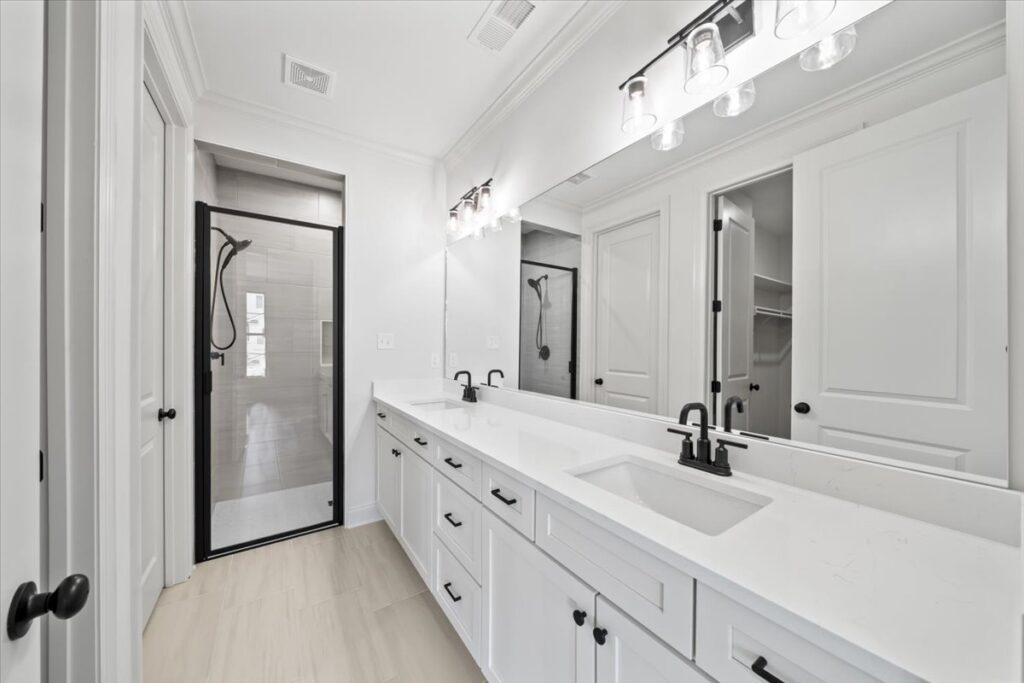
Beyond that, consider swapping out the faucet if it’s dated. A new faucet in brushed nickel or matte black runs $60 to $120 and takes about an hour to install. If your vanity mirror is one of those big frameless builder-grade plates, you can either replace it with a framed mirror or add a frame to the existing one. Both options are cheap and make the bathroom feel more intentional.

Paint and flooring change everything

If you could only do two things before listing, these should probably be the two.

Paint

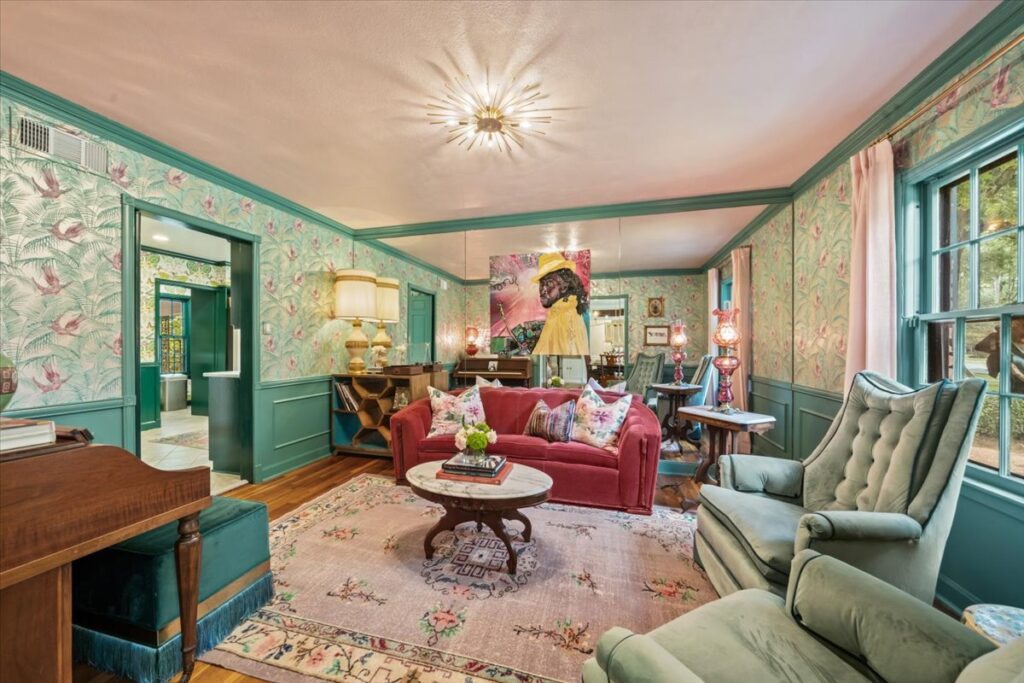
A fresh coat of paint makes a house feel new. Go neutral. Greige (that grey-beige blend), light taupe, and soft ivory all work because they appeal to the widest range of buyers and let people imagine their own furniture in the space. Avoid anything too bold or too personal. That dark green accent wall you love might be the reason a buyer moves on to the next listing.

Use a satin or eggshell finish for durability and a slight sheen that hides small imperfections. Don’t forget the baseboards, door trim, and ceiling edges. Scuffed-up trim makes fresh wall paint look worse by comparison.

One word of caution that we’ve seen bite sellers in the Memphis market: don’t paint over original wood trim, doors, or cabinets. Some buyers will pay more for a house with unpainted wood details, and painting over them is nearly impossible to undo. If the wood looks tired, clean it and apply a fresh coat of polyurethane instead.

Flooring

Worn carpet is one of the first things buyers notice and one of the last things they forgive. If your carpet is stained or matted, either have it professionally cleaned or replace it. New neutral carpet is surprisingly affordable and makes bedrooms feel fresh.

For common areas, Luxury Vinyl Plank has become the go-to flooring choice in the Memphis market. It looks like hardwood, handles humidity and spills, and costs a fraction of the real thing. If you already have hardwood floors, get them refinished. Original hardwoods are a selling point that buyers in Germantown, Collierville, and East Memphis respond to.

Consistency matters here. Five different flooring types across seven rooms makes a house feel choppy. The more continuity you have in your flooring, the bigger and more cohesive the space feels.

Declutter and take yourself out of the house

This one is free, and it might be the hardest to do. When a buyer walks through your house, they need to picture their life there, not yours. That means packing up family photos, personal collections, kids’ artwork on the fridge, and anything that stamps the house as specifically yours.

Reduce your furniture too. Most rooms have more furniture in them than they need for a showing. Pulling out a side table, an extra chair, or that oversized bookshelf makes rooms feel larger and lets buyers see the actual space.

Closets matter more than you might expect. Buyers open them. If your closets are stuffed to the point where you can’t see the back wall, it signals that the house doesn’t have enough storage. Thin out your closets to about half capacity. Use matching bins or baskets on the shelves for a clean, organized look.

A detail that’s easy to overlook: light bulb color temperature. This sounds minor, but mismatched bulbs (one warm yellow, one cool white in the same room) make a space feel off. Use warm-toned bulbs in living areas and bedrooms, neutral in bathrooms, and daylight bulbs in laundry rooms and closets.

The artwork trick

Here’s an interesting one. A Samsung-commissioned survey found that 43% of potential buyers said well-chosen artwork on the walls would make them more likely to increase their offer. The study estimated that tasteful wall art could add roughly $8,800 to the perceived value of a home.

Take that specific number with a grain of salt, but the principle is sound. Bare walls feel cold. Too-personal art feels like someone else’s house. A few well-scaled, neutral pieces (landscapes, abstract prints in muted colors, simple compositions) help a room feel finished and livable without being distracting. You can find affordable framed prints at HomeGoods or Target for $20 to $40 each.

Fix the small stuff buyers notice

A dripping faucet won’t tank your sale, but it will plant a question in a buyer’s mind: what else hasn’t been maintained? Small repairs send a signal about the overall condition of the house, and that signal matters.

Walk through your house and look for these:

  • Leaky faucets or running toilets
  • Squeaky doors or loose handles
  • Windows that stick or won’t lock
  • Burnt-out light bulbs (every single one)
  • Scuffed walls or nail holes that haven’t been patched
  • Cracked or missing outlet covers (these cost about a dollar each and make a bigger visual difference than you’d expect)

If your HVAC hasn’t been serviced recently, schedule it before you list. Change the air filters. Buyers in the Memphis area know that summers here are brutal, and they’ll ask about the AC system. A recent service record removes a worry from their list.

Check the exterior too. Peeling paint on trim, a fence board that’s rotting, or a screen door that doesn’t close right are all things that show up in photos and during walkthroughs. None of these are expensive fixes, but skipping them adds up to an overall impression of deferred maintenance.

Frequently asked questions

What’s the most cost-effective upgrade before selling? Fresh paint and landscaping. Both are cheap relative to the impact they have. A full interior paint job in neutral colors runs $2,000 to $4,000 for a typical Memphis-area home, and it makes everything else in the house look better. Fresh mulch, trimmed beds, and a clean driveway can be done for under $200.

Should I renovate my kitchen before listing? Probably not. Full kitchen renovations are expensive, and you rarely get the full cost back in a higher sale price. Small updates (new hardware, backsplash, under-cabinet lights, clean counters) give you most of the visual improvement for a fraction of the cost.

Do I need to stage my home? It depends. If you’re still living in the house, decluttering and depersonalizing often gets you most of the way there. If the house is vacant, staging the living room, kitchen, and primary bedroom is worth considering. Empty rooms photograph poorly and can make a house feel smaller than it is.

What paint colors do buyers want? Neutrals. Greige, light taupe, soft ivory, and warm grey are all safe. Avoid anything bright, dark, or highly specific. You want a clean backdrop that lets buyers fill in the blanks.

How long before listing should I start upgrades? Give yourself four to six weeks. That’s enough time to paint, handle repairs, pressure wash, update fixtures, and declutter without rushing. If you’re doing flooring, start earlier since install and curing can eat into your timeline.

Does replacing flooring increase home value? It can. New LVP or refinished hardwoods are almost always worth the investment. Stained or worn carpet is one of the most common objections buyers raise, and removing that objection before they walk through the door keeps attention on the things you want them to notice.

Where to start

If this list feels long, don’t try to do everything at once. Talk to your real estate agent before you spend a dollar. A good agent will walk through your house with you, point out the things that buyers in your specific market and price range actually care about, and help you skip the stuff that won’t move the needle.

At Reid Realtors, we do this with every seller we work with. Our team includes former home builders who know the difference between an upgrade that pays for itself and one that just costs you money. We’ve helped homeowners across Germantown, Memphis, Bartlett, Collierville, and the surrounding areas get their homes ready to sell for more than two decades.

Call us at (901) 372-8500 to set up a walkthrough. We’ll tell you exactly what to fix, what to skip, and what your home could sell for once it’s ready.

No Comments

Downsizing Your Home in Memphis

If you’ve been rattling around in a house that feels too big for just the two of you (or just you), you’re not alone. Downsizing your home is one of the most common real estate moves Memphis homeowners make once the kids are gone, retirement gets closer, or the upkeep on a bigger place starts feeling like a second job.

But it’s also one of the most personal decisions you’ll ever make about real estate. There’s money involved, obviously. There’s also a whole pile of emotions that nobody really prepares you for. And there are practical details that can turn a smart financial move into a headache if you don’t think them through.

Here’s what we see Memphis homeowners deal with when they’re weighing whether to downsize, and what you should know before putting up a sign.

Why so many Memphis homeowners are downsizing right now

The numbers are hard to ignore. According to Census data and Realtor.com, nearly 12,000 Americans turn 65 every single day, and that pace holds for the next two years. About 15% of older Americans say they’re planning to retire this year, with another 23% targeting 2027.

That wave of retirements is driving a lot of housing decisions. When the daily commute goes away, so does the main reason many people stayed in a particular house or neighborhood. The four-bedroom place near the office that made sense at 45 doesn’t always make sense at 65.
In the Memphis area, this lines up with another factor: longtime homeowners have been sitting on rising property values for years. If you bought in Germantown or East Memphis 15 or 20 years ago, your home is probably worth considerably more than what you paid. That built-up equity gives you options you might not realize you have.

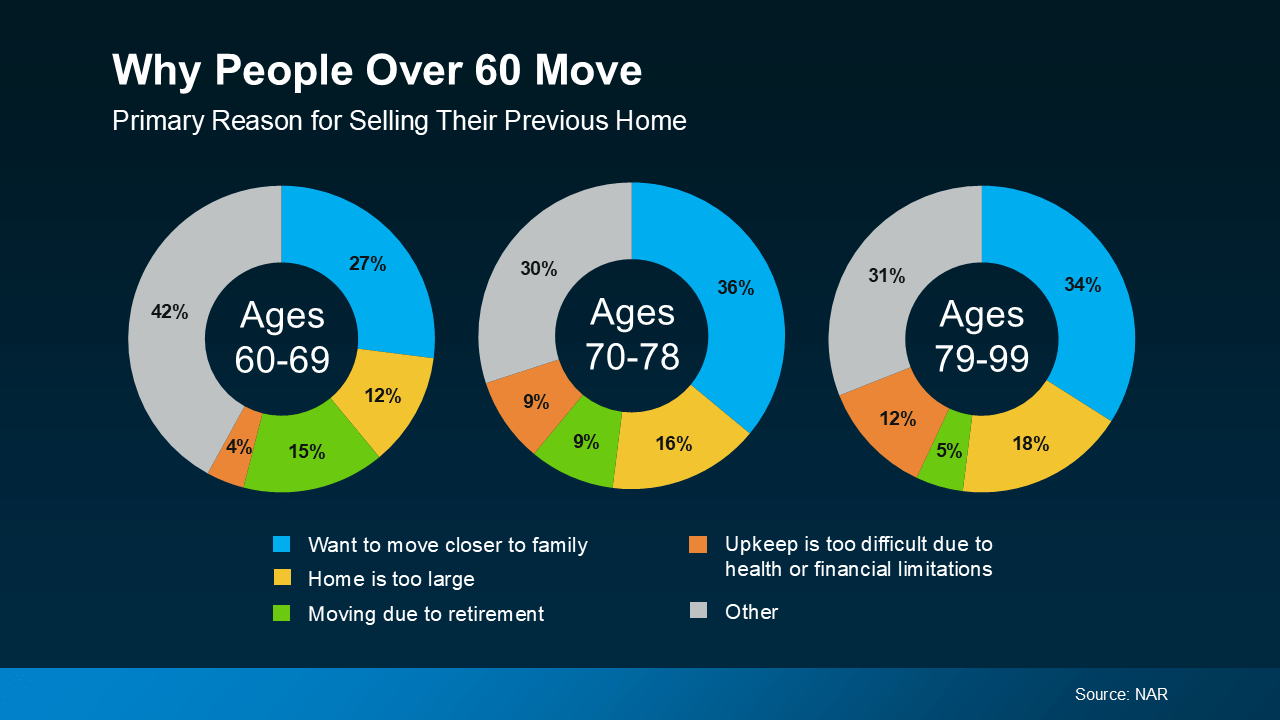
The National Association of Realtors tracks why people over 60 move, and the top reasons aren’t about cashing in on a hot market. They’re about lifestyle. People want to be closer to family. They want fewer stairs and less yard work. They want to stop spending weekends on maintenance and start spending them on the things they actually enjoy.

 a graph of age groups

The financial picture

Let’s talk money, because for most people that’s where the downsizing conversation either gets real or stalls out.

According to Cotality (formerly CoreLogic), the average American homeowner has about $299,000 in home equity. If you’ve owned your home for a long time, your number could be significantly higher, especially if your mortgage is paid off or nearly there.

That equity is the engine that makes downsizing work financially. When you sell a larger, more expensive home and buy something smaller, the difference in price goes into your pocket. Depending on the gap, that could mean paying cash for the next place, adding a meaningful chunk to retirement savings, or both.

But the sale price is only part of the equation. The ongoing monthly savings add up fast.

A smaller home means lower property taxes. In Shelby County, that difference can be hundreds of dollars a year depending on where you move and the assessed value of the new place. You’ll spend less on utilities. Less on insurance. Less on general maintenance and repairs. If you move from a house with a big yard to a townhome or a property with an HOA that handles exterior upkeep, you can also subtract the cost of lawn care, gutter cleaning, and the other weekend tasks that eat into your time.

For a lot of retirees, the savings from downsizing don’t just reduce expenses. They change what’s possible. That’s travel money. That’s helping a grandchild with college. That’s breathing room in a budget that felt tighter than it should.

One scenario worth thinking through: if downsizing reduces your monthly housing costs by $500, that money invested over 15-20 years compounds into a meaningful amount. Or, put differently, it’s $6,000 a year you weren’t spending on a house you didn’t need.

The emotional side of leaving

Here’s the part that catches people off guard. You can run the numbers, agree that downsizing makes perfect financial sense, and still feel a pit in your stomach when you think about actually doing it.

That’s normal. You raised your kids in this house. You know every creaky floorboard. The pencil marks on the doorframe where you tracked how tall the grandkids were getting. The kitchen where you’ve hosted every Thanksgiving for 20 years.

Leaving those things behind is hard, and anyone who tells you it’s just a house is being dismissive.

A few things that help.

Give yourself time. This isn’t a decision you need to make in a weekend. Homeowners who start thinking about downsizing a year or two before they actually do it tend to be happier with the outcome than people who rush into it.

Separate the stuff from the memories. The house holds memories, but you take the memories with you. The physical objects are a different conversation. Before you even think about listing, go through your belongings room by room. Keep what you’ll actually use in a smaller space. Give sentimental items to family members who’ll appreciate them. Sell what has value. And let go of the rest. Doing this before you list takes enormous pressure off the moving process.

Your family might have opinions. Adult children sometimes feel weird about their parents selling the house they grew up in. That’s understandable. But this is your decision, based on your life and your finances. Most family members come around once they see how much happier you are after the move.

One observation from working with downsizers over the years: the anticipation of leaving is almost always harder than the actual leaving. We’ve watched hundreds of families make this move, and the overwhelming majority say the same thing a few months later. They wish they’d done it sooner.

Signs downsizing is right for you

Not everyone should downsize, and not every moment is the right time. Here are the situations where it tends to make the most sense.

You have rooms nobody uses. If you’re heating and cooling bedrooms that haven’t had a person sleep in them for years, you’re paying for space you don’t need. That’s a straightforward one.

Maintenance is becoming a burden. The yard work, the roof repairs, the gutters, the HVAC system that needs replacing. If keeping up with the house feels more like an obligation than a source of pride, that’s telling you something.

The house doesn’t fit your body anymore. This is the one people don’t like to talk about, but it matters. Stairs become a concern as you get older. A big yard becomes harder to manage. A two-story home with the laundry in the basement and the bedrooms on the second floor is a different experience at 70 than it was at 40.

You’d rather spend money on living than on housing. When you start doing the math and realize how much of your retirement budget goes to a house that’s bigger than what you need, the trade-off gets obvious.

On the other hand, if you still love the space, use most of the rooms, and feel comfortable with the maintenance costs, there’s no rule that says you have to downsize. Downsizing is only a good move when it actually improves your life.

Where Memphis downsizers tend to go

Most people who downsize in the Memphis area don’t leave the metro. They move to something smaller and more manageable, usually in a neighborhood they already know and like.

Germantown and Collierville both have townhome and condo developments that attract downsizers. These tend to offer single-level living, smaller yards or HOA-maintained exteriors, and proximity to the restaurants and shopping that people in those communities are used to.

Cordova has newer single-story homes in the moderate price range that work well for people coming out of a larger house. Bartlett and Arlington offer similar options, sometimes with a bit more land if you’re not ready to give up outdoor space entirely.

For people who want a change of scenery, some Memphis downsizers move closer to Midtown or Downtown, especially those drawn to walkability and being near the cultural core of the city. That’s a bigger lifestyle shift, but it appeals to retirees who are done with suburban commuting and want their neighborhood to feel active.

And then there are people who leave Memphis altogether. Florida, the Carolinas, and the Tennessee mountains all pull Memphis retirees. If relocation is on your mind, the equity in your Memphis home can go a long way in markets where housing costs are lower.

The point is, downsizing doesn’t have to mean moving across town to a place you’ve never been. For most people, it means staying in the same general area but in a home that better fits their life right now.

Getting your home ready to sell

If you’ve decided to move forward, the selling process for a long-owned home has some quirks you should be aware of.

Start with decluttering. This is different from packing, and it should happen well before you list. The more stuff you remove from the house, the bigger and cleaner it looks to buyers. Closets, garages, attics, spare bedrooms, the basement — everything gets lighter. Buyers need to picture their life in your space, and that’s hard when every surface is covered.

The four-category approach works: keep, give, sell, trash. Be honest with yourself during this process. If you haven’t touched something in five years and it’s not a family heirloom, it probably goes in the sell or trash pile.

Don’t over-renovate. A full kitchen remodel before listing rarely makes financial sense. But small updates do. Fresh neutral paint. Replacing dated light fixtures. Pressure washing the driveway and front walkway. Cleaning carpets or refinishing hardwood floors. These are the kinds of affordable fixes that change how a buyer feels about a home.

Get professional photos taken. If your agent doesn’t include professional photography as part of their listing package, that should give you pause. NAR data shows that 83% of buyers say photos are the most useful feature on a property listing. Your home needs to look its best online because that’s where the first impression happens.

And price it based on current data. Not what your neighbor got two years ago. Not what Zillow says. A comparative market analysis from an agent who sells in your neighborhood regularly is the only reliable way to set a price that attracts buyers without leaving money on the table.

Costs that catch people off guard

Downsizing saves money over time, but the transition itself has costs that are easy to overlook.

Selling your home comes with closing costs, typically 6-10% of the sale price when you factor in agent commissions, title fees, transfer taxes, and any repairs negotiated during the inspection. On a $300,000 home, that’s $18,000-$30,000.

Moving expenses add up, especially if you’re moving furniture that’s been in the same place for decades. Professional movers in the Memphis area typically charge $2,000-$5,000 for a local move, more if you’re going out of state.

Your existing furniture might not fit. That oversized sectional or the king-size bedroom set may not work in a smaller floor plan. Budget for some replacement pieces.

If there’s a gap between selling your current home and closing on the new one, you may need temporary housing or storage. Both cost money.

And here’s one that surprises people: property taxes on a newer or recently updated smaller home can sometimes be comparable to what you were paying on your older, larger home, depending on assessed values in the new neighborhood. Run the numbers before assuming everything drops.

None of these costs should stop you from downsizing if the long-term math works out. But knowing about them in advance means no surprises at closing.

Start with a conversation

Downsizing is a big decision, but the first step is small. You don’t need to commit to anything. You just need information.

What is your current home actually worth? What would a smaller home in the neighborhoods you like cost right now? What does the math look like after selling costs and the transition? These are questions an experienced agent can answer in one meeting.

At Reid Realtors, we’ve been helping Memphis-area families with exactly this kind of move for three generations. We’ll walk your property, talk through the numbers, and give you an honest picture of what downsizing could look like for your situation. No pressure, no sales pitch. Just a conversation about your options.

Call us at (901) 372-8500 or stop by our Germantown office. Whenever you’re ready, we’re here.

No Comments

How Home Equity Can Work for You

If you’ve owned your home for a few years, there’s a good chance you’re sitting on more money than you think. Not cash in a savings account, but equity, the share of your home you actually own free and clear.

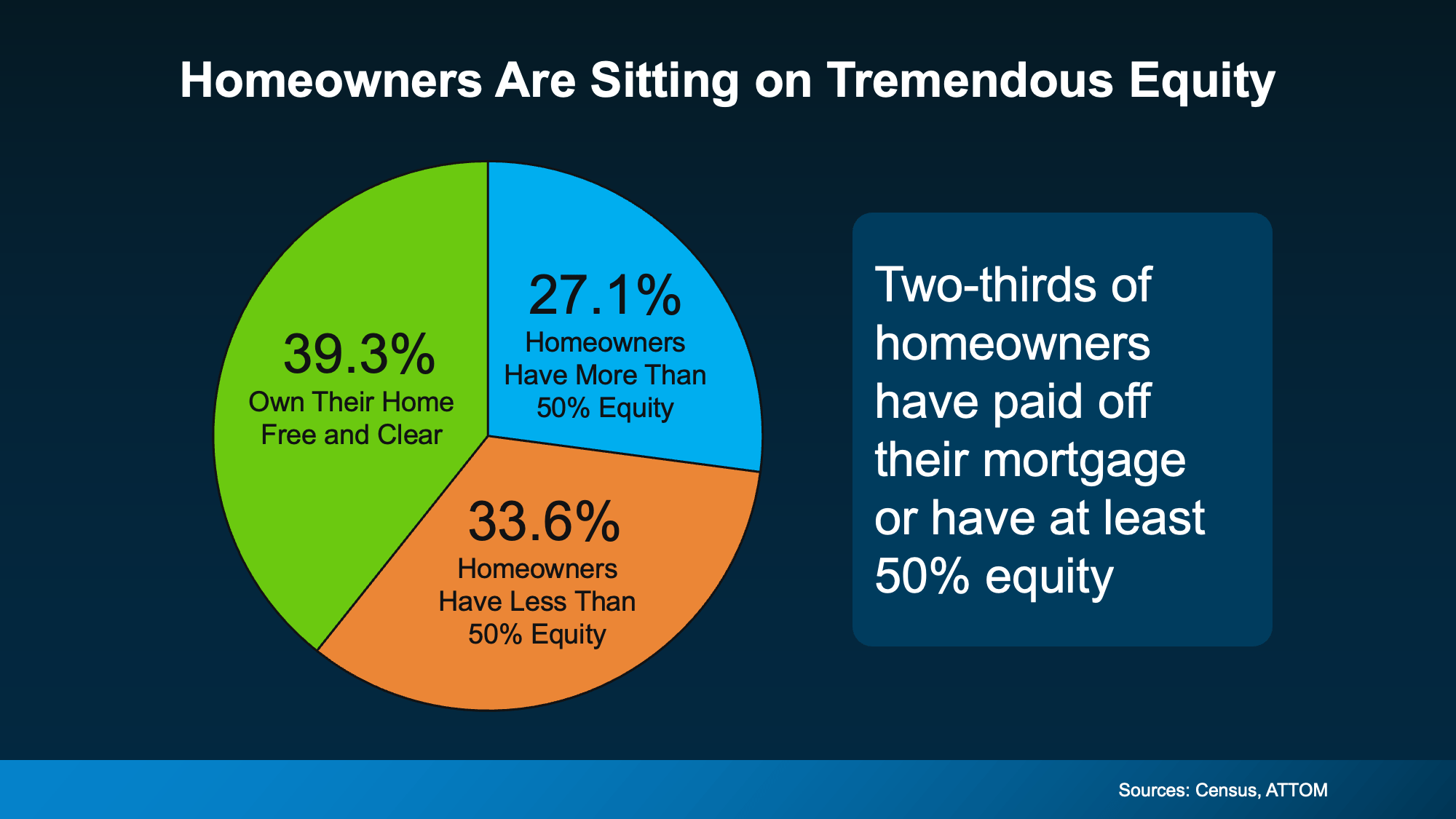
Two-thirds of American homeowners have significant equity right now, according to Census and ATTOM data. About 39% own their homes outright, and another 27% have at least 50% equity built up. The typical homeowner has close to $300,000 in equity, per Cotality. That’s real money, even if it doesn’t feel like it because you can’t see it in your bank balance.

But here’s where things get tricky. Having equity and knowing how to use home equity wisely are two very different things. Tapping into it at the wrong time or for the wrong reasons can cost you thousands, or worse, put your home at risk. So let’s walk through your actual options, what they cost, and when each one makes sense.

a pie chart with numbers and text

What home equity is and how to calculate yours

Home equity is simple math. Take what your home is worth today and subtract what you still owe on your mortgage. The difference is your equity.

Say you bought a home for $350,000 with a $280,000 mortgage. You’ve paid the balance down to $220,000 over the years, and your home has appreciated to $400,000. Your equity is $180,000.

Two things build equity over time. First, every mortgage payment chips away at your loan balance. Second, if your local market pushes home values up, your equity grows without you doing anything at all. Most homeowners benefit from both simultaneously.

One catch worth knowing: the equity number you calculate at home is an estimate. Lenders require a formal appraisal before they’ll let you borrow against it. Your neighbor’s sale price gives you a ballpark, but the appraiser’s number is the one that counts.

Four ways to access your home equity

You can’t just withdraw equity like money from an ATM. You have to borrow against it, and each borrowing method works differently. Here’s what you’re actually choosing between.

Cash-out refinance

A cash-out refinance replaces your current mortgage with a new, larger one. You use part of the new loan to pay off the old mortgage and pocket the rest as cash.

This sounds clean on paper, but the details matter. Your new loan comes with a new interest rate, new terms, and potentially a longer repayment timeline. If you locked in a 3% mortgage a few years ago and today’s rates are hovering around 6-7%, a cash-out refi means giving up that low rate on your entire balance, not just the cash you’re pulling out.

That trade-off hits hard. On a $300,000 mortgage, the difference between 3% and 7% adds up to hundreds of extra dollars every month for the next 30 years.

A cash-out refinance works best when current rates are close to (or lower than) your existing rate, or when you need a large lump sum and the math still pencils out after factoring in the rate change.

Home equity loan

A home equity loan is a second mortgage. You keep your existing mortgage exactly as it is and take out a separate loan against your equity. You get the money in one lump sum, typically at a fixed interest rate, with a fixed repayment term between 5 and 30 years.

The upside here is predictability. Fixed rate, fixed payment, same amount due every month until it’s paid off. You also don’t touch your original mortgage rate, which matters a lot if you locked in something low.

The downside is you now have two monthly mortgage payments. And because it’s a second lien (meaning your first mortgage gets paid before it does if things go sideways), interest rates on home equity loans tend to run higher than first mortgages.

Home equity loans make the most sense when you know exactly how much money you need upfront, like for a specific renovation project or a one-time expense.

Home equity line of credit (HELOC)

A HELOC also uses your home as collateral, but instead of a lump sum, you get a revolving line of credit. Think of it like a credit card backed by your house. You draw money as you need it, up to your approved limit, and you only pay interest on what you actually borrow.

HELOCs come in two phases. During the draw period (usually 5-10 years), you can borrow and repay freely, with payments often covering just interest. After that, you enter the repayment period (usually 10-15 years), where you pay back principal and interest on whatever balance remains.

There’s one thing that trips people up with HELOCs: most carry variable interest rates. Your payment can change month to month based on market conditions. That initial low rate might climb over the life of the loan. Some lenders offer fixed-rate options on portions of your HELOC balance, so ask about that if rate predictability matters to you.

A home equity line of credit works well for ongoing expenses or projects that happen in phases, like a multi-room renovation where costs come in waves over several months.

Reverse mortgage

Reverse mortgages are designed specifically for homeowners 62 and older. Instead of making monthly payments to a lender, the lender pays you, either as a lump sum, monthly installments, or a line of credit. You don’t repay the loan until you sell the home, move out, or pass away.

There’s no monthly mortgage payment, but you still have to cover property taxes, homeowners insurance, and home maintenance. Miss those obligations and you can face foreclosure just like with any other mortgage product.

Your loan balance grows over time because interest and fees get added to what you owe each month. That means your equity shrinks as the years pass. By law, you’ll never owe more than 95% of your home’s appraised value when the loan comes due, but your heirs will need to deal with the remaining balance, usually by selling the home.

Closing costs on reverse mortgages run higher than other options because borrowers are required to pay mortgage insurance. You’re also required to meet with a HUD-approved housing counselor before you can take one out, which is actually a good thing.

Reverse mortgages fit a narrow situation: retirees who plan to stay in their home long-term, need supplemental income, and aren’t focused on leaving the property to their children debt-free.

Smart ways to use home equity

Having access to equity is one thing. Spending it wisely is another. Here are the uses that tend to make financial sense.

Home improvements that add value

Reinvesting equity back into your property is one of the more logical uses because done right, you’re increasing the home’s value while also improving your living situation. Kitchen and bathroom renovations consistently return a good chunk of their cost at resale.

The key word there is “done right.” Not every renovation pays for itself. A $50,000 backyard pool might make your summers better, but it won’t add $50,000 to your home’s sale price. Talk to a local real estate agent before you start any major project so you can prioritize updates that actually move the needle when it’s time to sell.

Debt consolidation (with a big asterisk)

If you’re carrying high-interest credit card debt at 18-24% APR, replacing it with a home equity loan at 7-9% can save you a significant amount in interest. The math works on paper.

But this strategy has a serious risk baked in. You’re converting unsecured debt into debt secured by your home. If you can’t make the payments on a credit card, your credit score takes a hit. If you can’t make the payments on a home equity loan, you could lose your house.

There’s also a behavioral trap. Plenty of people consolidate their credit card debt using home equity, then run those credit cards right back up because the underlying spending habits haven’t changed. Now they have both the home equity loan and new credit card debt, which is a worse position than where they started.

Consolidation makes sense only when the interest rate savings are substantial and you’ve genuinely addressed whatever caused the debt in the first place.

Funding a major life expense

Some homeowners use equity to start a business, cover education costs, or help a family member with a down payment on their own home. These can be reasonable uses, especially when the alternative is higher-interest borrowing.

College tuition is a common one. Home equity loan and HELOC rates are typically lower than private student loan rates, and the interest may be tax-deductible if the funds are used for certain qualified purposes (check with a tax advisor on your specific situation).

Moving to a home that fits your life

If you’ve outgrown your current place or the kids have moved out and you’re rattling around in too much space, your equity can fund the down payment on the next home. Some homeowners in high-equity positions can buy their next house outright with cash from their sale.

This isn’t technically “tapping” equity through a loan product. You’re accessing it by selling. But it’s worth mentioning because selling is the cleanest, simplest way to turn equity into money, with no new debt attached.

When you should leave your equity alone

Not every situation calls for touching your equity, and honestly, some of the most common reasons people consider it don’t hold up under scrutiny.

Your existing debts have lower rates than what you’d borrow at

This is the scenario that catches a lot of people off guard. If you’re carrying debts at 4%, 5%, and 6%, and the best HELOC or home equity loan rate you can find is 7% or higher, consolidating those debts into a home equity product means you’re paying more interest, not less. You’re also moving from unsecured debt to debt secured by your home. That’s a bad trade in both directions.

You want to free up monthly cash flow without a real plan

Stretching payments over a longer term through equity borrowing can lower your monthly bills, but you’ll pay significantly more in total interest over time. If the goal is cash flow relief, look at your budget first. Cutting expenses or increasing income solves the problem without adding risk to your home.

The improvements are cosmetic and you have young kids

This one’s practical. If your children are still in the phase where walls get crayoned and floors get abused, expensive cosmetic renovations are going to take a beating before you see any return. Wait until the wear-and-tear years pass. Structural issues like a failing roof or foundation problems are different, those shouldn’t wait regardless.

You’re treating equity like a savings account

One of the most common misconceptions about home equity is that it’s money “just sitting there” waiting to be used. It’s not. Equity is wealth on paper that you can only access by taking on new debt or selling your home. Borrowing against it reduces your ownership stake and comes with interest, fees, and risk. Treat it as a last resort or a strategic tool, not a piggy bank.

The 20% equity rule

Regardless of which option you choose, most financial professionals recommend keeping at least 20% equity in your home at all times. This serves as a financial cushion if home values dip and helps you avoid owing more than your home is worth, a painful situation many homeowners experienced during the 2008 crash.

The good news is that most homeowners today are well above that threshold. According to the Intercontinental Exchange, mortgage holders collectively have $17.3 trillion in home equity, with $11.2 trillion considered “tappable” equity, meaning it can be accessed while still maintaining that 20% buffer.

Your lender will enforce their own version of this rule. Most won’t let you borrow more than 80-90% of your home’s value across all loans combined.

Costs you need to factor in

Every equity product comes with upfront costs that eat into the money you actually receive. Budget for these before you commit.

Closing costs on home equity loans, HELOCs, and cash-out refinances typically range from 3-6% of the loan amount. On a $100,000 loan, that’s $3,000-$6,000 before you’ve spent a dime on whatever you’re borrowing for.

You’ll likely pay for an appraisal, origination fees, title search, and credit report fees at minimum. Reverse mortgages tend to have the highest closing costs of the bunch because of the required mortgage insurance premium.

If you plan to sell your home within the next couple of years, these upfront costs may not be worth it. You’d be paying thousands to access money for a short period before the loan gets paid off at closing anyway. In that case, a HELOC with lower upfront costs might make more sense than a full refinance, or you might be better off just waiting to sell.

Before you borrow against your home

If you’re seriously considering using your equity, take two steps before you sign anything.

First, get a realistic picture of how much equity you actually have. Ask a local real estate agent for a market analysis of your home, or look at recent comparable sales in your area. This won’t replace the formal appraisal your lender will require, but it gives you a starting point.

Second, talk to a financial advisor. They can help you evaluate whether borrowing against your home is the right move for your specific situation, or whether there’s a better option you haven’t considered. This is especially important for retirees looking at reverse mortgages, where the long-term implications are significant.

The interest you pay on home equity products may be tax-deductible if the funds are used for home improvements, but the rules have specific requirements. A tax advisor can tell you whether your planned use qualifies.

Bottom line

Your home equity is probably one of the largest financial assets you have. That makes it worth protecting. Used strategically, for the right purpose and at the right time, it can fund renovations, eliminate expensive debt, or help you make a major life transition. Used carelessly, it can pile on debt and put your home at risk. The best use of equity is one where you’ve done the math, compared the rates, understood the fees, and have a clear plan for repayment. If the numbers don’t work in your favor right now, sitting tight is a perfectly valid financial decision. Your equity isn’t going anywhere.

No Comments

Your House Didn’t Sell. Here’s What To Do Now.

When your house doesn’t sell, it stings. You spent weeks getting the place ready. You told friends and family about the move. You started browsing homes in the neighborhood you had your eye on. And then your listing expired without a single solid offer.

Frustrating? Sure. Embarrassing? Maybe a little. But your house not selling the first time doesn’t mean it won’t sell. It usually means the strategy needs to change, not the house.

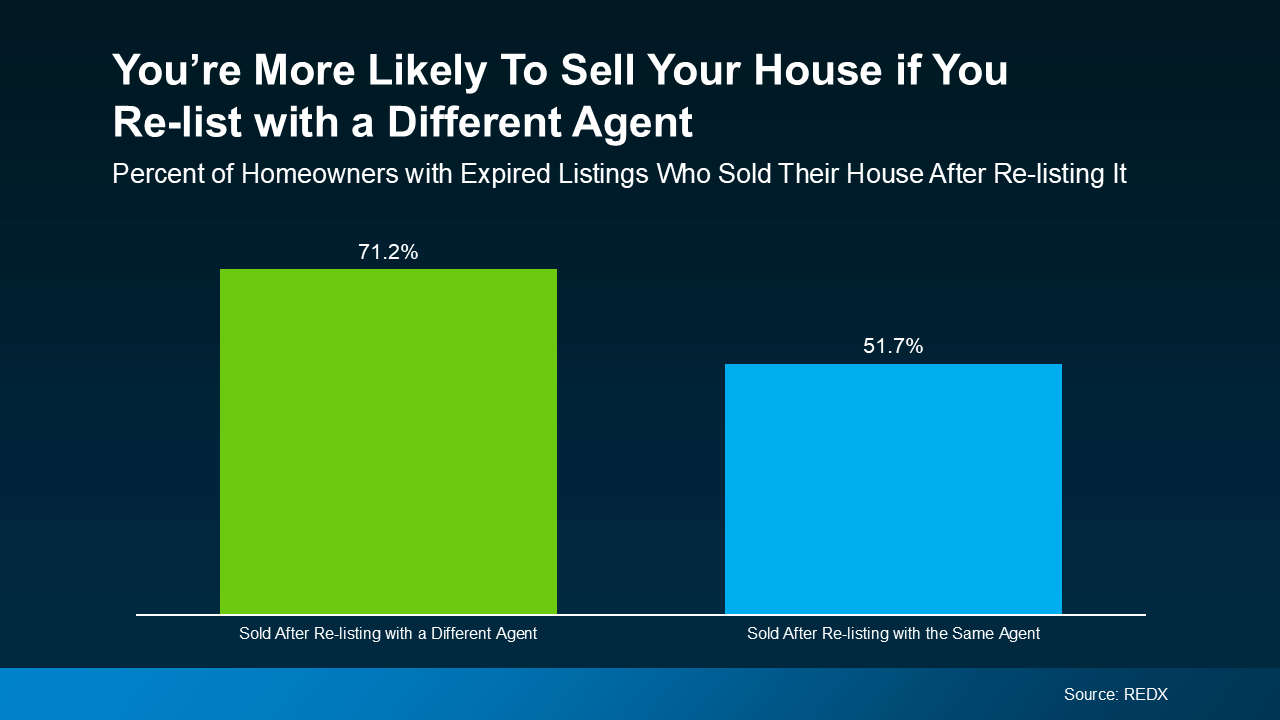
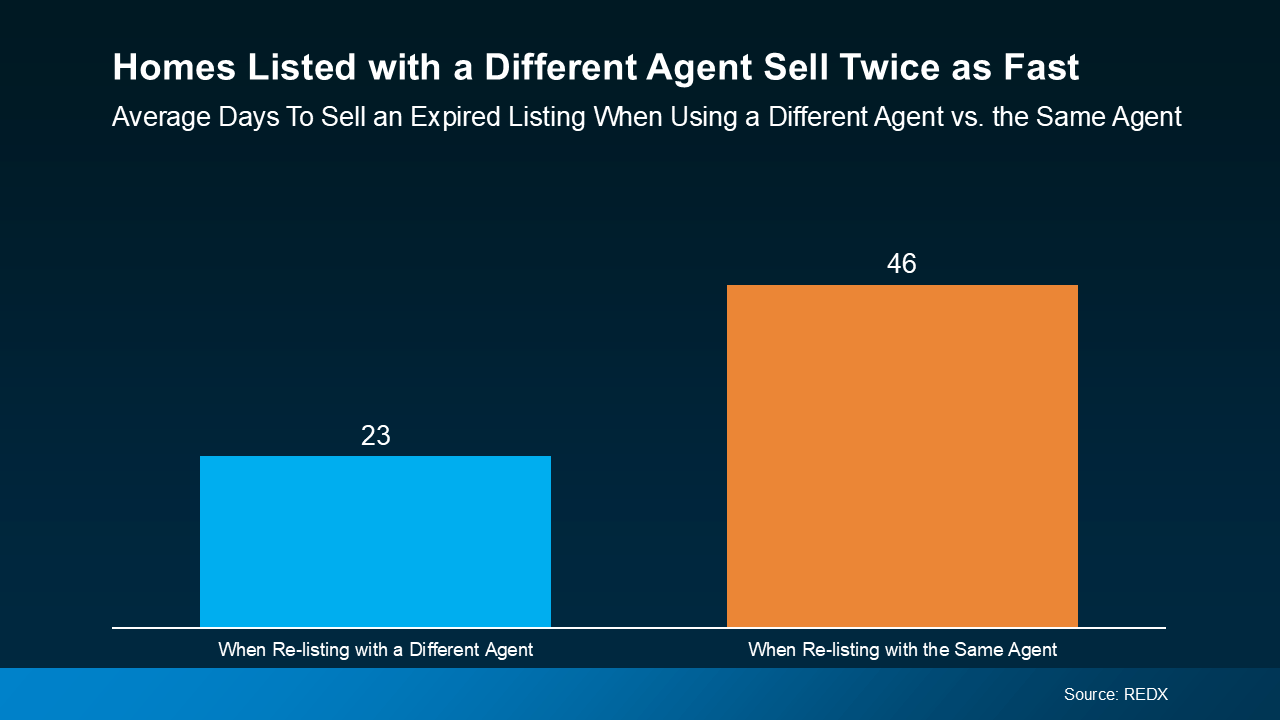
Research from REDX found that homeowners who re-list with a different agent sell at a significantly higher rate than those who stick with the same one. Same house, different approach.

So if your listing just expired in Memphis, Germantown, Collierville, or anywhere nearby, don’t panic. Let’s talk about what might have gone wrong and what a better second attempt looks like.

Pricing problems kill more listings than anything else

If there’s one factor that shows up in almost every unsold listing, it’s price. In a HomeLight survey, 77% of top agents pointed to overpricing as the number one reason homes sit on the market.

A lot of sellers price their home based on what a neighbor got a year or two ago. That worked in 2021, when buyers were waiving inspections and paying well above asking. The Memphis market has shifted since then. Mortgage rates changed the math for buyers, and even a home priced 5% too high can get passed over entirely.

Here’s how it usually plays out. Your home hits the market and gets the most attention in those first two weeks. Buyers browse by price range, and if your listing doesn’t stack up against comparable homes in that bracket, they scroll past. By day 30, the listing looks stale. By day 60, buyers start assuming something is wrong with it.

The frustrating part? This has nothing to do with your home’s actual condition. It’s a perception problem created by one bad number.

The fix here is a comparative market analysis from an agent who knows your specific neighborhood. Not a Zestimate. Not what your coworker’s house went for in Bartlett last spring. You need pricing based on what’s selling right now, including active listings competing with yours and sales that closed in the last 30 to 60 days.

According to HousingWire, many sellers who re-listed only had to adjust by about 4% to get real traction. That’s not a huge move, but it can open the door to buyers who weren’t seeing your home before.

One thing people overlook: buyers search in price brackets, usually $25,000 or $50,000 increments. If your home is at $327,000, dropping to $299,000 puts you in front of a completely different group of buyers who never would have seen your listing.

Your home didn’t make a strong first impression

First impressions in real estate start online. Before a buyer steps foot in your house, they’ve already decided whether it’s worth visiting based on listing photos. That decision takes about three seconds.

If the photos were dark, cluttered, or taken with a phone camera, a lot of buyers scrolled right past. According to NAR, 83% of buyers say professional listing photos are the most useful feature on a property website. That’s the bare minimum now.

Then there’s the in-person experience. Scuffed walls. Dated light fixtures. A front yard that needs attention. A house that smells like last night’s dinner. None of these are dealbreakers on paper, but they stack up. Buyers aren’t just looking at square footage. They’re trying to picture themselves living there, and those little things make that harder.

So walk through your home like you’ve never been inside before. Better yet, have your agent do it and be brutally honest with you. Look at the things you’ve stopped noticing because you see them every day.

A lot of the fixes are cheap. Neutral paint. Swap a dated ceiling fan. Pull heavy curtains and let some light in. Clear off the countertops. These aren’t renovations. They’re the kind of afternoon projects that change how a buyer feels when they walk in.

And if you didn’t have professional photos the first time, fix that before anything else. Professional photography, video walkthroughs, drone footage for homes with bigger lots — these are standard now for agents who consistently move homes.


The marketing didn’t reach the right buyers

Putting your home on the MLS and waiting for calls worked 15 years ago. If your marketing was limited to a yard sign, a few online photos, and maybe an open house, your home probably wasn’t getting seen by enough people.

Buyers today start on their phones. They’re scrolling Zillow, saving listings, sharing links with their partner before they ever talk to an agent. If your listing didn’t grab attention in that scroll, it basically didn’t exist for them.

But being online isn’t enough on its own. Your listing needs to get in front of the right buyers at the right time. That means targeted digital ads, a real social media push (not just one Facebook post), and sometimes direct outreach to agents working with qualified buyers in your price range.

When you talk to your next agent, ask them to walk you through their marketing plan for your property specifically. Not a general capabilities brochure. A plan with a timeline. What happens in week one? Week two? What platforms, what targeting? If they can’t give you that level of detail, they’re probably planning to list it and wait.

You weren’t open to negotiating

Holding firm on price and terms works when you’ve got five offers on the table. In the current market, buyers have more options and tighter budgets. A lot of them expect some back-and-forth before signing.

If your last round included offers that fell apart over repair requests or closing costs, that’s worth thinking about. Losing a deal over a $3,000 repair when you’re sitting on tens of thousands in equity is the kind of thing that looks different in hindsight.

Go into your next listing knowing what you’re willing to bend on and where your limits are. The goal is to close. Sometimes that means covering part of the closing costs or handling a minor repair.

Home values across Memphis have gone up considerably over the past five years. You probably have more equity than you realize, which means you can offer some concessions without actually hurting your bottom line. And a good agent will help you look at offers on their full terms, not just the number at the top. The highest offer isn’t always the strongest. The one most likely to actually close is.

Timing worked against you

Real estate has seasons, and they matter more than most sellers think. A listing that launches in late November is going to sit longer than one that hits in April. Not because the home is worse — there are just fewer active buyers during those months.

If your listing went up during a slow stretch, or if the market shifted while you were listed, timing may have played a bigger role than you’d expect.

Talk to a local agent about what the Memphis market looks like right now and when the next strong window for sellers is. Pulling a listing and relaunching with fresh photos, updated pricing, and better timing can produce very different results. Agents who’ve been doing this a long time recommend it regularly.

The agent wasn’t the right fit

Nobody really wants to talk about this one, but it matters. Agents don’t all work the same way. Some are aggressive with marketing, adjust pricing based on feedback, and stay in constant contact. Others put the sign in the yard and wait.

The REDX data is straightforward: sellers who switch agents before re-listing sell at a higher rate. That’s not necessarily a knock on your previous agent. A different perspective, a different buyer network, and a different marketing approach can produce a different outcome.

Treat your next agent search like a job interview, because that’s what it is. Ask about their marketing plan, their average days on market, how they handle pricing, and what specifically they’d change about how your home was presented. Pay attention to whether they’re honest with you or just agreeable. The agents who walk through your house and tell you what needs to change — even when it’s not what you want to hear — tend to be the ones who actually get it sold.


So what now?

If your listing just expired, here’s where to start.

First, take a breath. An expired listing is a data point, not a dead end. You now know what didn’t work, and that’s genuinely useful.

Then get a second opinion from a different agent. Have them look at your property, your pricing, and what they’d change. You’d be surprised how often a fresh set of eyes catches something obvious that everyone involved had stopped seeing.

If buyers who toured your home had consistent complaints, take those seriously. Paint, staging, and better photos are relatively small investments that tend to pay for themselves quickly.

And be honest with yourself about price. If comparable homes in your area are selling below what you were asking, the market is telling you something. You can argue with it, but you won’t win.

Your home can still sell

Most expired listings aren’t the end of the road. The house hasn’t changed. The buyers are still out there. What needs to change is the plan.

If you want a second opinion on your home, our team at Reid Realtors has been helping Memphis-area families buy and sell for three generations. We’ll walk your property, tell you what we think, and put an honest plan together — whether that’s with us or not.


No Comments

Home Inspection Red Flags

You’ve spent weeks — maybe months — scrolling through listings, driving through neighborhoods, and walking through house after house. You finally found the one. The layout works, the neighborhood feels right, and you can already picture where the couch goes.

But before you get too attached, there’s one step that can save you from turning your dream home into a financial nightmare: the home inspection. And more importantly, knowing which findings are minor quirks and which ones are genuine red flags.

Not every issue on an inspection report is a dealbreaker. Every home has something. But certain problems — especially ones common to Memphis-area homes — deserve serious attention before you sign on the dotted line.

Why You Should Never Skip a Home Inspection

It might be tempting to waive the inspection, especially if you’re competing with other buyers on a home in Germantown or Collierville. But skipping this step means you’re essentially buying a property blind. You won’t know the true condition of what’s behind the walls, under the floors, or up on the roof.

A home inspection gives you leverage. If the report uncovers problems, you can negotiate repairs, ask for a price reduction, or walk away entirely. Without it, you’re absorbing every hidden issue at full cost — and some of those costs can reach well into five figures.

Think of the inspection fee (typically a few hundred dollars) as cheap insurance against a $10,000 surprise.

Foundation Problems

The foundation is literally what everything else sits on. When it’s compromised, nothing else in the house is truly stable.

Memphis sits on clay-heavy soil, and clay expands when it’s wet and contracts when it’s dry. That constant movement puts pressure on foundations over time, leading to shifting, cracking, and settling that you won’t find in areas with sandier or rockier ground. It’s one of the most common structural concerns in our market.

What to Watch For

Hairline cracks in concrete are normal — they happen during the curing process and aren’t cause for alarm. Cracks less than an eighth of an inch wide from minor settling can usually be sealed without much expense.

The real concern starts with horizontal cracks in basement or crawl space walls, or diagonal cracks that radiate from the corners of doors and windows. Those patterns suggest the foundation is moving in ways it shouldn’t. Cracks wider than a quarter inch anywhere on the foundation typically require evaluation by a structural engineer.

Other signs of foundation trouble include doors that won’t close properly, uneven floors, and gaps between walls and ceilings. Foundation repair in the Memphis area can run anywhere from a few thousand dollars for minor stabilization to $15,000 or more for major work — so this is one area where you want the full picture before committing.

Roof Condition

Your roof is the barrier between your home and Memphis weather — and Memphis weather doesn’t go easy on roofs. Between summer storms, hail, and heavy rain, roofing materials take a beating.

Age and Material

Your inspector should be able to estimate the roof’s age and identify the material type. Most asphalt shingle roofs last 20 to 25 years with proper maintenance. If the roof is approaching the end of its lifespan, you’re looking at a replacement cost that commonly falls between $8,000 and $20,000 depending on the size and pitch of the home.

Warning Signs

Missing or curling shingles, discolored patches, and areas where shingles don’t match are all indicators of previous damage or patchwork repairs. On the interior, water stains on ceilings — those brownish rings or streaks — often point to an active or recent leak.

One subtle red flag: freshly painted ceilings or differences in ceiling texture between rooms. Sometimes sellers cover up water damage with a coat of paint. Your inspector should be checking the attic space for signs of moisture, daylight coming through, or sagging decking.

Also pay attention to any trees with branches touching or hanging over the roof. Overhanging vegetation traps moisture, scrapes shingles, and gives pests easy access to your home.

Electrical System Issues

Electrical problems aren’t just expensive — they’re dangerous. And in Memphis, where you’ll find everything from brand-new construction in Arlington to century-old homes in Midtown, the range of electrical conditions is wide.

Outdated Wiring

Homes built between the 1880s and 1940s may still have knob-and-tube wiring, which is a serious fire hazard and will almost certainly need to be replaced entirely. Homes from the 1960s and 70s sometimes have aluminum branch circuit wiring, which is another significant concern. Both can lead to higher insurance premiums — or in some cases, difficulty getting insured at all.

Replacing an electrical panel alone can cost around $8,000 or more. A full rewire of an older home pushes that number considerably higher. If you’re looking at a historic Midtown home with original charm, make sure you understand what’s behind the plaster walls before you fall in love with the woodwork.

Other Electrical Red Flags

Outdated fuse boxes (instead of modern breaker panels), two-prong outlets throughout the house, and a lack of GFCI outlets near water sources are all signs that the electrical system needs attention. An older system may also struggle to handle the demands of modern appliances, air conditioning, and electronics.

Plumbing and Sewer Concerns

Plumbing problems can range from a minor annoyance to a catastrophic expense, and the worst ones are often hidden underground or inside walls.

Pipe Material Matters

Homes built before the 1950s may have galvanized pipes — identifiable by their silver-gray color. These pipes were designed to last about 60 years, which means most are living on borrowed time. As they corrode internally, they restrict water flow and can release lead into the drinking water. Replacing galvanized plumbing throughout a house is a significant investment, often $10,000 or more.

Cast iron drain pipes are another concern in older Memphis homes. They’re reliable for 50 to 70 years, but eventually they deteriorate from the inside out. A full replacement can run $30,000 or higher.

Homes built before 1986 may also contain lead pipes, which were banned that year but remain in many older properties across the Memphis area.

Get a Sewer Scope

Even if your home is connected to city sewer (as most Memphis homes are), a separate sewer scope inspection is worth every penny. A camera goes through the main sewer line to check for tree root intrusion, bellies where water pools instead of draining, and obstructions. Sewer line repairs can reach $10,000, and they’re the kind of problem that won’t show up in a standard home inspection unless you specifically request this add-on.

Signs that hint at sewer problems include standing water in the yard, slow drains throughout the house, or heaved sidewalks and walkways near the sewer line.

Mold and Moisture

Memphis humidity is no joke. The combination of warm temperatures and moisture creates ideal conditions for mold growth, particularly in crawl spaces, basements, and poorly ventilated areas.

When Mold Is Normal

Small amounts of mold around bathtub caulking, shower corners, and windowsills are common in any home. These areas see regular moisture and condensation, and a little surface mold there isn’t a red flag on its own.

When Mold Is a Problem

Mold on walls or ceilings outside of bathrooms and kitchens signals something more serious — usually a hidden leak, poor ventilation, or chronic moisture intrusion. If your inspector finds mold in unusual locations, it often means there’s a larger underlying issue that needs to be identified and fixed before the mold itself can be properly addressed.

Crawl spaces deserve special attention in Memphis homes. High humidity can lead to moisture buildup under the house, promoting mold growth on floor joists and subflooring. Your inspector should be going under the house (if accessible) and checking for standing water, moisture on surfaces, and visible mold.

Professional mold remediation can cost anywhere from a few hundred dollars for a small area to several thousand for widespread contamination. But the mold is only half the battle — you also need to fix whatever moisture problem caused it in the first place.

Seller Tricks to Watch For

If you walk into a showing and smell candles, air fresheners, or heavy fragrance, take note. While some sellers just want their home to smell inviting, strong scents can also mask musty odors that indicate mold or mildew. Ask for the scents to be turned off or removed before a second visit.

Termites and Pest Damage

Termites are a fact of life in the Memphis area. The warm, humid climate makes Tennessee one of the more active regions for termite activity in the country, and damage from these pests is both common and costly.

What Inspectors Look For

Signs of termite activity include mud tubes along the foundation, discarded wings near windows and doors, hollow-sounding wood, and bubbling or cracking paint on wood surfaces. However, termite activity isn’t always visible — it can be seasonal, and damage often occurs inside walls and structural members where you can’t see it.

For this reason, many experienced buyers in the Memphis market opt for a separate Wood Destroying Insect (WDI) inspection in addition to the standard home inspection. A general inspector may note signs of pest activity, but a dedicated WDI inspection is more thorough.

Beyond Termites

Squirrels, mice, and rats can cause their own brand of damage — chewing through wiring (creating fire hazards), nesting in walls and attics, and contaminating insulation. If there are gaps or openings along the foundation or roofline, critters will find a way in. Your inspector should note any potential entry points.

Drainage and Grading

Water management around the exterior of a home is one of the most frequently flagged issues in inspection reports, and it’s one that a lot of buyers overlook.

The Basics

The ground around your foundation should slope away from the house for at least five feet. When it doesn’t, rainwater pools against the foundation — and over time, that standing water causes settlement, wood rot, and moisture intrusion into crawl spaces and basements.

Gutter downspouts should extend at least five feet from the foundation or connect to a drainage system. One of the most common problems inspectors find is downspouts that dump water right at the base of the house.

Planter Beds and Mulch

High soil or mulch levels against the siding or foundation are another frequent issue. The proper clearance between soil and the exterior facade is four to six inches. Homeowners often pile new mulch on top of old mulch year after year, gradually raising the grade until it’s in contact with siding or even above the foundation line. This traps moisture against the structure and invites both rot and pests.

Why It Matters

Drainage problems are deceptive because the damage they cause is gradual. You might not notice anything for months or years, but the cumulative effect of water sitting against your foundation, seeping into crawl spaces, or saturating the soil underneath your home adds up. Fixing drainage professionally can cost $5,000 to $10,000 or more, though some grading issues can be addressed with relatively simple landscaping corrections.

HVAC System Health

Heating and cooling equipment is easy to ignore — it’s usually tucked away in a closet, attic, or crawl space — but it’s one of the most expensive systems in the house to replace.

Lifespan and Condition

Most HVAC systems last 15 to 20 years with proper maintenance. If the system in the home you’re considering is approaching or past that range, budget for replacement. A new system can cost anywhere from $5,000 to $15,000 or more depending on the size of the home and type of equipment.

Your inspector should check for dirty condenser coils, clogged filters, and proper airflow. These sound like minor maintenance items, but chronic neglect shortens equipment life and can lead to expensive compressor or heat exchanger failures.

Gas Appliance Safety

Gas-fired furnaces that haven’t been properly maintained can develop cracked heat exchangers, which can leak carbon monoxide into your home. This is a safety issue that goes beyond dollars and cents. If the home has gas appliances, make sure the inspector checks for proper combustion and venting.

Windows and Doors

Replacing windows and doors isn’t glamorous, but it’s expensive. If a home still has original single-pane windows, you’re looking at poor energy efficiency, minimal sound insulation, and eventual replacement costs that add up quickly across a whole house.

Check that windows and doors open and close smoothly, seal tightly, and don’t show signs of rot or deterioration around the frames. Failed seals on double-pane windows (visible as fogging or condensation between the panes) mean those units need replacement.

In older Memphis homes, window replacement across the entire house can easily exceed $10,000 — and in some historic districts, there may be requirements about what replacement windows are acceptable.

Red Flags Beyond the House Itself

A thorough evaluation doesn’t stop at the property line. Some of the most important factors aren’t things any inspector will put in their report.

The Neighborhood

Drive by the property at different times of day and on different days of the week. A street that seems quiet on a Tuesday morning might tell a different story on a Saturday night. You can fix a house, but you can’t fix your neighbors.

Use Google Street View’s historical feature to see what the property and surrounding homes have looked like over the past several years. Overgrown yards, accumulating vehicles, or deteriorating properties nearby can signal quality-of-life issues that won’t show up on an inspection report.

Listing Red Flags

A home that’s been on the market significantly longer than comparable properties in the area usually has a reason. Similarly, a listing with very few photos — or no interior photos at all — is often hiding something. Homes that have been listed, taken off the market, and relisted in a short timeframe also warrant extra scrutiny. Ask your agent to dig into the listing history.

Quick Flips

If a home sold recently and is back on the market for 30 to 50 percent more with obvious cosmetic upgrades, proceed with caution. Quick-flip investors are known for prioritizing surface-level improvements — fresh paint, new flooring, updated fixtures — while leaving structural, electrical, and plumbing issues untouched or poorly addressed. If you’re interested in a flipped property, have the mechanical and structural systems inspected especially carefully.

Unpermitted Work

Additions, renovated rooms, and converted garages should all have proper building permits on file. In many areas, permit history is available online. Unpermitted work can create insurance problems, complicate future sales, and may not meet code — which means it could need to be redone.

Choosing the Right Inspector

Not all home inspectors are created equal. An experienced inspector who knows the Memphis market will understand the specific issues that affect homes in this area — from clay soil foundation concerns to termite prevalence to the quirks of older Midtown construction.

Don’t automatically go with whoever is cheapest or whoever your agent recommends without doing your own research. Look at their reviews, find out how many inspections they’ve done, and ask whether they provide detailed reports with photos. A good inspector doesn’t just hand you a checklist — they walk you through what they’ve found and explain what it means.

Consider adding specialty inspections for sewer scope, termite/WDI, and radon testing. The extra cost is minimal compared to the protection they provide.

Keep Perspective

It’s easy to read through a list like this and feel overwhelmed. Every home has issues — brand new construction included. The goal of an inspection isn’t to find a perfect house. It’s to make sure you understand what you’re buying so you can make an informed decision.

Some problems are minor and easily fixed. Others are major but negotiable — a seller might agree to make repairs or reduce the asking price. And some issues are genuine dealbreakers that justify walking away.

The key is having the information you need, a clear understanding of what repairs would cost, and an experienced real estate agent who can help you navigate the negotiation from there.

Ready to Find Your Memphis Home?

Buying a home is one of the biggest financial decisions you’ll ever make, and having the right team behind you makes all the difference. At Reid Realtors, our agents know the Memphis market inside and out — from Germantown and Collierville to Midtown and Bartlett. We’ll help you find the right home, guide you through the inspection process, and make sure you’re making a decision you feel confident about.

Contact us today to get started with a local agent who puts your interests first.

No Comments

Win Against Multiple Offers Without Overpaying

You finally found it. The right house, the right neighborhood, the right price. You walk through the front door, picture your furniture in the living room, imagine your kids running through the backyard — and then your agent tells you there are already three other offers on the table.

Your stomach drops. Now what?

Multiple offer situations haven’t disappeared from the Memphis market. While 2026 feels calmer than the bidding wars of a few years ago, well-priced homes in popular areas like Germantown, Collierville, and Bartlett are still drawing plenty of attention. The difference now is that winning doesn’t require throwing money at a property and hoping for the best. It requires strategy.

This guide breaks down exactly how to make your offer stand out — without blowing past your budget or taking on unnecessary risk.

Why Multiple Offers Still Happen in Memphis

The overall Memphis housing market has shifted toward more balanced conditions in 2026. Inventory is up compared to the pandemic years, homes are sitting a bit longer, and buyers generally have more breathing room. So why are some listings still getting stacked with competing offers?

It comes down to desirability. A move-in-ready home in a top school district, priced correctly, with good curb appeal? That property is going to attract attention no matter what the broader market is doing. Neighborhoods like Germantown, Collierville, Arlington, Bartlett, and Cordova consistently draw strong buyer interest because of their schools, safety, and amenities.

The homes that sit are the ones that need work, are overpriced, or are in less desirable locations. The homes that spark bidding competitions are the ones everybody wants — and there are always fewer of those than buyers who want them.

Get Your Finances Locked Down First

Before you even think about making an offer, your financial picture needs to be crystal clear. Not “pretty sure I can afford it” clear. More like “here’s a letter from my lender confirming exactly what I qualify for” clear.

Pre-Approval vs. Pre-Qualification

There’s a meaningful difference between these two, and sellers know it. A pre-qualification is a rough estimate based on self-reported income and debts. A pre-approval means a lender has actually pulled your credit, verified your income, and reviewed your financial documents. It carries real weight.

Some lenders go a step further with what’s called pre-underwriting, where your loan is essentially approved before you even find a property. When a seller sees a pre-underwritten offer sitting next to a basic pre-qualification, they know which one is more likely to close without a hitch.

Know Your Ceiling

Work with your lender to understand not just what you qualify for, but what you’re comfortable paying. Those are often two different numbers. Knowing your true ceiling before you walk into a competitive situation prevents emotional decisions when the pressure is on.

This clarity also sets you up to use tools like escalation clauses effectively, which we’ll get into shortly.

Speed Matters More Than You Think

In a multiple offer situation, the buyer who acts first often has a real advantage. Not because the first offer automatically wins, but because it sets the tone and puts you in the conversation before other buyers even know the home exists.

Work With an Agent Who Moves Fast

This is where your choice of real estate agent makes a tangible difference. An experienced local agent has direct MLS access and can set up automated alerts the moment a property matching your criteria hits the market. They can also get you into a showing within hours — not days — of a listing going live.

In Memphis’s more popular submarkets, a 24-hour delay can mean the difference between being one of two offers and being one of six. Your agent should be someone who picks up the phone, responds to texts quickly, and understands that timing is part of the strategy.

Have Your Paperwork Ready

Don’t wait until you find the house to start gathering documents. Your pre-approval letter, proof of funds for your down payment, and any other supporting paperwork should be ready to attach to an offer at a moment’s notice. When your agent says “we need to move on this,” you want to be able to say “let’s go” — not “give me a couple days to pull that together.”

Start With a Strong Offer

This might sound obvious, but it’s the most common mistake buyers make in competitive situations. They try to leave room to negotiate on a property that isn’t going to give them that opportunity.

Don’t Lowball a Well-Priced Home

If a home is priced fairly for the market and you come in ten or fifteen thousand below asking, you’re sending a signal that you’re either not serious or haven’t done your homework. In a multiple offer scenario, that offer goes straight to the bottom of the pile.

Smart sellers and their agents know the market. They’ve looked at comparable sales, they’ve priced strategically, and they’ll recognize when a buyer is trying to get a deal that doesn’t match the situation.

Understand the Seller’s Bottom Line

Here’s something many buyers don’t think about — the seller doesn’t care about your offer price in isolation. They care about their net proceeds. That’s the amount they actually walk away with after commissions, closing costs, and any concessions.

An offer of $310,000 that asks the seller to cover $8,000 in closing costs and make $5,000 in repairs might actually net them less than a clean offer at $300,000. Keep this in mind as you build your offer. Every dollar you ask the seller to contribute is a dollar subtracted from what they actually receive.

Creative Strategies That Set Your Offer Apart

Sometimes a strong price isn’t enough on its own. Here’s where smart strategy can separate your offer from the pack without requiring you to simply outspend everyone else.

Cover Your Own Closing Costs

In a competitive situation, asking the seller to help with your closing costs is a red flag. It signals that you’re stretching financially, and it directly reduces the seller’s net proceeds. Plan your budget to absorb your own closing costs from the start, and your offer immediately looks cleaner and more attractive.

Offer to Pay Part of the Seller’s Costs

Want to go a step further? Offering to cover a portion of the seller’s closing costs can be a powerful move. It effectively increases the seller’s net without you having to raise your offer price above what you’re comfortable paying. This is particularly useful if you’re financing with a VA loan, since VA buyers face restrictions on guaranteeing cash above the appraised value. Covering seller costs sidesteps that issue while still sweetening the deal.

Close Quickly

Unless the seller has communicated a specific timeline, offering a fast close — 30 days or less — shows you’re ready to go and reduces the uncertainty window for everyone involved. Sellers worry about deals falling apart, and a shorter timeline means less time for something to go wrong.

A faster close requires your financing to be in order, which is another reason that pre-approval and pre-underwriting matter so much.

Increase Your Earnest Money

Earnest money is your good faith deposit — the money you put up to show you’re serious about following through. The standard range is typically one to three percent of the purchase price, but in a competitive situation, bumping that number up can make a real impression.

Why? Because earnest money is at risk if you back out for reasons outside your contingencies. A larger deposit tells the seller you have skin in the game and aren’t likely to walk away over something minor.

Just be thoughtful about how much you commit. Earnest money protections exist for a reason, and you don’t want to put yourself in a position where you lose a significant sum because of an unforeseen issue.

Use an Escalation Clause Wisely

An escalation clause is a provision in your offer that automatically increases your bid by a set amount above any competing offer, up to a maximum cap you define. For example, you might offer $290,000 with an escalation clause that beats any competing offer by $2,000 up to a maximum of $310,000.

This tool is powerful because it keeps you competitive without requiring you to guess what other buyers are offering. But it comes with a few cautions.

First, your cap is essentially your real offer — sellers and their agents will see it. Don’t set a cap higher than what you’re genuinely willing and able to pay. Second, make sure your agent is experienced with escalation clauses. Not every seller or listing agent is comfortable with them, and the way the clause is written matters. Third, be aware that some agents may use the knowledge of your cap to negotiate more aggressively.

Used correctly, escalation clauses are one of the best tools available for competitive situations. Used carelessly, they can push you past your budget.

Purchase the Home As-Is

Agreeing to buy the property as-is doesn’t mean you skip the inspection. It means you’re telling the seller that you won’t ask them to make repairs based on the inspection findings. You’re still free to walk away if the inspection reveals deal-breaking issues — your inspection contingency protects that right.

For sellers, this removes a major source of stress. They don’t have to worry about a long negotiation over repairs after the inspection, which makes your offer significantly more appealing.

Contingencies and When to Waive Them

Contingencies are the conditions built into your offer that must be met for the deal to move forward. They protect you, but in a competitive situation, they can also make your offer look risky from the seller’s perspective.

The Clean Offer Advantage

A clean offer is one with minimal contingencies. Fewer conditions mean fewer opportunities for the deal to fall apart, which gives the seller confidence that the transaction will close smoothly.

The most common contingencies are inspection, appraisal, financing, and the sale of another property. Each one you remove makes your offer stronger — but also increases your risk.

What You Should and Shouldn’t Waive

The inspection contingency is the hardest one to advise waiving. A home inspection protects you from unknowingly buying a property with serious structural, electrical, plumbing, or safety issues. Some sellers will have a pre-listing inspection done, which can give you enough confidence to waive your own. But in general, this is one contingency worth keeping.

The financing contingency is another one to be cautious with. Waiving it means you’re committing to buy even if your loan falls through. If you’re pre-underwritten and your lender has given you a strong green light, the risk is lower — but it’s not zero.

The home sale contingency — where your offer depends on selling your current home first — is almost always a deal-killer in multiple offer situations. If you need to sell before you buy, talk to your lender about a bridge loan. These short-term loans help you cover the gap between buying your new home and selling your current one, effectively removing this contingency from your offer. Bridge loans do come with higher interest rates and fees, so discuss the full cost picture with your lender before going this route.

The appraisal contingency is where things get interesting, especially in competitive markets.

Navigating the Appraisal Gap

When you offer more than the asking price — or even at asking price in a fast-moving market — there’s a chance the home won’t appraise for the contract price. Your lender won’t finance more than the appraised value, which creates a gap that somebody has to cover.

What an Appraisal Gap Coverage Means

Offering to cover part or all of the appraisal gap tells the seller that the deal won’t collapse because of a low appraisal. You’re committing to bring extra cash to the closing table to make up the difference.

For example, if you’re under contract at $305,000 and the home appraises at $295,000, you’d need to bring an additional $10,000 in cash (on top of your down payment) to close the deal.

This is a significant commitment, and it only makes sense if you’ve looked at the comparable sales data and believe the home is worth what you’re paying — even if the appraiser disagrees.

When Overbidding Makes Sense

Going above asking price can work in your favor, but only if the numbers add up. The highest offer doesn’t always win, and it doesn’t always make financial sense.

Before you bid over asking, talk to your agent about recent comparable sales in the area. If similar homes have been selling at or above the price you’re considering, you’re on solid ground. If you’d be setting a new high for the neighborhood, proceed with caution.

Also consider this — a full-price offer that covers closing costs and has no contingencies can actually net the seller more than an offer that’s $25,000 higher but comes loaded with concessions and conditions. It’s about the complete package, not just the number at the top.

Should You Write a Personal Letter?

You’ve probably heard the advice about writing a heartfelt letter to the seller, telling them how much you love their home and how you can picture your family growing up there. It’s a nice idea, and it used to work occasionally.

But here’s the reality in 2026 — the National Association of Realtors actually advises against buyer “love letters.” The reason is fair housing law. Personal letters can inadvertently reveal information about your race, religion, family status, national origin, or other protected characteristics, which could influence a seller’s decision in ways that violate the Fair Housing Act.

Some agents will still suggest it. Some sellers might appreciate it. But the legal risks are real, and an increasing number of lawsuits in this area should give everyone pause. Your offer should stand on its financial strength and terms, not on personal appeal.

The All-Cash Advantage

If you have the ability to make an all-cash offer, you hold the strongest card in any multiple offer situation. Cash eliminates financing contingencies, removes the risk of appraisal gaps, and allows for a much faster close.

That said, most buyers aren’t in a position to pay cash for a home. If you are, work with your agent to leverage that advantage fully — it’s often worth more to a seller than a higher financed offer with more conditions attached.

Flexibility Is an Underrated Weapon

Not every competitive advantage has a dollar sign attached to it. Sometimes, being flexible with the seller’s needs can tip the scales in your favor.

Maybe the seller needs to stay in the home for a few weeks after closing. Maybe they want to close on a specific date that aligns with their next purchase. Maybe they’re emotionally attached to the property and want to know it’s going to someone who’ll take care of it.

Your agent can find out what matters to the seller beyond price and help you shape an offer that addresses those needs. A seller choosing between two similar offers will often pick the one that makes their life easier.

Work With an Agent Who Knows Competitive Markets

Everything in this guide comes back to one thing — having the right person in your corner. A skilled, experienced agent doesn’t just help you find homes. They help you win them.

They know how to structure offers that appeal to sellers. They know when an escalation clause makes sense and when it doesn’t. They understand the nuances of the Memphis market and can tell you whether a particular home is likely to draw competing offers before you even walk through the door.

Reid Realtors has been helping Memphis-area buyers navigate competitive situations since 1981. With deep roots in Germantown, Collierville, Bartlett, Arlington, and the surrounding communities, the team understands what it takes to stand out in this market — and how to protect your interests while doing it.

Your Next Move

Multiple offer situations can feel overwhelming, but they don’t have to be. The buyers who win aren’t always the ones who spend the most — they’re the ones who come prepared, move quickly, and present offers that make it easy for sellers to say yes.

Get your financing squared away. Find an agent who treats urgency as part of the job. Build your offer around the seller’s needs, not just your own. And know your limits before the pressure is on.

If you’re looking to buy in the Memphis area and want an agent who knows how to compete without overextending your budget, reach out to the team at Reid Realtors. They’ve been doing this the right way for over 40 years.

No Comments

Top ROI Home Improvements Before Selling Your Memphis Home

Your home is probably your biggest financial asset. So when it’s time to sell, it makes sense to squeeze every possible dollar out of the deal. But here’s the thing most sellers get wrong — they spend too much on the wrong projects and not enough on the ones that actually move the needle.

The truth? A deep clean can return over 3,000% on your investment, while a major kitchen remodel might only recoup 38 cents on the dollar. Those numbers aren’t even close, and yet sellers pour tens of thousands into granite countertops while ignoring a $200 detail cleaning.

Whether you’re listing in Germantown next month or thinking about selling your Collierville home a year from now, this guide breaks down exactly where your renovation dollars work hardest — and which projects to skip entirely.

The Over-Improvement Trap

Before you rip out a single cabinet or pick up a paintbrush, you need to understand the most expensive mistake sellers make. Over-improving happens when you put more money into a project than you’ll ever get back at closing.

It’s tempting to watch a few episodes of your favorite home renovation show and decide your house needs a $85,000 kitchen overhaul. But according to the 2025 Cost vs. Value Report, that major kitchen remodel only returns about 38% of its cost. You’d spend $85,000 and add roughly $32,300 in value. That’s a $52,700 loss.

The goal is straightforward — get two dollars back for every dollar you spend, or at least break even. And the best way to do that is by comparing your home to similar listings in your neighborhood. If every house on your street has updated flooring and yours doesn’t, that’s a gap worth closing. If you’re the only home in Bartlett without a solid-surface countertop, buyers will notice and adjust their offers accordingly.

A good rule of thumb is the 30% rule. Don’t spend more than 30% of your home’s current value on total renovations. For a $300,000 Memphis home, that caps your renovation budget at $90,000 — and honestly, you should aim to spend far less than that on targeted, high-return projects.

Start With a Deep Clean

This might sound too simple, but a thorough deep clean delivers the highest return of any pre-sale activity. We’re talking about a potential 3,650% ROI, which dwarfs every other project on this list.

That means hiring a professional cleaning crew to scrub baseboards, degrease kitchen surfaces, steam carpets, clean windows inside and out, wipe down light fixtures, and make every surface gleam. The cost is typically a few hundred dollars. The impact on buyer perception is enormous.

Here’s why it works so well. Buyers don’t just evaluate your home with logic — they evaluate it with their gut. A spotless home signals that the previous owner cared about the property. A dingy baseboard or dusty ceiling fan does the opposite. It makes buyers wonder what else has been neglected.

Deep cleaning should be the absolute first thing on your pre-sale checklist, before any renovation project even gets considered.

Curb Appeal Improvements That Pay Off

Every buyer who visits your home forms an opinion before they walk through the front door. In the Memphis market, where homes are selling in roughly 25 to 50 days depending on condition and neighborhood, that first impression can make or break a showing.

Replace the Front Door

A new steel entry door costs around $2,435 on average and adds approximately $5,270 in resale value. That’s a 216% return, making it one of the single best investments you can make.

Your front door sets expectations for the entire house. If it’s faded, dented, or just looks dated, buyers start their tour with a negative impression. A new steel door improves security, energy efficiency, and curb appeal all at once.

If the door itself is in decent shape, a fresh coat of paint can work wonders at a fraction of the cost. Black front doors are particularly popular with today’s buyers.

Upgrade the Garage Door

Garage door replacement tops the 2025 Cost vs. Value Report with a staggering 194% to 349% ROI, depending on the source and market. The average project costs around $4,300 to $4,500 and can add $8,700 to $15,000 in resale value.

For homes where the garage faces the street — which is most homes in the Memphis suburbs — this is one of the most visible improvements you can make. A modern, insulated garage door transforms the entire look of a property.

Refresh the Landscaping

Professional landscaping and basic yard maintenance can yield around 100% ROI, and the cost is relatively low. You don’t need an elaborate garden design. What you need is a clean, inviting yard that whispers “low maintenance” to potential buyers.

Trim overgrown hedges and trees. Lay fresh mulch in flower beds. Clean up any dead plants or bare patches. Add a few simple potted plants near the entrance for color. And make sure the lawn is mowed and edged before every showing.

For Memphis sellers specifically, the climate means you’ll want to focus on plants and landscaping that handle heat and humidity well. Native plants and drought-tolerant options are attractive to buyers who don’t want to spend their weekends watering the yard.

Add Stone Veneer Accents

Manufactured stone veneer costs around $10,900 to $11,700 and returns approximately $16,700 to $24,300 — a 153% to 208% ROI. It adds architectural interest and a premium look to an otherwise plain exterior.

This project makes the most sense for homes with large expanses of vinyl siding or a dated exterior. It’s not necessary for every home, but where it fits, the return is impressive.

Interior Updates With the Best Returns

Once the outside looks sharp, it’s time to focus on the rooms buyers care about most — the kitchen, bathrooms, and main living areas.

Minor Kitchen Remodel

Notice the word “minor.” A midrange minor kitchen remodel costs roughly $27,500 to $28,500 and returns about $26,400 to $32,100. That’s a 96% to 113% ROI, depending on your market and the specifics of the project.

What counts as minor? Think cabinet refacing or repainting (white is still the most popular choice), new countertops if your current ones are laminate, updated stainless steel appliances, a tile backsplash, and new hardware on cabinets and drawers. You’re not moving walls, changing the layout, or replacing plumbing.

A few kitchen-specific tips for Memphis sellers:

Cabinets — If your cabinet boxes are solid, refinishing is far more cost-effective than replacing. Sand, prime, and paint them white or a clean neutral color. Skip beiges, yellows, and taupes, which read as dated.

Countertops — If you already have a solid surface like granite or quartz, leave it alone even if the color feels outdated. The hard surface itself is what buyers value. If you’re working with damaged laminate or tile, upgrading to quartz makes sense if comparable homes in your area have already made that switch.

Appliances — Focus on the stove, microwave or hood, and dishwasher. Stainless steel integrates with any future update the buyer might make. Don’t worry too much about the refrigerator, as most sales don’t include it.

Faucets — A new kitchen faucet is one of the easiest and most affordable upgrades you can make. Choose something sleek in a finish that matches your other hardware — brushed nickel or matte black are safe bets.

Bathroom Refresh

A midrange bathroom remodel returns about 74% of costs, with an average project cost of roughly $25,250 returning around $18,600 in value. While that’s below 100%, updated bathrooms are a key factor in how fast a home sells. In a market where move-in-ready properties command a premium, outdated bathrooms can stall a sale.

You don’t need a full gut renovation. Focus on the details that make the space feel fresh:

Replace outdated faucets, showerheads, and towel bars. Re-grout or re-caulk the tub and shower. Update the vanity or at least refinish it. Replace the toilet if it’s old or stained — new models are water-efficient and surprisingly affordable. Swap dated lighting for modern vanity fixtures.

If your bathroom still has that signature 1980s pink or mint green, resurfacing the tub and shower in white is far cheaper than a full replacement and completely transforms the space.

Start with the primary bathroom, then move to secondary baths if your budget allows. Buyers put the most weight on the primary suite.

Fresh Paint Throughout

Painting is the single most cost-effective way to make a home feel new. About 32% of sellers paint their home’s interior before listing, making it the most common pre-sale project for good reason.

Fresh paint covers marks, nicks, and nail holes. It eliminates scuff marks and makes walls look clean and cared-for. And it gives buyers a blank canvas to envision their own belongings in the space.

Stick with warm, neutral colors — whites, light grays, greiges, and soft tans. These make rooms feel larger and appeal to the widest range of buyers. Lighter colors photograph well too, which matters for online listings where most Memphis buyers start their search.

One interesting data point — certain colors in specific rooms can actually boost your sale price. Olive green kitchens and other strategically chosen accent colors have shown measurable results. Your real estate agent can help you pick colors that work for your specific home.

Flooring Updates

Roughly 20% of sellers address flooring before listing, and it’s easy to see why. Stained, torn, or dated flooring makes buyers assume the worst about overall home maintenance.

If you have hardwood floors in good condition, a simple refinishing to address surface scratches can return well over 100% of the cost. Refinished hardwood is one of the highest-ROI interior improvements available.

If you’re dealing with worn-out wall-to-wall carpet, you have two options. New carpet is less expensive and adds that “new home” feel, especially in bedrooms. But hard-surface flooring — hardwood or luxury vinyl plank — is what most buyers prefer in main living areas. It’s easier to clean, more durable, and looks more modern.

Where possible, keep flooring consistent throughout the home. Mismatched flooring from room to room makes a house feel choppy and disjointed.

Fixtures and Hardware That Signal Quality

Small details add up faster than you might think. Buyers notice when a home feels cohesive and updated, even if they can’t pinpoint exactly why.

Doorknobs, Hinges, and Pulls

Replace brass and gold-toned hardware with brushed nickel, stainless steel, or matte black throughout the house. Keep it consistent — mismatched hardware between rooms makes a home feel disjointed.

Cabinet pulls, drawer handles, and doorknobs should all follow the same design language. This is a low-cost project that takes a weekend and makes the entire home feel intentionally designed.

Light Switches and Outlets

Cream-colored switches and outlets age a home instantly. White is the current standard, and modern rocker-style switches look cleaner than old toggle designs. Replace outlet covers and faceplates while you’re at it.

This is the kind of detail that costs very little but affects how buyers perceive the overall age and condition of your home.

Light Fixtures and Ceiling Fans

Outdated brass chandeliers and builder-grade boob lights date a home faster than almost anything else. Replace them with simple, contemporary fixtures in finishes that match your hardware choices.

In living rooms and primary bedrooms, ceiling fans are actually a selling point. Memphis summers are no joke, and buyers see individual climate control as both practical and cost-saving.

Improvements to Skip

Not every renovation adds value, and some can actually make your home harder to sell. Here’s what to avoid:

Major kitchen remodel — At only 38% ROI, a full kitchen overhaul is one of the worst investments before selling. Save the dream kitchen for the buyer to customize.

Swimming pool — Pools are polarizing. Many families see them as safety hazards and maintenance burdens. In the Memphis market, a pool rarely recoups its installation cost.

Room additions — Adding square footage sounds great in theory, but the construction cost almost never comes back at resale, especially for sellers on a shorter timeline.

Garage conversions — Most buyers want a garage for parking and storage. Converting it to a gym or office limits your buyer pool significantly.

Ultra-luxury upgrades — Professional-grade appliances and marble countertops in a neighborhood where homes sell for $200,000 to $300,000 won’t return their cost. Match your improvements to your market.

Wall-to-wall carpeting — Most buyers prefer hard surfaces. Installing new carpet throughout goes against current preferences, with returns of only 25% to 50%.

Timing Your Improvements

When you make improvements matters almost as much as what you improve. Here’s a practical timeline:

Selling within the next few months? Stick to cosmetic improvements and essential repairs. Deep clean, paint, update fixtures, power wash the exterior, and handle any deferred maintenance items. These projects offer the fastest turnaround and highest returns.

Selling in one to two years? You have time for strategic improvements like replacing the front door, upgrading the garage door, refinishing floors, and doing a minor kitchen or bathroom refresh.

Selling in three or more years? Consider larger projects like window replacement, siding updates, or comprehensive kitchen and bathroom remodels. You’ll get to enjoy the improvements while building equity.

For Memphis specifically, spring is ideal for exterior projects like painting and landscaping. Summer works for major renovations. Fall is perfect for interior work like painting and kitchen updates. And winter typically offers the best contractor availability and rates for indoor projects.

How to Calculate Your Own ROI

The formula is simple:

ROI = (Value Added – Project Cost) ÷ Project Cost × 100

For example, a $4,513 garage door replacement that adds $8,751 in value returns 94% ROI. Anything over 100% means you’re actually making money on the improvement. Returns between 70% and 100% are considered excellent because the improvement essentially pays for itself while making your home more competitive.

Returns below 50% are usually only worth it if you’ll enjoy the improvement for years before selling.

Keep in mind that these national averages vary by neighborhood, local market conditions, material quality, and whether you hire a professional or tackle the work yourself. Your real estate agent can help you identify which improvements will have the biggest impact in your specific part of Memphis.

The Pre-Sale Checklist

If you’re feeling overwhelmed by all of this, here’s the simplified priority list:

Do first — Deep clean everything, touch up paint, update fixtures and hardware, power wash the exterior, service your HVAC system, and handle any minor repairs. These projects cost relatively little and deliver outsized returns.

If budget allows — Replace the front door, upgrade the garage door, refinish or replace flooring, do a minor kitchen refresh, and invest in professional landscaping.

Skip entirely — Major kitchen remodels, room additions, swimming pools, luxury upgrades that exceed your neighborhood, and custom built-ins.

Making Your Memphis Home Stand Out

In today’s Memphis market, buyers are looking for homes that feel move-in ready. They don’t want projects — they want a space where they can picture themselves living from day one.

The good news is that achieving that move-in-ready feeling doesn’t require a massive renovation budget. Strategic, targeted improvements in the right areas consistently outperform expensive overhauls. A fresh coat of paint, updated hardware, clean floors, and strong curb appeal do more for your bottom line than a $50,000 kitchen renovation ever could.

When you’re ready to list, working with a local real estate professional who understands the Memphis market makes all the difference. They can walk through your home, identify the specific improvements that will resonate with buyers in your neighborhood, and help you prioritize your budget for maximum return.

Reid Realtors knows the Memphis market inside and out — from Germantown to Collierville, Bartlett to Arlington. Contact our team to get personalized advice on preparing your home for sale and maximizing your return on every dollar you invest.