

You look at the cost of buying a home. Then you look at the cost of childcare. And for a lot of families, it feels like you have to pick one.
But a growing number of buyers are finding a way to make both work by doing something that used to be rare and is now becoming a real strategy: pooling resources with family and buying a multi-generational home together.
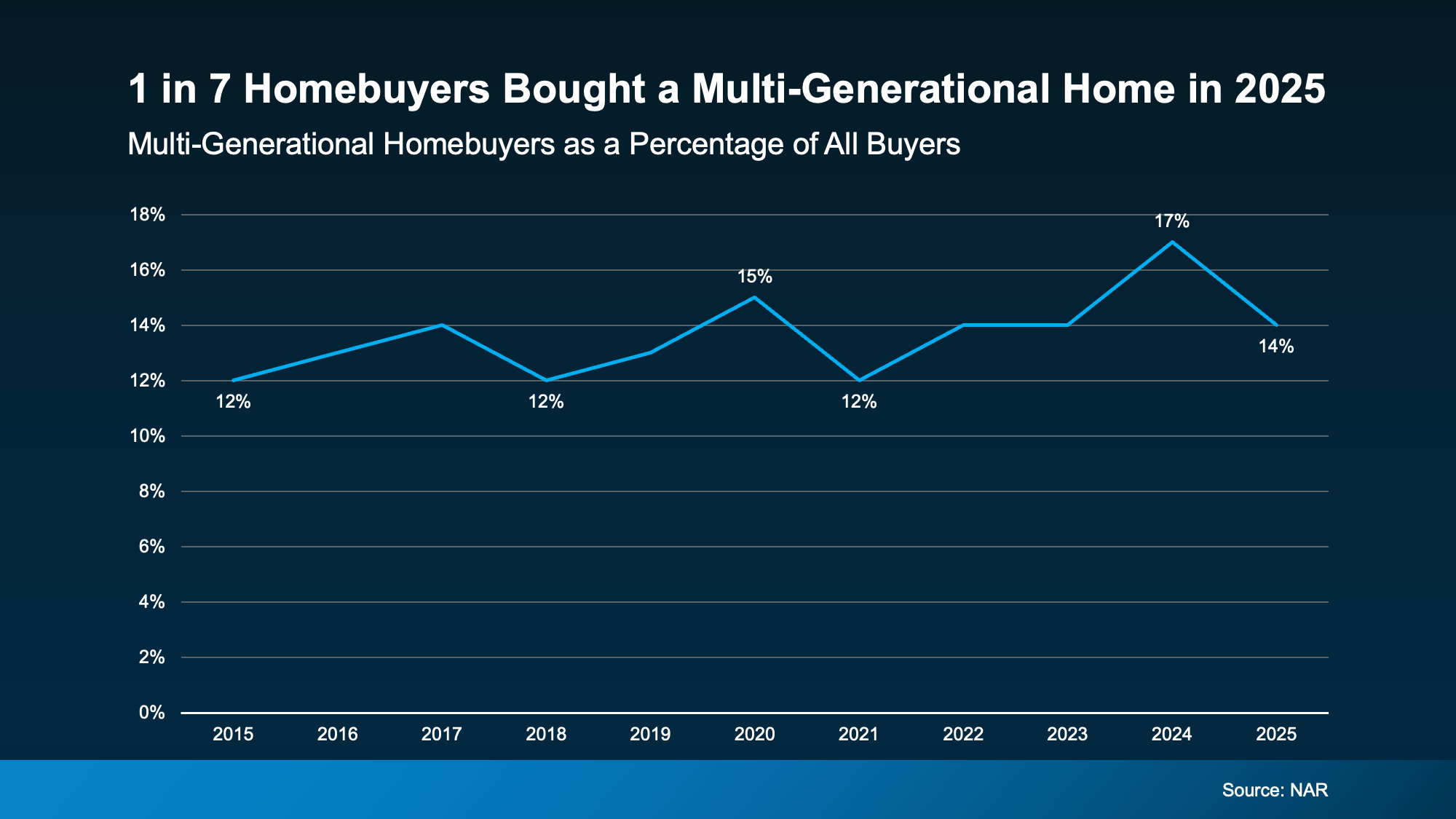
According to the National Association of Realtors, nearly 1 in 7 homebuyers purchased a multi-generational home in 2025. That’s 14% of all buyers choosing to live with parents, grandparents, or adult children under the same roof. And for the first time, childcare showed up as a primary reason for the decision.
The reasons are mostly financial.
The affordability squeeze that’s pushing families together
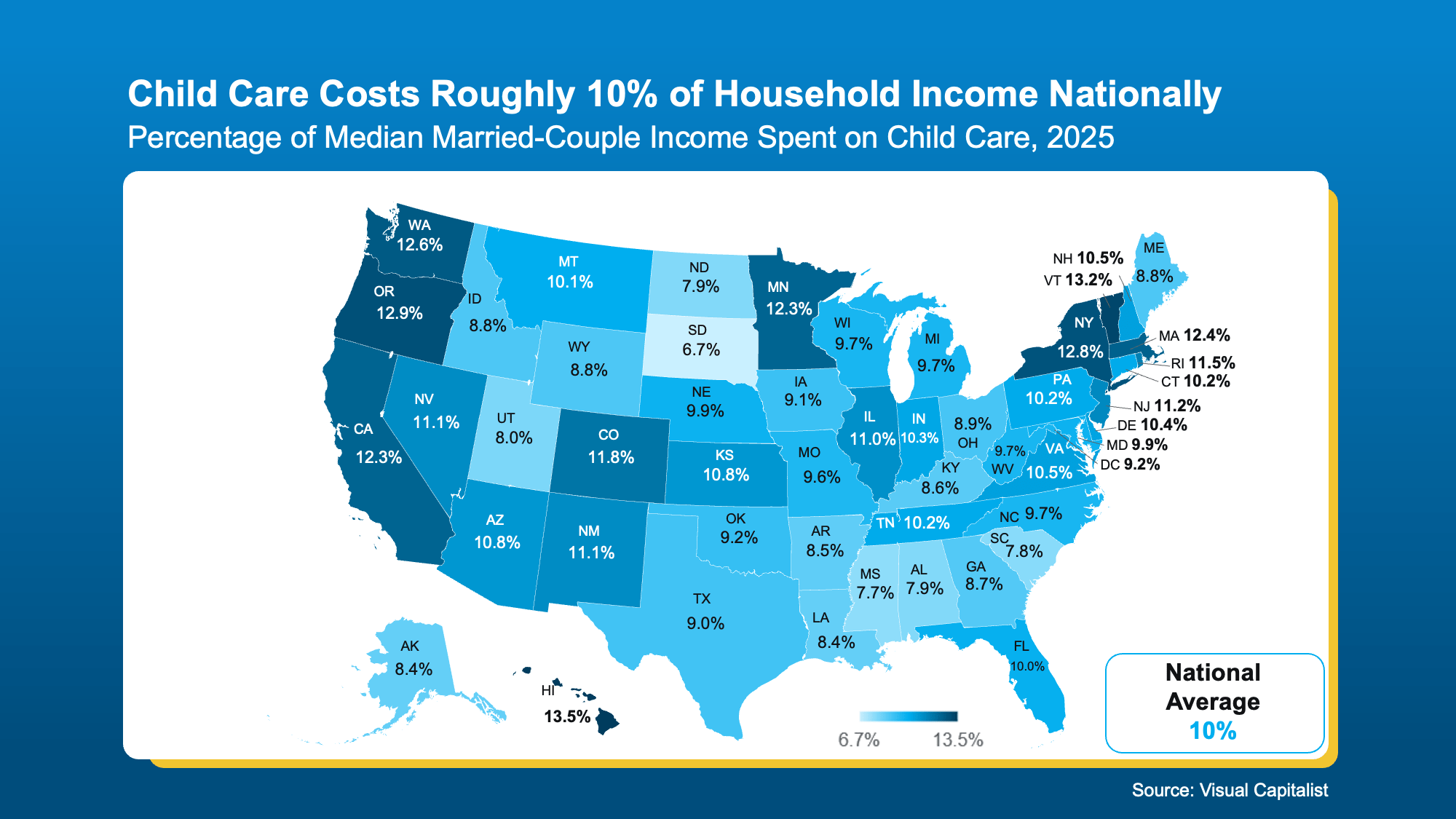
The Department of Health and Human Services says childcare should take up no more than 7% of a family’s monthly income. The average married couple spends closer to 10%. Layer a mortgage payment on top of that, and it’s easy to see why younger families feel stuck.
Meanwhile, 31% of adults between 25 and 29 are living with their parents, and finances are the number one reason. Housing costs have pushed homeownership out of reach for many people trying to do it on a single household income.
Multi-generational living offers a different path. When two generations combine incomes, a home that felt impossible on one salary starts to look doable. Two mortgages become one. Utility bills get split. Insurance costs are shared. The financial math changes completely.
And affordability is projected to keep improving in 2026, which means families who’ve been waiting for the right moment may find it sooner than expected.
Childcare is now a major factor
NAR’s 2025 report broke new ground when it listed childcare as a primary reason for purchasing a multi-generational home. Specifically, 12% of multi-gen buyers said grandchildren living in the home was a key factor, and 6% pointed directly to reducing childcare costs.
Those numbers might sound small, but they represent a shift. Childcare has always been an unspoken benefit of living near family. Now it’s showing up in the data as a deciding factor in where and how people buy.
When grandparents live in the home, daily childcare becomes a family arrangement instead of a $1,500-a-month line item. Morning drop-offs disappear. Babysitter searches stop. And for many families, that savings is what finally makes the mortgage payment work.
The health and relationship benefits go both ways
The financial argument for multi-generational living is strong, but the personal side matters just as much.
Research shows that children who grow up with close grandparent relationships tend to be more resilient and have fewer behavioral issues. They learn family recipes, hear stories from another era, and build bonds that weekly visits can’t replicate.
Grandparents benefit too. Studies consistently find that grandparents who spend regular time with their grandchildren tend to live longer. Having people around who need you, who want to hear your stories, who drag you outside to play catch — that kind of daily connection keeps people healthier longer than most interventions doctors can offer.
For adult children who move back in with their parents, the arrangement offers something unexpected. Parents and kids get to know each other as adults, often for the first time. The relationship changes, and usually for the better.
There’s also a safety element. Aging parents who might otherwise need assisted living can stay with family, surrounded by people who know them. If a health issue comes up, someone is already there.
What multi-generational homes look like in practice
The phrase “living with your parents” conjures images of moving back into your childhood bedroom. Modern multi-generational homes look nothing like that.
Builders have caught on to the demand. Today’s multi-gen floor plans are designed around two ideas: togetherness when you want it, privacy when you need it.
The most common feature is an in-law suite (sometimes called a mother-in-law suite or secondary suite). These typically include a private bedroom with an attached bathroom and walk-in closet, often on the first floor for accessibility. Some include a small living area or kitchenette, giving the occupant something close to their own apartment within the larger home.
Flexible-use rooms are another thing to look for. A room that works as a playroom for young kids can become a study space for teenagers, a home office for remote workers, or a bedroom when someone new joins the household. Families change. The house should be able to change with them.
At the higher end, some multi-gen homes include separate entrances, dual kitchens, and fully independent living spaces connected by a shared wall or hallway. These setups work well for families who want proximity without constant overlap.
Accessibility features also matter when aging parents are part of the picture. Wider doorways, zero-step entries, grab bars in bathrooms, and first-floor primary suites all make the home safer and more functional for everyone.
Making privacy work under one roof
The biggest concern families have about multi-generational living is privacy. Living with anyone requires adjustment, and adding a generation to the mix makes it more complicated. Nobody wants to pretend otherwise.
But most of the friction comes down to two things: the floor plan and the conversation.
Homes designed for multi-gen living solve a lot of the floor plan problems on their own. Separate suites with their own bathrooms give everyone a space to retreat to. Insulated walls between living areas cut down on noise. Split bedroom designs put distance between generations without making the home feel disconnected.
The conversation part is harder. The families who make this work tend to set expectations early. Who covers which bills? What are the shared spaces versus private spaces? How do you handle guests, noise, and different schedules? These aren’t fun conversations, but they’re the ones that keep things running smoothly six months in.
If you’re choosing between suburban communities in the Memphis area, it’s worth considering which neighborhoods have the home sizes and floor plans that support this kind of arrangement.
The numbers behind the movement
The growth in multi-generational living isn’t a blip. It’s a steady, decades-long trend.
About 18% of the U.S. population now lives in a multigenerational household. That’s roughly 1 in 5 Americans, and it represents a 30% increase since 2007. The reasons vary by family — some can’t afford to buy alone, some need help with caregiving, and plenty just want to be closer to the people they’d otherwise only see on holidays.
For homebuyers weighing their options, understanding the real gap between renting and owning helps put the multi-gen decision in perspective. Homeownership builds wealth over time, and sharing the cost of entry with family can make that wealth-building start years earlier than it would otherwise.
Is a multi-generational home right for your family?
Not every family is built for shared living, and that’s fine. But if you’ve been running the numbers on buying and coming up short, it’s worth asking whether a different approach could change the outcome.
A few questions to start with:
- Do you have family members who are also looking to buy, or who need a housing change?
- Would shared expenses make a home purchase possible that isn’t possible alone?
- Is childcare eating into your budget in a way that limits your housing options?
- Do you have aging parents who might benefit from living closer to family?
If you answered yes to any of those, a multi-generational home deserves a serious look.
Talk to someone who knows the local inventory
Multi-gen homes come in all shapes, from purpose-built floor plans with in-law suites to larger existing homes that can be adapted. The right fit depends on your family’s size, needs, and budget.
A Reid Realtors agent can walk you through what’s available in your area, help you identify homes with the right layout, and answer the questions that come up when multiple generations are making a decision together. Reach out anytime — even if you’re just starting to explore the idea. Buying with family is a bigger conversation than buying alone, and it helps to have someone in your corner who’s seen how it works.