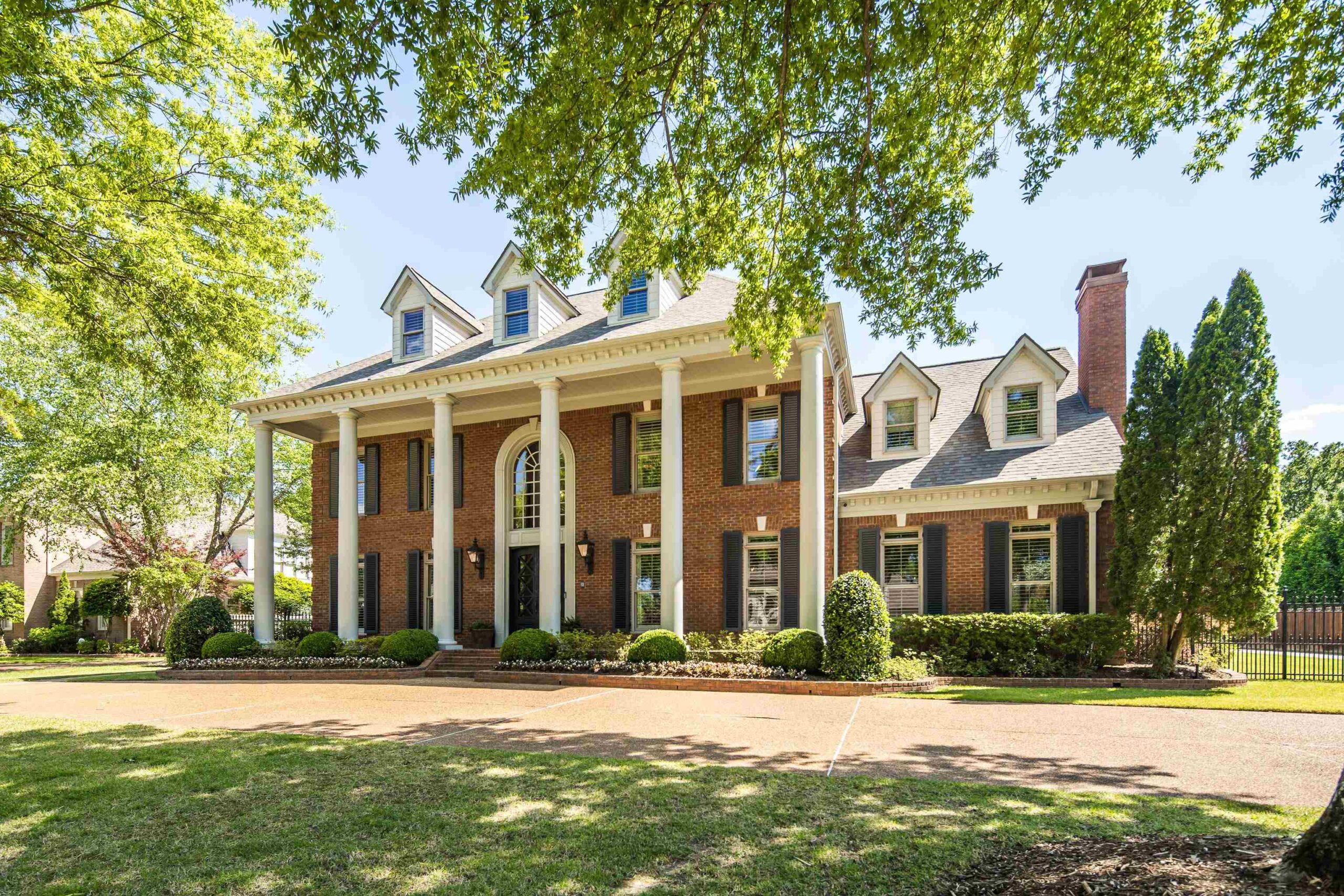
If you own a home in Germantown, or you’re shopping for one, property taxes are probably the least understood number in your monthly payment. Buyers fixate on the mortgage rate, then get to the closing table and discover the escrow line. Owners get a reappraisal notice and can’t tell whether the bill is about to jump. And it’s two separate bills, which surprises nearly everyone we work with.
So let’s take the mystery out of it. By the end of this you should be able to read your own tax bill, and probably your neighbor’s.
How Tennessee figures a property tax bill
Tennessee has no state property tax and no state income tax on wages. Property taxes here are local: your county charges one rate, and if you live inside a city, that city charges its own on top.
The math runs on two numbers. First, the county assessor appraises your home’s market value. Then Tennessee applies its assessment ratio: residential property is taxed on 25% of that appraised value. A $600,000 home has an assessed value of $150,000, and every tax rate you’ll see is charged per $100 of that assessed number.
That 25% ratio is why Tennessee rates look scary out of context. A rate of $2.70 per $100 sounds enormous until you remember it applies to a quarter of your home’s value, not the whole thing.

The two bills every Germantown homeowner gets
Living in Germantown means two taxing authorities, and they bill separately.
Shelby County’s 2026 tax rate is $2.702382 per $100 of assessed value, and it applies to every property owner in the county, city or not. County bills go out in the fall and can be paid without penalty through the last day of February.
Germantown’s city rate is $1.79 per $100 of assessed value, set by the Board of Mayor and Aldermen with the FY26 budget. The city mails its own statements each November, due at the start of December, with the same end-of-February backstop before penalties start. Of that $1.79, the biggest single slice, 77 cents, funds public safety: police, fire, and EMS.
If your mortgage has an escrow account, your lender collects a twelfth of both bills each month and pays them for you, which is why most owners never write these checks directly. It’s still worth knowing the numbers, because escrow follows the bills, and when the bills move, your monthly payment moves with them.
What the bill looks like on a real Germantown home
Take that $600,000 Germantown home. Its assessed value is $150,000.
The county’s share works out to about $4,054 a year at the current rate. The city’s share is $2,685. Together that’s roughly $6,739 a year, or about $560 a month riding along in your escrow payment. For as long as you own the house.
Scale it to your own place from there: a $450,000 home lands near $5,050 a year combined, and an $800,000 home near $8,990. If you want to check the county’s math yourself, the Shelby County Trustee’s tax calculator uses the same formula.
How Germantown compares around the county
Germantown’s combined rate is lower than Memphis’s, which catches a lot of people off guard. Memphis adopted a 2025 city rate of about $2.58, so a Memphis homeowner pays roughly $5.28 per $100 assessed once the county is included, against Germantown’s roughly $4.49. On that same $600,000 of appraised value, the Memphis bill runs about $7,925 a year, almost $1,200 more than Germantown.
The catch, and it’s a real one, is that Germantown homes cost more per square foot, so the dollar totals often even out or flip. Choosing a suburb is really choosing a mix of home price, tax rate, and services. Each of the suburbs sets its own municipal rate and they all differ, which we broke down alongside schools and housing stock in our Collierville vs. Germantown vs. Bartlett comparison. And homeowners in unincorporated Shelby County pay only the county rate, the cheapest tax situation in the area, traded against city services.
Why everything changed in 2025
Shelby County reappraises every property on a four-year cycle, and 2025 was the year. The assessor reset values to the market as of January 1, 2025, and after several hot years, most East Shelby homeowners saw big jumps on paper. The next reappraisal comes in 2029.
Here’s the part of the system that’s genuinely well designed: a reappraisal is not allowed to be a stealth tax increase. State law requires each government to calculate a certified tax rate, the rate that would bring in the same total revenue from the new, higher values. That’s why the county’s rate fell from $3.39 to roughly $2.70 after reappraisal. Your value went up, the rate came down, and the two were supposed to wash for the average property.
Two things can still raise your actual bill. If your home’s value rose more than the county average, you absorb more of the load even at the certified rate. And a government can vote to go above its certified rate through a public process, which Germantown did, adding about 29 cents to fund the FY26 budget. That combination, above-average appreciation plus a rate increase, is why plenty of Germantown owners opened 2025 bills that were noticeably higher even though “rates went down” was technically true.
If you think your appraisal is wrong
You can’t appeal your tax rate, but you can appeal your appraised value, and the process starts free. The Shelby County Assessor offers an informal review where you submit evidence, and beyond that you can take your case to the County Board of Equalization, which meets starting in the spring.
Evidence beats frustration. Recent sales of genuinely comparable homes near you, a documented condition issue the mass appraisal couldn’t see, or an appraisal from your own refinance can all move the number. Between reappraisal years your value mostly sits still, so the months after a reappraisal notice are the window that matters most. If you’re weighing whether your number is out of line, we’re glad to pull the comparable sales; we watch Germantown’s market closely enough to know which sales the assessor’s model probably leaned on.
The tax breaks worth checking
Tennessee runs a property tax relief program for homeowners 65 and older, disabled homeowners, and disabled veterans, which reimburses part of the bill for those who income-qualify. Separately, Shelby County and Germantown participate in the tax freeze program, which locks the tax amount for qualifying homeowners 65 and up, so future rate and value increases can’t raise it. Income limits adjust each year, so check the current thresholds with the Shelby County Trustee rather than assuming you don’t qualify. If you have a parent in a long-owned Germantown home, this is worth a phone call; the freeze in particular is underused.
At tax-filing time, property taxes also feed the federal deduction picture for itemizers, which we covered in the tax benefits of owning a home in Memphis.

What this means when you’re buying or selling
For buyers, the practical move is to run the tax math on the specific home before you fall in love, because it changes what you can afford. Two houses at the same price in Germantown and unincorporated Shelby can differ by thousands a year in carrying cost. Your lender will fold the real number into your pre-approval, and if you’re comparing areas, we can run side-by-side tax scenarios for any home on your list, including current Germantown listings.
For sellers, taxes show up as a proration at closing: you cover the portion of the year you owned the home, the buyer takes the rest, and the settlement statement does the splitting. It’s one of the line items we walked through in what buyers and sellers pay in closing costs around Memphis.
Two bills, one number to know
If you remember one thing, make it your combined rate: about $4.49 per $100 of assessed value in Germantown right now, which pencils out to roughly 1.1% of your home’s market value per year. Know that number and you can sanity-check an escrow estimate or a reappraisal notice in about thirty seconds.
And if a bill or a notice doesn’t pass the smell test, reach out. We’ll pull the records and the comps and tell you whether it’s worth a fight or just the new normal.