A $285,000 house in Germantown hits the market on a Friday. By Monday there are two offers. Neither is full price. The seller counters both. One buyer folds. The other negotiates $4,000 in closing cost credits and a home warranty, pays asking price, and closes in 30 days.
That back-and-forth is what the Memphis market looks like right now. Not a frenzy, not a drought. Inventory sits around two to three months of supply across the metro, and the median home price in Shelby County hovers near $270,000. Homes that are priced right move in 30 to 40 days. Homes that aren’t sit and collect price cuts.
In a market like this, real estate negotiation strategies matter more than they have in years. Neither buyers nor sellers hold all the leverage, which means the deals that close well tend to hinge on how you negotiate as much as what you offer. This guide covers how to negotiate a house price in Memphis right now, from Collierville subdivisions to East Memphis bungalows, whether you’re the buyer or the seller. And it goes past price into the terms where most of the real money changes hands.
Four rules that apply to every deal
Before the buyer-specific and seller-specific tactics, there are rules that hold no matter which side of the table you’re on.
Always ask. The worst answer you’ll get is no. We’ve watched buyers leave thousands on the table because they assumed a seller wouldn’t negotiate on closing costs and never brought it up.
Keep the conversation alive. Dead negotiations don’t close. Even when a counter seems unreasonable or an offer feels low, responding keeps options open. The moment communication stops, the deal is over.
Make every concession count. If you agree to something the other side wants, get something back. You’re not being difficult. You’re making sure both parties feel like they gained something, which is how deals close in a balanced market.
Keep your emotions in check. This is the hard one. Buying or selling a home is personal. But the moment frustration or excitement starts driving the decision, you’re negotiating from a weaker spot, and the other side can usually tell.
How buyers should negotiate in Memphis right now
Buyers in the Memphis metro have more room to negotiate than they’ve had since before the pandemic. But “more room” doesn’t mean sellers accept anything. You still need a strategy, and it needs to be built on data.
Get pre-approved first
This isn’t optional. A mortgage pre-approval letter tells the seller you’re financially qualified and ready to move. In neighborhoods like Bartlett and Arlington, where well-priced homes still draw multiple offers, a pre-approved buyer beats an unverified one every time.
Talk to your lender before you start browsing. Know your rate, know your ceiling. When the right house comes up, you want to write an offer that day, not scramble for paperwork. If you’re buying your first home in Memphis, this step alone puts you ahead of half the competition.
Negotiate beyond the price tag
The purchase price gets all the attention, but experienced buyers know the real savings often come from other terms. In a balanced market, a seller who won’t budge on price may be open to:
- Seller-paid closing costs, saving you 2 to 3% of the purchase price upfront
- A rate buydown, where the seller contributes toward lowering your mortgage rate
- Personal property like appliances, window treatments, or outdoor equipment
- Home warranty coverage for the first year
We closed a deal in Cordova earlier this year where the buyer paid full asking price but got $8,000 in seller concessions toward closing costs and a two-year home warranty. The seller was happy with the price. The buyer kept more cash in their pocket. That’s the kind of closing cost negotiation that works when both sides feel like they won.
How a rate buydown works
Rate buydowns have become one of the most useful negotiating tools in this market, and a lot of buyers don’t fully understand them. There are two common types.
A temporary buydown, like a 2-1 buydown, drops your rate by two points the first year and one point the second year before settling at the note rate. The seller funds it at closing. It lowers your payment while you settle into the house, which helps if you expect income to rise or plan to refinance if rates fall.
A permanent buydown uses seller money to buy down the rate for the life of the loan through discount points. It costs more upfront but lowers your payment for as long as you own the home. When a seller is stuck on price but motivated to sell, asking them to fund a buydown instead of cutting the price can be worth more to you than the price reduction would have been. Run both scenarios with your lender before you decide which to ask for.
Target homes that have been sitting
A home listed for 50 or 60 days in this market is sending a signal. Maybe the price is off. Maybe the photos don’t do it justice. Whatever the reason, that seller is more motivated than someone who listed yesterday.
Average days on market across the metro in 2026 runs 30 to 40 days depending on the neighborhood. Germantown and Collierville tend to move faster. Anything sitting well above 40 days gives you leverage to negotiate harder on price, terms, or both. You can explore how these suburbs compare to get a feel for what’s normal in each area.
Build your offer on comparable sales
Your offer should come from data, not a gut feeling. What did similar homes in that subdivision sell for in the last 90 days? What’s the price-per-square-foot trend? Are homes in that zip code selling above or below list?
When you work with an agent who knows these neighborhoods, they’ll pull those numbers before you write. Comparable sales data is the strongest negotiating tool you have because it takes emotion out of the conversation. You’re not saying “I think this is overpriced.” You’re showing what the market paid for similar houses.
Winning a multiple-offer situation without overpaying
Even in a balanced market, the best homes still draw competing offers. A move-in-ready house in a good school district, priced near market value, can pull three or four offers in a weekend. The trick is competing hard without wrecking your own budget. Our full guide on winning a multiple-offer situation goes deeper, but a few negotiation levers matter most.
An escalation clause lets you automatically beat competing offers up to a cap. You might offer $300,000 and agree to top any verified competing offer by $2,000, up to a ceiling of $315,000. It keeps you in the running without forcing you to guess high from the start. Use it carefully, because some sellers and agents dislike them, and they reveal your maximum.
Clean terms often beat a higher number. A seller choosing between a $305,000 offer with a financing contingency and a 60-day close, and a $300,000 offer with strong pre-approval and a 30-day close, frequently takes the lower, cleaner one. Shortening your contingency windows, being flexible on the closing date, and putting down a larger earnest money deposit all signal you’re serious without raising your price.
If you lose, ask about backup position. Deals fall apart regularly. Financing fails, inspections turn up problems, buyers get cold feet. A clean backup offer can turn into the winning one a week later.
Negotiating the appraisal gap
This is the part of the deal that catches buyers off guard most often. You agree on a price, then the appraisal comes in below it. The lender will only finance against the appraised value, which leaves a gap between what you offered and what the bank will lend.
Say you’re under contract at $310,000 and the appraisal lands at $300,000. That $10,000 difference has to be resolved before the deal closes, and there are a few ways to handle it.
The seller can lower the price to the appraised value. This is most likely when the market has cooled and the seller knows the next buyer’s appraisal will probably come back the same. You can meet in the middle, with the seller dropping the price part of the way and you covering the rest in cash. Or you can cover the full gap yourself with cash on top of your down payment, which only makes sense if you have the funds and really want the house.
If you’re a buyer worried about this, talk to your agent about an appraisal contingency, which lets you renegotiate or walk if the number comes in low. If you’re a seller, pricing accurately from the start is your best defense, because a home priced at the market rarely has appraisal problems. When you’re competing as a buyer, offering limited appraisal gap coverage (agreeing to cover up to a set amount) can make your offer stronger without exposing you to an unlimited risk.
Negotiating after the home inspection
Plenty of deals are won or lost in the days after the inspection report comes in. The buyer signs a contract, the inspector finds issues, and a second round of negotiation begins. How you handle it matters as much as the original offer.
For buyers, resist the urge to send a laundry list of every cosmetic flaw. Sellers tune out a 30-item repair request, and you lose credibility on the things that count. Focus on what’s material: the HVAC system at the end of its life, the active roof leak, the electrical panel that won’t pass insurance. Ask for those to be repaired, or ask for a credit so you can handle them after closing.
For sellers, a repair request isn’t an attack. It’s a continuation of the deal. You can agree to the work, offer a credit instead, or counter with a partial fix. A buyer asking for $3,000 in repairs after a smooth inspection is usually still a buyer who wants the house. Countering at $1,500 keeps the deal alive far more often than refusing outright.
The repair-credit-versus-repair decision comes up constantly. A $200 electrical fix is easy to handle before closing. A $6,000 foundation concern is often better as a credit, where the buyer picks their own contractor and controls the scope. Your agent will know which approach fits the situation and your local market.
Seller negotiation tactics that close deals
Selling in a balanced market means you can’t plant a sign and wait for a bidding war. You need a plan. These seller negotiation tactics separate homes that sit from homes that sell on good terms.
Price it right on day one
This is the single most important decision you’ll make, and it shapes every negotiation that follows. Overprice by even 5% and you’ll watch the listing go stale while buyers negotiate aggressively on competing homes nearby.
With the Memphis median near $270,000 and buyers having access to real-time sales data, there’s no room to test the market with an inflated number. Price your home off recent comparable sales and you negotiate from strength. Price it above the market and you’re playing defense from the start.
Your listing agent should walk you through a comparative market analysis built from actual closed sales in your neighborhood. Not a Zestimate. A real analysis from someone who has sold homes on your street.
Always counter, even low offers
Sellers make this mistake out of emotion. A low offer comes in and the instinct is to ignore it or decline outright. But a low offer is still an offer. Someone wants your house. They’re testing.
Counter it. Even if the opening number is way off, a counter keeps the conversation alive. Some of the best deals we’ve closed started with offers that looked insulting on day one and turned into solid contracts after two rounds.
Think about the full picture when you counter
Don’t just drop your price by $2,000 and send it back. Consider what the buyer is really asking for.
If they want closing cost credits, can you offer a smaller amount rather than rejecting the request? If they want a fast close, can you accommodate that in exchange for a higher price? If their offer depends on selling their current home, how does that affect your timeline? Our post on whether to sell before buying or buy first walks through those timing trade-offs. Strategic counters show the buyer you’re engaged, and they reveal what the buyer actually cares about, which is information you can use.
Get inspected before you list
A pre-listing inspection costs $300 to $500 and takes one of the buyer’s strongest negotiating tools off the table. When a buyer’s inspection turns up surprises, they’ll use those findings to renegotiate, sometimes aggressively.
If you already know about potential issues and have either fixed them or priced accordingly, there’s nothing for the buyer to come back with. You control the story instead of reacting to it.
Document every upgrade
Replaced the roof in 2024? New HVAC? Updated kitchen? Keep the receipts, warranties, and permits ready.
When a buyer tries to talk your price down, documented upgrades give you concrete reasons to hold firm. “The roof is two years old with a transferable 30-year warranty” is a much stronger position than “we think the roof is fairly new.”
Deal terms that don’t involve the price
Some of the best negotiation in Memphis real estate right now happens around terms that have nothing to do with the number on the contract.
Closing cost credits
Instead of lowering the sale price, the seller offers a credit toward the buyer’s closing costs. This keeps the sale price intact, which matters for the appraisal and future comps, while cutting the buyer’s cash needed at closing. For a buyer in the $250,000 to $350,000 range common across Bartlett and Arlington, a 2 to 3% credit means $5,000 to $10,500 less out of pocket at the table.
Contingency timelines
Most offers include contingencies for inspection, appraisal, and financing. Those timelines are negotiable. A seller might agree to a longer inspection window in exchange for a higher price. A buyer might shorten their contingency periods to make an offer stand out. In a balanced market, these adjustments can be the difference between winning a deal and losing one.
Closing date flexibility
If a buyer needs to close in 21 days, or needs 60 because they’re selling another property, a seller willing to flex on the date adds value without giving up a dollar. Closing date flexibility is free leverage that many sellers underuse, and it often matters more to the other side than a small price change.
Leasebacks and possession dates
When a seller needs time to move, a post-closing occupancy agreement (a leaseback) lets them stay in the home for a set period after closing, sometimes rent-free as a concession. For a buyer who isn’t in a rush, offering a free two-week leaseback can win a deal against a higher offer that demands immediate possession. It costs you very little and solves a real problem for the seller.
Negotiating new construction is a different game
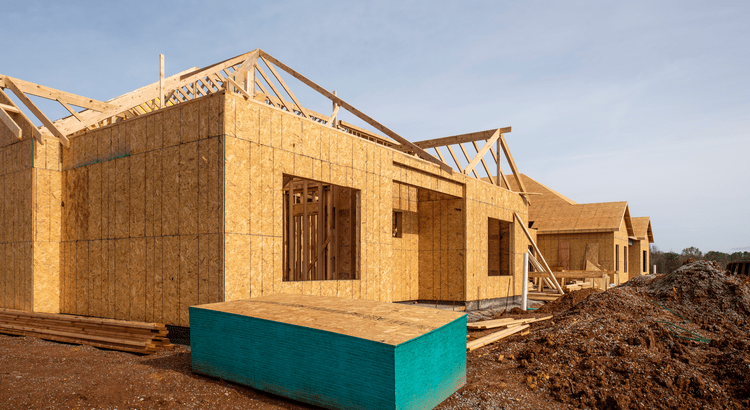
If you’re touring new builds, throw out some of the resale playbook. Builders negotiate differently, and understanding why saves you from leaving money on the table. With new construction prices down across the Memphis suburbs, there’s real room to work right now, but it usually isn’t in the base price.
Builders protect the base price because cutting it lowers the comps for every other home in the community. What they will do is pile on incentives: covering closing costs if you use their preferred lender, funding a rate buydown, throwing in upgrades like finished basements, appliance packages, or design center credits. A builder might not knock $10,000 off the price but will happily give you $10,000 in upgrades and another $5,000 toward closing.
Standing inventory is where the price itself moves. A finished spec home the builder is carrying at quarter’s end, or the last few lots in a closing-out phase, gives you the most leverage. Builders have sales targets, and a completed house sitting on their books costs them money every month. Bring your own agent to the first visit, because the on-site sales rep works for the builder, and you want someone negotiating for you.
Walking away is a real strategy
Not every deal is worth saving. Sometimes the other side’s demands are unreasonable. Sometimes the inspection changes the math. Sometimes the appraisal comes in low and nobody wants to bridge the gap.
Walking away isn’t losing. When you’re genuinely willing to walk, and the other side can tell, you negotiate from strength. The worst deals in real estate happen when someone feels stuck and agrees to terms they shouldn’t have.
For buyers, there will be another house. Memphis has solid inventory right now across Collierville, Germantown, Bartlett, East Memphis, Arlington, and Cordova, especially as more sellers list now that the lock-in effect is loosening. For sellers, if a buyer’s demands stay unreasonable after multiple rounds, the next buyer might be easier to work with. A week back on the market beats a bad deal.
Common questions about negotiating in this market
Can you still negotiate price in 2026? Yes. With two to three months of supply and homes averaging 30 to 40 days on market, most sellers expect some negotiation. The exception is a well-priced, move-in-ready home in a top school district, where you may need to compete closer to asking and win on terms instead.
How much should you offer below asking? There’s no fixed rule. On a home priced right that just listed, 2 to 3% under is a reasonable opening. On a home that’s sat 60-plus days, 5 to 10% under with documented comps to back it up is defensible. Your agent’s comparable sales analysis should set the number, not a percentage you read online.
What’s the most overlooked negotiation tool? Terms. Buyers fixate on price and ignore closing cost credits, rate buydowns, leasebacks, and closing date flexibility, which is often where a seller has the most room to move.
Your agent is your biggest advantage
Real estate negotiation isn’t just about knowing the tactics. It’s about reading people, understanding what the other side is really after, and knowing which neighborhoods appraise tight and which have room.
An agent who has closed hundreds of deals in the metro picks up on signals that data alone won’t tell you. They can read a buyer’s motivation from how an offer is structured. They know whether a seller’s counter is firm or has room. They know which builders are sitting on standing inventory and which lenders fund the cleanest buydowns.
At Reid Realtors, we negotiate Memphis real estate deals every week, from established Germantown communities to the growing neighborhoods around Arlington. If you’re getting ready to buy or sell in the Memphis area this year, we’d like to be your advantage at the table.