

Here’s something that might catch you off guard: if you’re serious about buying a house without breaking the bank, you might want to skip the traditional spring house-hunting season and start your search in the dead of winter instead.
I know what you’re thinking. January? Really? When it’s freezing outside and everyone’s recovering from the holidays? But hear me out, because the data tells a pretty compelling story that could save you tens of thousands of dollars.
Most people assume spring is when you should buy a house. The weather’s nice, the flowers are blooming, and there’s just something about those sunny open houses that feels right. But while everyone else is waiting for warmer weather, they’re actually missing out on some of the best deals of the entire year.
Let’s dig into why January could be your secret weapon in today’s tough housing market.
Price Tag Differences
When researchers looked at housing data across the United States, they found something interesting: January consistently comes out as one of the cheapest months to buy a home. We’re not talking about small differences here either.
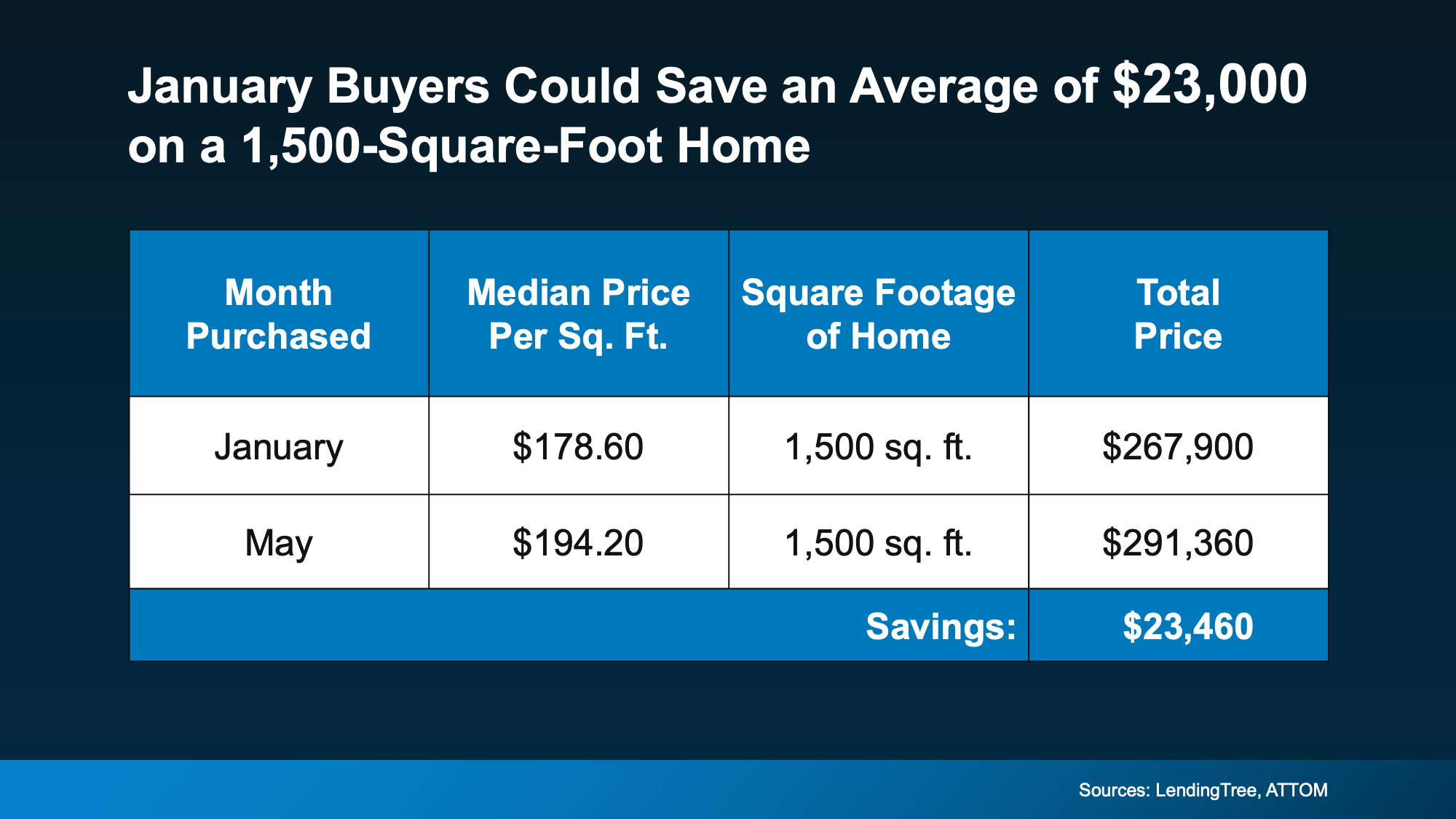
Think about it this way. If you’re looking at a standard 1,500 square foot house, buying in January versus waiting until May could save you around $23,000. That’s not pocket change. That’s a new car. That’s a year of daycare. That’s a pretty substantial down payment on your next home down the road.
The reason comes down to basic economics: supply and demand. During the winter months, there are simply fewer people out there looking at houses. When demand drops, prices tend to follow. It’s the same principle that makes airline tickets cheaper on Tuesdays or hotel rooms more affordable during the off-season.
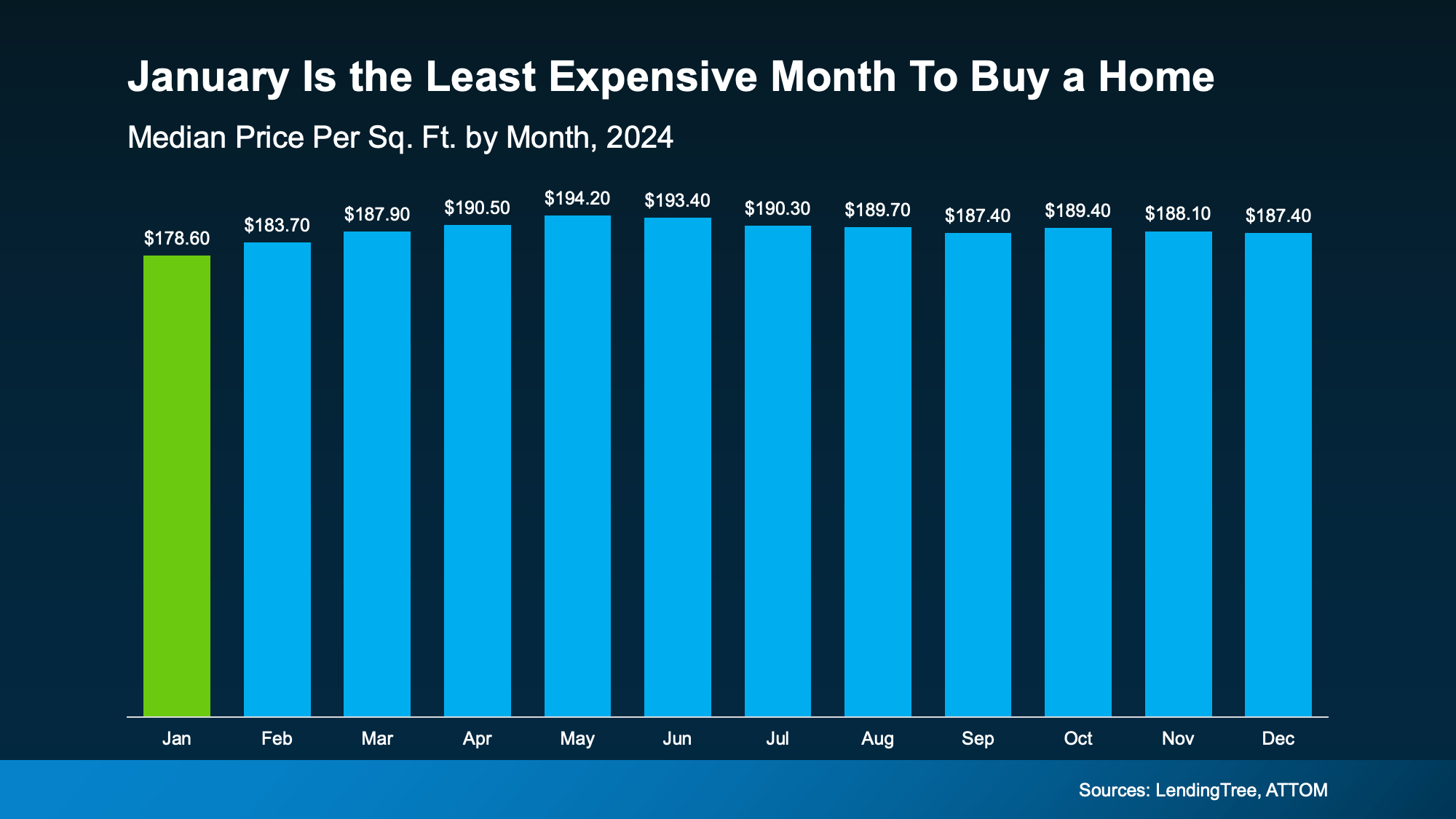
Historical data backs this up year after year. January typically offers some of the lowest price-per-square-foot numbers you’ll see all year. Meanwhile, spring and early summer? That’s when prices tend to hit their peak because that’s when everyone and their cousin decides it’s time to buy.
Competition Changes Everything
Let’s talk about one of the most frustrating parts of home buying: competing with other buyers. If you’ve ever been in a bidding war, you know exactly how stressful and expensive it can get. You fall in love with a house, make what you think is a fair offer, and then suddenly three other families are bidding against you, driving the price up beyond what you wanted to spend.
Winter completely changes this dynamic. When most people are focused on holiday recovery and hunkering down until spring, the housing market quiets down significantly. This creates a totally different buying environment.
With fewer buyers actively searching, you’re much less likely to find yourself in a multiple offer situation. That house you love? You might actually be the only serious buyer looking at it. This gives you room to breathe, to think clearly, and to make decisions based on what works for your budget rather than what it takes to outbid someone else.
There’s also a psychological benefit here that shouldn’t be underestimated. When you’re not constantly worrying about losing out to other buyers, you can take your time during showings. You can really look at that foundation, test those windows, and imagine your life in the space without feeling rushed.
Winter Sellers Need to Sell
Here’s something important to understand about winter listings: sellers who put their homes on the market during the coldest, slowest time of year usually have a reason. They need to sell.
Think about it from their perspective. Who wants to deal with showing their house during the holidays? Who wants to keep their home in showing condition when they could be relaxing with family? The sellers listing in December and January are typically motivated by circumstances that make selling now worth the hassle.
Maybe they’ve already accepted a job in another city. Maybe they’re going through a life change that requires them to move quickly. Maybe they’ve been trying to sell for months and they’re ready to be done with it. Whatever their reason, their motivation becomes your advantage.
Motivated sellers are negotiating sellers. They’re more likely to consider reasonable offers, work with your timeline, and potentially contribute to closing costs or make other concessions that sellers in the hot spring market simply wouldn’t consider.
One real estate professional put it perfectly: when there aren’t dozens of buyers lined up, sellers have to work with the buyers who show up. That means you have actual negotiating power. You can ask for things like help with closing costs, repairs to be completed before you move in, or a home warranty to be included. These extras can easily add up to thousands of dollars in savings.
Numbers Don’t Lie
Let’s get specific with some data points that really illustrate the winter advantage. In recent years, the median price per square foot in May has been around $194, while January’s median sits closer to $179. That’s roughly an 8% difference, which sounds moderate until you actually calculate what it means for a real purchase.
For that typical 1,500 square foot home we mentioned earlier, an 8% difference translates to actual savings of over $20,000. And if you’re looking at larger homes or properties in higher-priced markets, the absolute dollar amount of savings scales up accordingly.
This isn’t just a one-year fluke either. When you look at patterns over the past decade, January consistently ranks as one of the most affordable months for home purchases. The trend holds steady year after year, which suggests this is a reliable market pattern rather than random chance.
What makes this even more valuable is what you can do with those savings. If you’re stretching to reach a 20% down payment to avoid private mortgage insurance, those extra dollars could make the difference. Or you could use the savings for renovations, furniture, or building up your emergency fund after making such a major purchase.
Trade-offs
Now, I’d be doing you a disservice if I didn’t mention that buying in January isn’t all sunshine and roses. There are legitimate reasons why fewer people shop for homes in winter, and you should go in with your eyes open about what you’re signing up for.
First and foremost: inventory is lower. While you might face less competition, you also have fewer homes to choose from. The selection just isn’t as robust as what you’d see in summer when everyone’s listing their properties. If you’re very particular about specific features or you’re searching in a small geographic area, the limited inventory could be frustrating.
Weather is another consideration that’s impossible to ignore. Trying to view properties when it’s snowing or icy isn’t just inconvenient – it can actually impact your ability to properly evaluate a home. That beautiful backyard might be covered in snow, making it hard to assess landscaping or drainage issues. Winter weather can hide problems that would be obvious in other seasons.
Inspections can be trickier too. Some issues, like air conditioning functionality or roof conditions, are harder to fully evaluate in winter. Your inspector might not be able to see everything they normally would, which means you’re taking on slightly more risk.
The holiday season can also create scheduling challenges. If you’re trying to close in late December or early January, you might run into issues with professionals being on vacation or offices operating at reduced capacity. This can slow down a process that already feels like it takes forever.
First-Time Buyers
If you’re buying your first home, the January advantage becomes even more significant. Unlike people who are selling one house to buy another, first-time buyers don’t have to worry about timing two transactions simultaneously. You’re not trying to find the perfect moment to list your current home while also searching for a new one.
This flexibility is huge. You can focus entirely on finding the right property at the right price without the added stress of coordinating a sale. While homeowners trying to upgrade or downsize often need to buy during peak season to maximize their sale price, first-time buyers can time their purchase purely around getting the best deal possible.
The savings we’re talking about also matter more when you’re making your first purchase. Your budget is probably tight. You’re trying to save for a down payment, cover closing costs, and still have money left over for moving expenses and those immediate repairs or purchases every new home requires. An extra $20,000 in savings isn’t just nice – it could be transformational for your financial situation.
Plus, getting into a home for less money means your monthly mortgage payment is lower. Over the life of a 30-year loan, the compound effect of starting with a lower purchase price adds up to significant savings in interest payments alone.
Market Timing
Let’s address the elephant in the room: most people can’t perfectly time their home purchase. Life doesn’t work that way. You buy when you need to buy, whether that’s because of a new job, a growing family, or a lease that’s ending.
If you absolutely need to move in March or your circumstances require a summer purchase, then obviously you should buy when it makes sense for your life. A slightly higher purchase price is worth it if the alternative is making decisions that don’t align with your actual needs.
But here’s the thing: if you have flexibility, you’d be leaving money on the table by not at least considering a winter purchase. We’re talking about potential savings in the neighborhood of 25% compared to peak season. That’s substantial enough that it’s worth planning your timeline around if you possibly can.
Ask yourself honestly: is there a genuine reason you need to wait until spring, or are you waiting simply because that’s what everyone says you should do? If it’s the latter, you might want to reconsider.
Homes Sit on the Market Longer in Winter
Another advantage that doesn’t get talked about enough: homes listed in January typically sit on the market longer before selling. While that might sound like a bad thing from the seller’s perspective, it’s great news for you as a buyer.
Data shows that newly listed homes in January stay on the market for a median of about 75 days before finding a buyer. Compare that to the spring and summer months, when homes often sell within 48 days. That extra time works in your favor in several ways.
First, you’re not forced to make lightning-fast decisions. You can schedule a second showing. You can bring your parents or a contractor friend to get their opinion. You can sleep on it and really think through whether this home meets your needs. When homes are flying off the market in 48 hours, you don’t have that luxury.
Second, the longer a home sits, the more anxious the seller becomes. A house that’s been listed for two months with minimal activity? That seller is going to be much more receptive to negotiation than one who just listed last week and already has three showings scheduled.
This extra time also reduces the pressure that leads to buyer’s remorse. Making a decision about the biggest purchase of your life in 24 hours because that’s how fast you have to move in spring? That’s a recipe for second-guessing yourself. Having the space to carefully consider your options leads to more confident decisions.
Make January House Hunting Work
If I’ve convinced you that January might be worth exploring, here’s how to actually make it happen successfully despite the challenges.
Start your preparation in the fall. Get your financing sorted, know your budget, and understand what you’re looking for well before January arrives. This way, when you see the right property, you can move quickly even though you have more time than you would in spring.
Be strategic about viewing homes. Yes, weather can be an issue, but schedule showings on clearer days when possible. Bring a flashlight for those shorter winter days. Ask sellers if they have photos from other seasons so you can see what the landscaping looks like or how the deck is set up.
Work with an experienced local agent who knows how to navigate winter sales. They’ll have strategies for dealing with weather challenges, understand which sellers are truly motivated, and can help you take advantage of the seasonal dynamics without falling into common traps.
Don’t be afraid to make reasonable requests. If you’re concerned about something you can’t properly evaluate in winter, build contingencies into your offer. Ask for a spring inspection of the roof, or request that the seller demonstrate the air conditioning works when warm weather arrives. Good sellers understand these concerns and will work with you.
Strategic Timing
Look, buying a house is always going to be expensive. We’re living in a market where affordability is challenging for a lot of people, and there’s no magic bullet that makes homeownership easy. But that doesn’t mean you can’t be strategic about how you approach it.
January offers a combination of advantages that simply don’t exist during the traditional busy season: lower prices, less competition, and more motivated sellers who are willing to negotiate. For buyers who can handle a bit of cold weather and a more limited selection, these benefits can translate into real, substantial savings.
Twenty-three thousand dollars might not sound life-changing if you’re extremely wealthy, but for most families trying to break into homeownership or upgrade to something better, that’s a significant amount of money. It could mean the difference between comfortably affording your dream home and stretching your budget to uncomfortable limits.
The key is understanding what you’re signing up for and being realistic about whether the trade-offs work for your situation. If you need a huge selection to choose from or you’re looking in a market where winter inventory essentially disappears, January might not be your best bet. But if you’re flexible, patient, and motivated by getting the best possible deal, winter house hunting deserves serious consideration.
Making Your Move
So what should you actually do with this information? If you’ve been thinking about buying a home and your timeline is flexible, start watching the market now. See what’s listed in your area during the winter months. Talk to a local real estate agent about what they’re seeing in terms of prices and competition.
Even if you decide January itself doesn’t work for your timeline, understanding these seasonal patterns can help you make smarter decisions about when to buy. The shoulder seasons – late fall and early spring before the rush starts – can offer similar advantages with slightly better inventory.
The worst thing you can do is just go with what everyone else is doing without thinking about whether it’s actually the best choice for you. Yes, spring is pleasant for house hunting. Yes, summer makes logistics easier. But if those preferences are costing you twenty grand, maybe they’re worth reconsidering.
Your financial situation, your market, and your specific needs all play into what timing makes sense. But don’t rule out winter buying just because it seems unconventional. Sometimes the path less traveled is less crowded for a very good reason – because it’s actually the smarter route.
If you’re curious about what January buying could look like in your specific market, reach out to a local real estate professional who can pull recent data for your area. Markets vary significantly by region, and what’s true nationally might be even more pronounced where you live, or it might be different. The only way to know is to look at the actual numbers.
One thing’s certain though: you’re not going to accidentally stumble into the best possible deal. Strategic home buying requires planning, patience, and sometimes the willingness to do things differently than everyone else. If January offers you a legitimate advantage and your situation allows for it, that’s an opportunity worth exploring. Your future self – and your bank account – might just thank you for it.