
Most buyers make up their mind about a house fast. Some research puts it at three minutes. Others say 90 seconds. Either way, by the time someone has walked from the curb to the kitchen, they’ve already got a gut feeling about whether they want to live there.
That gut feeling is what you’re trying to influence. And the good news is, the upgrades that move the needle aren’t the expensive ones. You don’t need a new kitchen or a bathroom addition. You need a house that looks clean, cared for, and ready to move into. Most of the work that gets you there costs a few hundred dollars and a couple of weekends.
Here’s where to put your time and money if you’re preparing your house for sale in the Memphis area.
Start outside the front door
Curb appeal isn’t a buzzword. It’s literally the first thing a buyer sees when they pull up to your house, and it sets the tone for the entire showing. A tired-looking exterior makes people wonder what else has been neglected. A clean, sharp one makes them walk in expecting to like what they find.
The good stuff is all cheap and fast.
Landscaping. Fresh mulch in the beds is probably the single best bang-for-your-buck improvement you can make outside. It costs under $100 for most yards and immediately makes the whole front look maintained. While you’re at it, trim back any overgrown shrubs, especially ones blocking windows or the front of the house. Edge the flower beds. Pull the weeds. Add a few seasonal flowers if you’re listing in spring or summer.
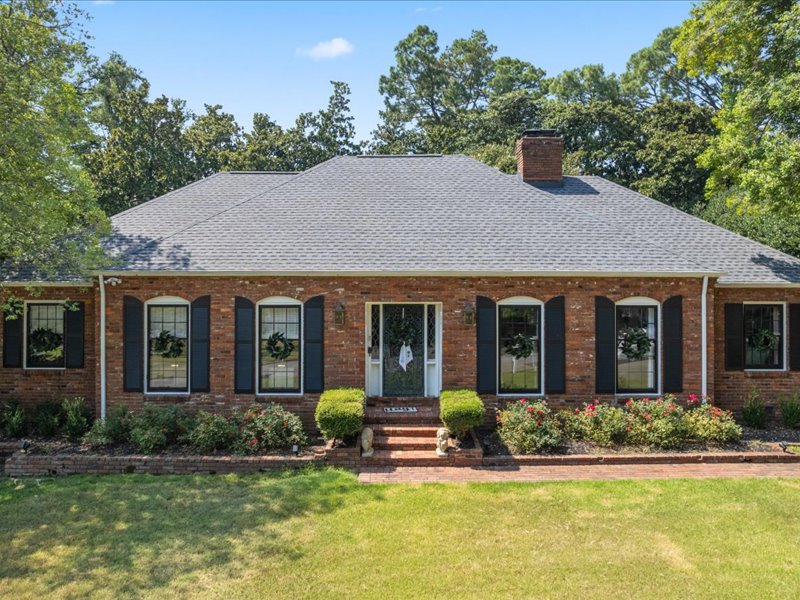
Pressure washing. Rent a pressure washer for a day and hit the driveway, sidewalks, patio, and siding. You’ll be surprised how much grime has built up. A clean exterior reads as “well cared for” even if you haven’t touched a thing inside yet.
The front door. Your front door gets more attention during a showing than almost any other single feature of your house. If the paint is peeling or the color is dated, repaint it. A coat of paint in a solid color (black, navy, or a deep red all work well) plus new hardware takes about two hours and costs around $50. Throw a clean welcome mat in front and a planter on either side, and you’ve got an entrance that actually makes people want to walk through it.
Lighting. If your porch light is one of those old brass lanterns from the 1990s, swap it out. A clean, modern fixture makes a big difference, especially for evening showings. Solar path lights along the walkway are another easy add.
Don’t overlook the gutters either. Clogged or overflowing gutters look bad in photos and raise drainage concerns for buyers who know what to look for.
Kitchens and bathrooms move the needle most
These two rooms carry more weight in a buyer’s decision than any other part of the house. You don’t need to gut them. You need to make them look current and clean.
Kitchen fixes that cost less than you’d think
Cabinet hardware is the easiest one. If your kitchen still has the brass or oak knobs it came with, replacing them with something modern (matte black and brushed nickel are both safe choices) changes the whole feel of the room. A full set of new pulls and knobs usually runs $50 to $150 depending on the kitchen.
If your backsplash is dated or missing, a simple subway tile or herringbone pattern in a neutral color is one of the best investments you can make. It’s a weekend project if you’re handy, or a few hundred dollars to have installed.
Under-cabinet LED strip lights are another small upgrade that buyers notice. They make countertops look brighter and the kitchen feel more finished. You can buy adhesive LED strips for under $30.
One thing that’s easy to miss: mismatched appliances. If your stove is black and your fridge is stainless, it creates a visual disconnect that makes the kitchen feel thrown together. You don’t necessarily need to buy all new appliances, but if you’re replacing one, match the finish to what you already have.
Bathroom updates worth doing
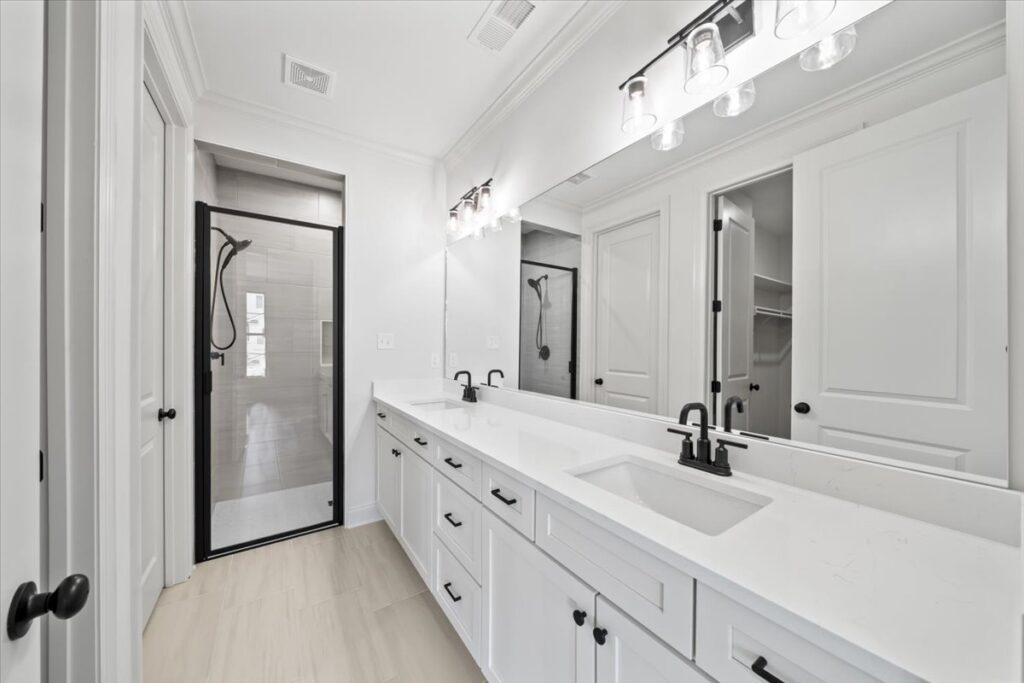
Re-caulking and re-grouting is the bathroom equivalent of fresh mulch outside. It costs almost nothing, takes a couple hours, and makes the whole room look cleaner. Old caulk that’s yellowed or peeling is one of those things buyers fixate on, even if everything else looks fine.
Beyond that, consider swapping out the faucet if it’s dated. A new faucet in brushed nickel or matte black runs $60 to $120 and takes about an hour to install. If your vanity mirror is one of those big frameless builder-grade plates, you can either replace it with a framed mirror or add a frame to the existing one. Both options are cheap and make the bathroom feel more intentional.
Paint and flooring change everything
If you could only do two things before listing, these should probably be the two.
Paint
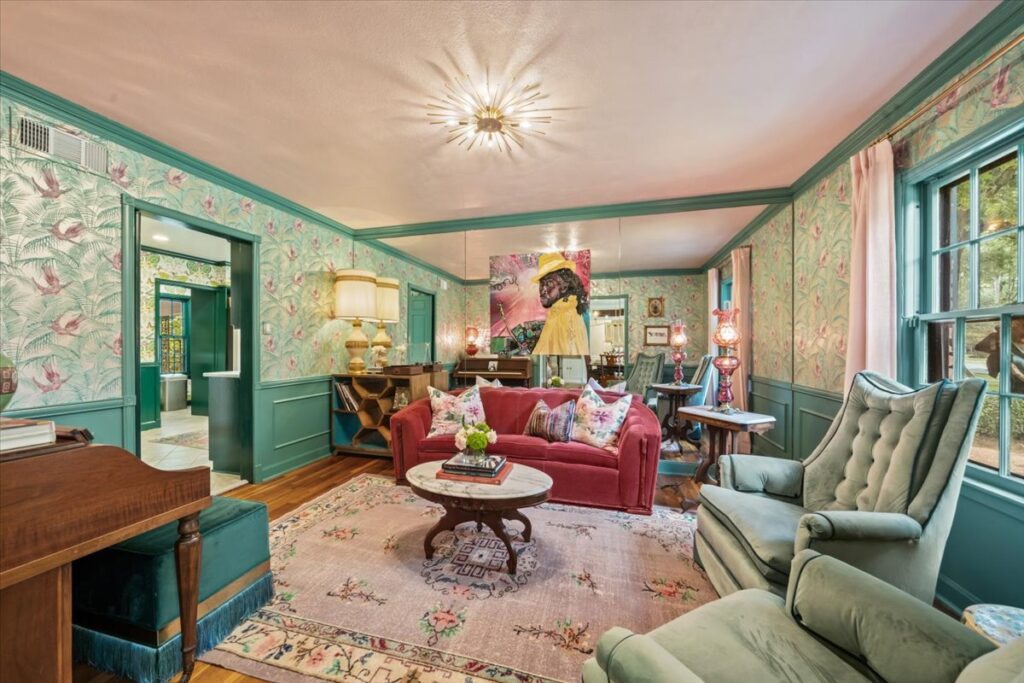
A fresh coat of paint makes a house feel new. Go neutral. Greige (that grey-beige blend), light taupe, and soft ivory all work because they appeal to the widest range of buyers and let people imagine their own furniture in the space. Avoid anything too bold or too personal. That dark green accent wall you love might be the reason a buyer moves on to the next listing.
Use a satin or eggshell finish for durability and a slight sheen that hides small imperfections. Don’t forget the baseboards, door trim, and ceiling edges. Scuffed-up trim makes fresh wall paint look worse by comparison.
One word of caution that we’ve seen bite sellers in the Memphis market: don’t paint over original wood trim, doors, or cabinets. Some buyers will pay more for a house with unpainted wood details, and painting over them is nearly impossible to undo. If the wood looks tired, clean it and apply a fresh coat of polyurethane instead.
Flooring
Worn carpet is one of the first things buyers notice and one of the last things they forgive. If your carpet is stained or matted, either have it professionally cleaned or replace it. New neutral carpet is surprisingly affordable and makes bedrooms feel fresh.
For common areas, Luxury Vinyl Plank has become the go-to flooring choice in the Memphis market. It looks like hardwood, handles humidity and spills, and costs a fraction of the real thing. If you already have hardwood floors, get them refinished. Original hardwoods are a selling point that buyers in Germantown, Collierville, and East Memphis respond to.
Consistency matters here. Five different flooring types across seven rooms makes a house feel choppy. The more continuity you have in your flooring, the bigger and more cohesive the space feels.
Declutter and take yourself out of the house
This one is free, and it might be the hardest to do. When a buyer walks through your house, they need to picture their life there, not yours. That means packing up family photos, personal collections, kids’ artwork on the fridge, and anything that stamps the house as specifically yours.
Reduce your furniture too. Most rooms have more furniture in them than they need for a showing. Pulling out a side table, an extra chair, or that oversized bookshelf makes rooms feel larger and lets buyers see the actual space.
Closets matter more than you might expect. Buyers open them. If your closets are stuffed to the point where you can’t see the back wall, it signals that the house doesn’t have enough storage. Thin out your closets to about half capacity. Use matching bins or baskets on the shelves for a clean, organized look.
A detail that’s easy to overlook: light bulb color temperature. This sounds minor, but mismatched bulbs (one warm yellow, one cool white in the same room) make a space feel off. Use warm-toned bulbs in living areas and bedrooms, neutral in bathrooms, and daylight bulbs in laundry rooms and closets.
The artwork trick
Here’s an interesting one. A Samsung-commissioned survey found that 43% of potential buyers said well-chosen artwork on the walls would make them more likely to increase their offer. The study estimated that tasteful wall art could add roughly $8,800 to the perceived value of a home.
Take that specific number with a grain of salt, but the principle is sound. Bare walls feel cold. Too-personal art feels like someone else’s house. A few well-scaled, neutral pieces (landscapes, abstract prints in muted colors, simple compositions) help a room feel finished and livable without being distracting. You can find affordable framed prints at HomeGoods or Target for $20 to $40 each.
Fix the small stuff buyers notice
A dripping faucet won’t tank your sale, but it will plant a question in a buyer’s mind: what else hasn’t been maintained? Small repairs send a signal about the overall condition of the house, and that signal matters.
Walk through your house and look for these:
- Leaky faucets or running toilets
- Squeaky doors or loose handles
- Windows that stick or won’t lock
- Burnt-out light bulbs (every single one)
- Scuffed walls or nail holes that haven’t been patched
- Cracked or missing outlet covers (these cost about a dollar each and make a bigger visual difference than you’d expect)
If your HVAC hasn’t been serviced recently, schedule it before you list. Change the air filters. Buyers in the Memphis area know that summers here are brutal, and they’ll ask about the AC system. A recent service record removes a worry from their list.
Check the exterior too. Peeling paint on trim, a fence board that’s rotting, or a screen door that doesn’t close right are all things that show up in photos and during walkthroughs. None of these are expensive fixes, but skipping them adds up to an overall impression of deferred maintenance.
Frequently asked questions
What’s the most cost-effective upgrade before selling? Fresh paint and landscaping. Both are cheap relative to the impact they have. A full interior paint job in neutral colors runs $2,000 to $4,000 for a typical Memphis-area home, and it makes everything else in the house look better. Fresh mulch, trimmed beds, and a clean driveway can be done for under $200.
Should I renovate my kitchen before listing? Probably not. Full kitchen renovations are expensive, and you rarely get the full cost back in a higher sale price. Small updates (new hardware, backsplash, under-cabinet lights, clean counters) give you most of the visual improvement for a fraction of the cost.
Do I need to stage my home? It depends. If you’re still living in the house, decluttering and depersonalizing often gets you most of the way there. If the house is vacant, staging the living room, kitchen, and primary bedroom is worth considering. Empty rooms photograph poorly and can make a house feel smaller than it is.
What paint colors do buyers want? Neutrals. Greige, light taupe, soft ivory, and warm grey are all safe. Avoid anything bright, dark, or highly specific. You want a clean backdrop that lets buyers fill in the blanks.
How long before listing should I start upgrades? Give yourself four to six weeks. That’s enough time to paint, handle repairs, pressure wash, update fixtures, and declutter without rushing. If you’re doing flooring, start earlier since install and curing can eat into your timeline.
Does replacing flooring increase home value? It can. New LVP or refinished hardwoods are almost always worth the investment. Stained or worn carpet is one of the most common objections buyers raise, and removing that objection before they walk through the door keeps attention on the things you want them to notice.
Where to start
If this list feels long, don’t try to do everything at once. Talk to your real estate agent before you spend a dollar. A good agent will walk through your house with you, point out the things that buyers in your specific market and price range actually care about, and help you skip the stuff that won’t move the needle.
At Reid Realtors, we do this with every seller we work with. Our team includes former home builders who know the difference between an upgrade that pays for itself and one that just costs you money. We’ve helped homeowners across Germantown, Memphis, Bartlett, Collierville, and the surrounding areas get their homes ready to sell for more than two decades.
Call us at (901) 372-8500 to set up a walkthrough. We’ll tell you exactly what to fix, what to skip, and what your home could sell for once it’s ready.