
The housing market is sending you two messages at once, and they don’t seem like they can both be true.
The headlines say buyers finally have leverage. Price cuts are everywhere, homes are sitting, sellers are flexible. Then you go looking for a house in the neighborhood you want, and the three listings that exist are priced like it’s 2022 and moving like they’re in no hurry at all.
Both things are real. And a big part of the explanation is generational: the people who own the most housing, in the most established neighborhoods, are the people with the least reason to sell it. If you want to understand pricing in the Memphis suburbs right now, you have to understand the Boomer standoff first.
The generation that doesn’t have to sell
Baby Boomers own an outsized slice of America’s houses. By most industry estimates it’s roughly two of every five homes, and a majority of those owners have either paid the mortgage off entirely or locked in a pandemic-era rate they will never see again. We covered that second group in our post on the lock-in effect, but for many Boomers it’s simpler than a rate calculation. They’re retired. No job transfer is coming. The house is paid for, the kids’ rooms are guest rooms, and surveys consistently find that most homeowners past 60 intend to stay right where they are.
A seller with no mortgage and no deadline behaves differently than any other seller in the market. They can list at their dream number and let it sit for eight months. They can pull the listing and wait for spring. Most of them skip all of that and simply don’t list.
Now map that onto the east metro. The neighborhoods built out in the 70s, 80s, and 90s in Germantown and Collierville, the ones with the mature trees and the top-rated school zones, are exactly where long-tenure owners concentrate. That’s why so little comes on the market in those pockets, and why what does list holds its price with a confidence that national headlines say shouldn’t exist. Scarcity is doing the negotiating for them.
Meanwhile, the sellers who do list are bending
Step outside those locked-tight streets and the national story is genuinely different. Much of the country now has more inventory than it has buyers to absorb it, and a market where the seller needs the deal more than the buyer does reprices itself fast.
The clearest evidence is price cuts. HousingWire’s data shows more than 40% of sellers have dropped their asking price, running just slightly behind last year’s pace:
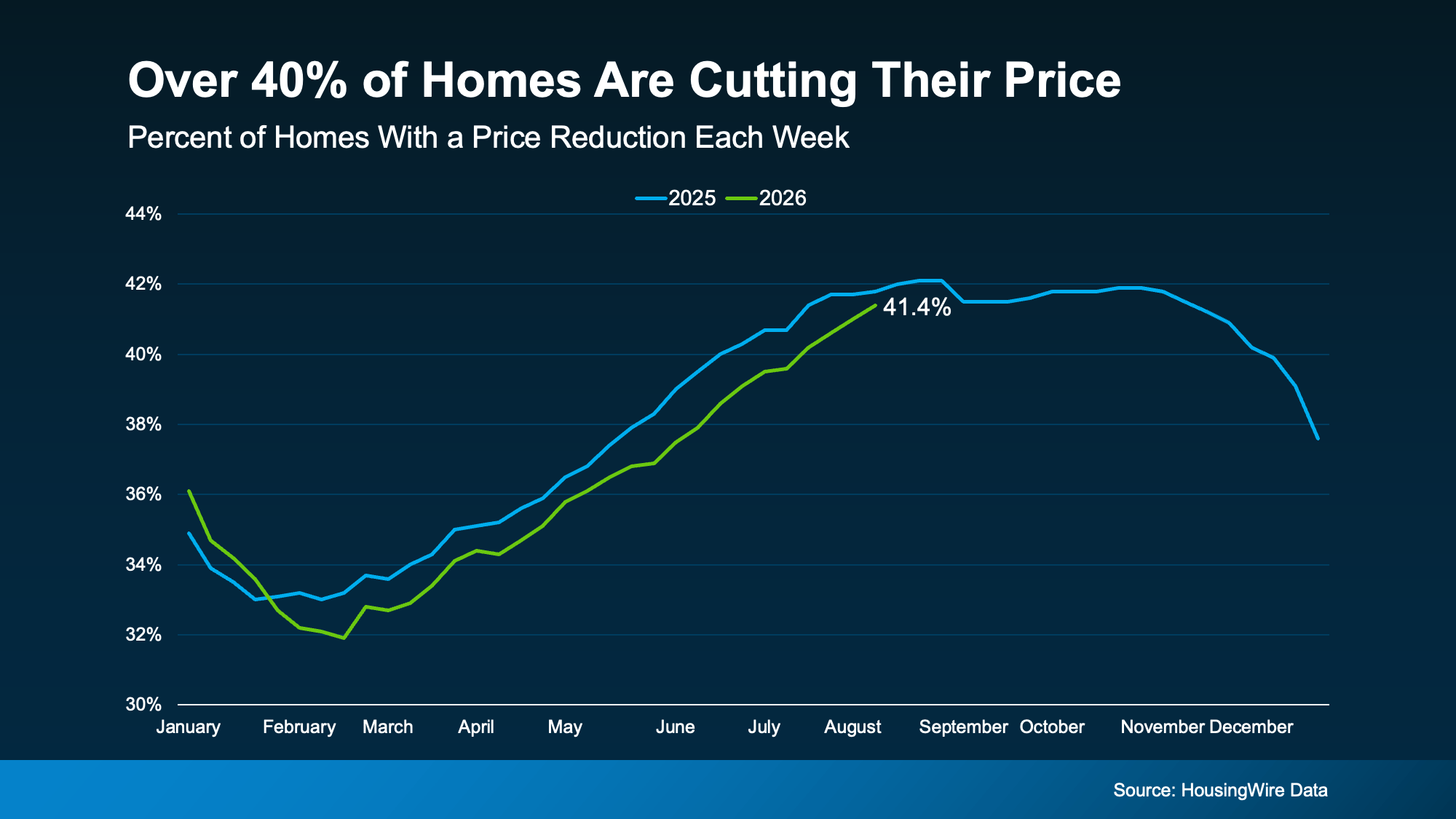
Four of every ten listings, each one a seller who decided that waiting was costing more than flexibility would. As Danielle Hale, Chief Economist at Realtor.com, put it:
“This is a market where people are adjusting and showing up rather than giving up. Sellers are meeting the market with more realistic asking prices, which is helping deals get done.”
And plenty of sellers are skipping the price-cut walk of shame by starting realistic. That’s a big reason July 2026 posted the lowest median list price of any July in five years, according to Realtor.com:
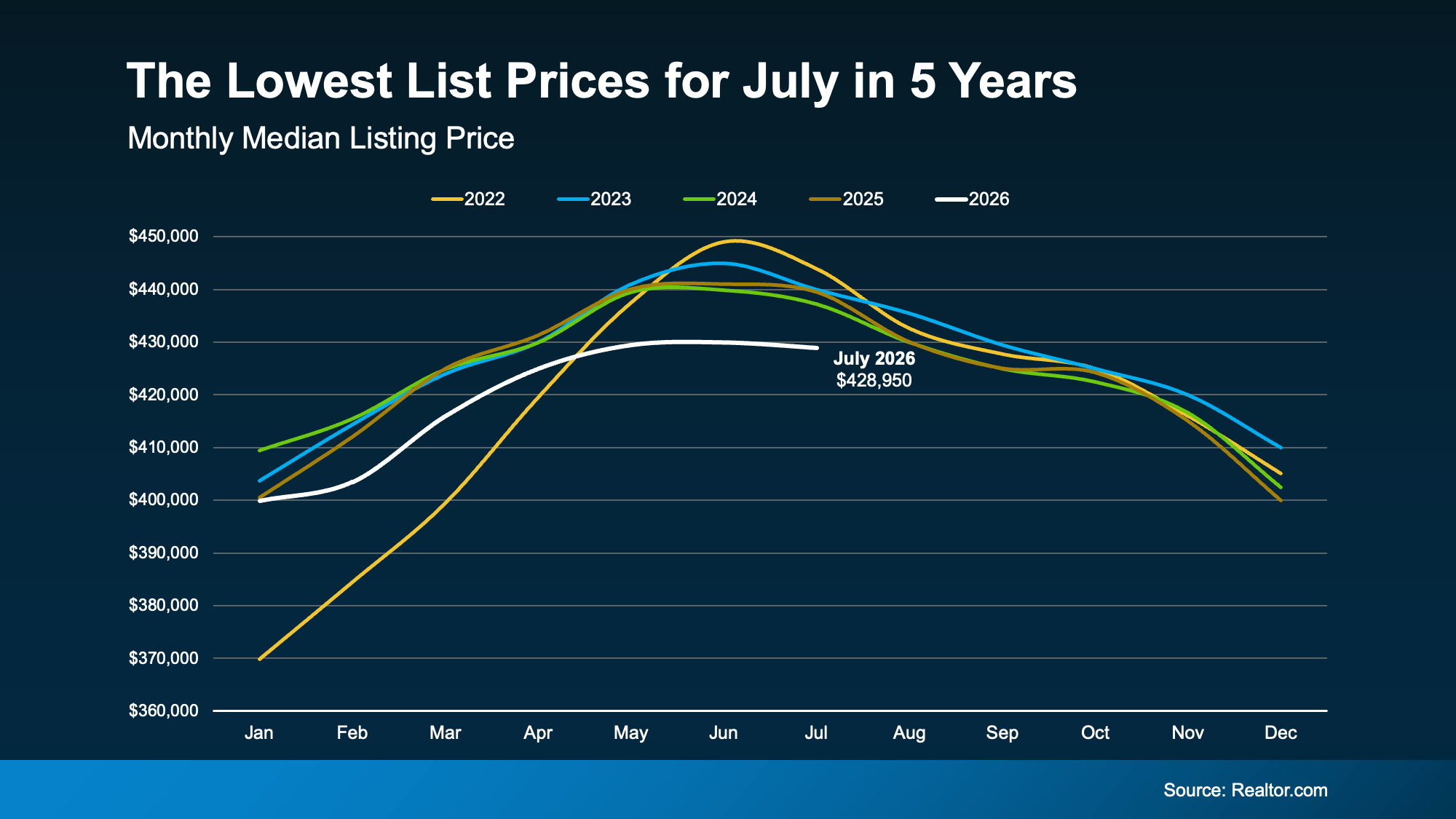
To be clear, that doesn’t mean home values are collapsing. Prices remain well above pre-pandemic levels. It means listing prices are being set for the buyers who exist, a shift we dug into in is it still a seller’s market. Sellers who have to sell are done pretending it’s 2021.
Two markets on the same map
So which market do you live in? In the Memphis area, honestly, it depends on the street.
Where turnover is natural and supply keeps coming, buyers have real leverage. Newer corridors in Arlington and Lakeland compete with builders who offer incentives every quarter. Areas of Bartlett and Cordova with regular job-move turnover see the price cuts the national charts describe. In those places, negotiate like the data says you can.
But the low-turnover Boomer streets play by the older rules, because four listings a year in a coveted school zone is a seller’s market no matter what the national median is doing. The homeowner on that street isn’t cutting the price, because she doesn’t need to sell, and if you don’t meet her number she’ll happily keep living there. That’s not stubbornness exactly. It’s just what zero urgency looks like with a paid-off house attached.
What this means if you’re buying
First, don’t let the locked-tight streets convince you the whole market is out of reach. The flexibility is real, it’s just unevenly distributed, and a good agent’s job is knowing which listings have a motivated human behind them. A seller who has already cut once will usually move again. A relocation, an estate, a builder closing out a phase, those are negotiations worth having. If you’ve been closing the app at the sight of every list price, the post on buying now versus waiting for lower rates covers the math most buyers get backwards.
Second, in the tight zones, the winnable house is usually the dated one. When a long-tenure owner finally does sell in Germantown or Collierville, the house often shows its decades: wallpaper, brass fixtures, an original kitchen. Buyers who can’t see past 1994 keep walking, and that’s the discount. The school zone doesn’t care what the countertops look like. Some of the best value in the east metro right now is a cosmetically tired house on a street where nothing else will list until next year.
What this means if you’re the one not selling
If you’re the owner in this story, sitting on a paid-off house and seeing no reason to move, you’re playing a strong hand and you know it. Two honest things anyway.
Waiting isn’t free. A big house carries taxes, insurance, upkeep, and the occasional $14,000 roof, and the equity inside it earns nothing until it moves. If the place has started working against you, our downsizing guide walks through what trading down looks like in this market and what it frees up.
And your timing isn’t only yours. Every year, more of your neighbors’ houses reach the market the hard way, through estates, and heirs price to settle, not to maximize. (If you’ve inherited one of those houses yourself, we wrote a guide for that too.) Selling while your street still lists two homes a year means selling into scarcity. The owner who waits until the neighborhood turns over all at once gives up the one advantage the standoff built. Whenever the time comes, the selling process starts with knowing what the scarcity is worth, and it may be more than you think, even in this market.
Know which street you’re shopping on
The national market and your target street can tell two different stories at the same time, and this fall they usually do. Price cuts and record-low list prices are real. So is the paid-off colonial that hasn’t budged a dollar in five months. The buyers and sellers who win here are the ones who know which market they’re standing in before they make their first move.
If you’re trying to figure that out for a specific neighborhood, reach out and we’ll tell you what’s really moving there, street by street.