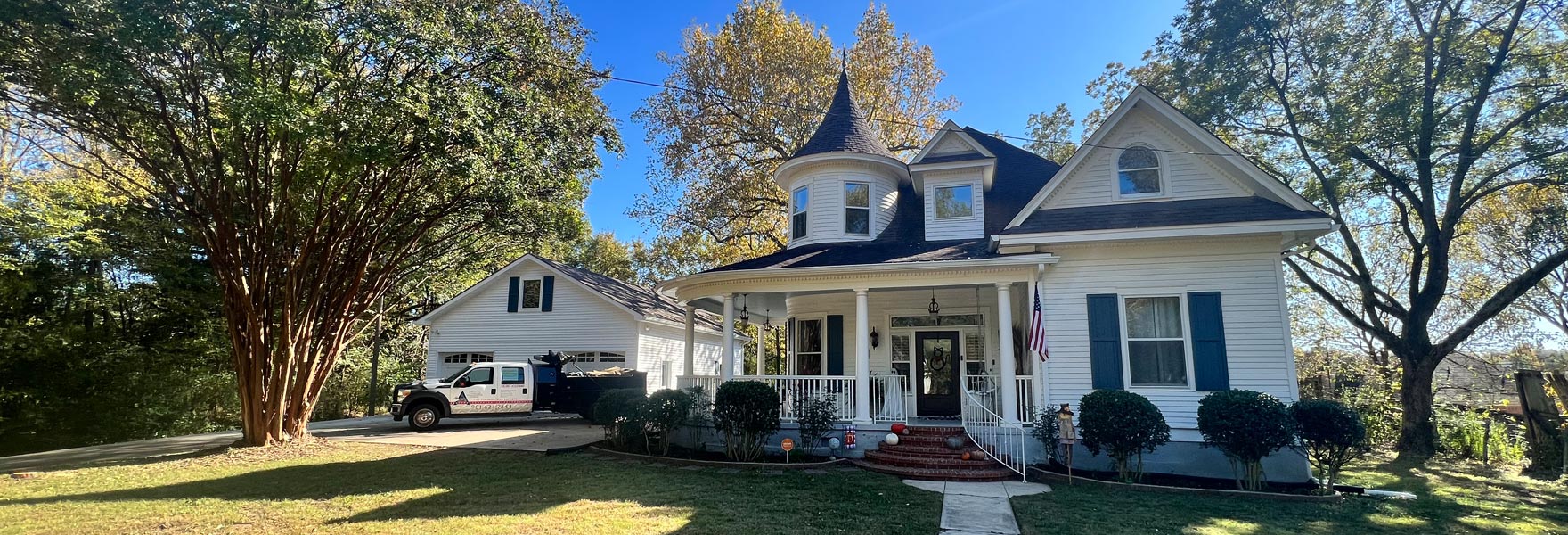
If you own a home, you’ve seen the pitches. Postcards that say “we buy houses in any condition.” Texts from a first name you don’t recognize asking if you’d consider selling. Maybe a slick online estimate promising a cash offer on your home in 24 hours, no showings, no repairs, close whenever you want.
Some of those offers are legitimate. A few are predatory. Almost all of them share one trait the marketing never mentions: the price is built to be well below what your home would bring on the open market.
That doesn’t automatically make them the wrong call. Speed and certainty are real things, and for some sellers they’re worth paying for. It does mean you should know exactly what you’re trading before you sign anything. This is the guide to that trade.
Who’s behind the offer
“Cash buyer” covers three very different operations, and it helps to know which one is texting you.
Local investors and flippers make up most of the volume. They buy houses that need work, renovate them, and resell them. Their business only works if they buy at a discount deep enough to cover the renovation, the holding costs, and their profit.
Wholesalers are the second group, and the one that generates most of the aggressive mail and texts. A wholesaler often has no intention of buying your house at all. They put it under contract, then sell that contract to an actual investor for a fee. Nothing about wholesaling is automatically illegal, but you’re negotiating with a middleman who adds a markup and may not have the money to close if no investor bites.
The third group is the big-name iBuyers you’ve read about, the venture-funded companies that make algorithmic offers on fairly standard homes. Their footprint comes and goes by market, and most of what lands in local mailboxes is the first two groups, not them.
The math behind the number
Flippers commonly work from some version of the “70% rule”: pay no more than about 70% of a home’s fixed-up value, minus the cost of repairs. The exact percentage moves around with the deal and the market, but the structure doesn’t. The offer starts from what your house will be worth after renovation, subtracts the renovation, then subtracts enough margin to make the whole project worth their risk.
Run that on a house that would sell for $500,000 renovated and needs $40,000 of work, and the offer lands somewhere around $310,000. The investor isn’t cheating you at that number. That’s simply what the business model requires. But notice what it means: the discount you accept can run to six figures. “A little less for convenience” undersells it considerably.
A “no fees” pitch doesn’t change this. Cash buyers love to point out that you’ll pay no commission, and it’s true. The commission you save is a fraction of the discount baked into the price. You’ll still have seller-side closing costs either way, which run on a predictable set of line items.
What the process looks like if you accept
The mechanics are genuinely simpler than a traditional sale, which is a big part of the appeal.
You sign a purchase agreement, usually as-is, meaning the buyer takes the house in its current condition and you make no repairs. There’s typically a short inspection or “option” period where the buyer can walk away, then the deal goes to a title company the same way any sale does. Because there’s no lender, there’s no appraisal requirement and no financing contingency, which removes the two most common ways ordinary sales fall apart. Closings can happen in as little as one to two weeks if the title is clean.
Two details are worth knowing. First, treat “cash” as unverified until you’ve seen proof of funds. Ask for a bank statement or letter in the buyer’s own name, dated recently. Second, many investors will negotiate a leaseback, letting you stay in the house for days or weeks after closing while you move. If timing is your whole reason for selling this way, that flexibility is part of the product. Ask for it.
When a cash offer genuinely makes sense
There are sellers for whom the discount is worth every dollar, and it’s worth being honest about who they are.
An inherited home far from where you live, filled to the ceiling and behind on maintenance, is the classic case. So is a sale during a divorce where both parties need the equity split and the conflict ended more than they need the last dollar. A house with a major problem you can’t afford to fix, a job transfer with a four-week fuse, a situation where you can’t face showings: these are real, and a fast, as-is, guaranteed close solves them.
The common thread is that the calendar or the circumstances are worth more to you than the money. If that’s you, a cash sale can be the right decision made with clear eyes. Just make it a decision, not a reaction to a persuasive phone call.
The games to watch for
The reputable end of this industry closes at the price they offered. The other end has a playbook.
The most common move is the inspection-period price drop. The buyer offers a number that gets you to sign, ties the house up for weeks with a long option period and a small earnest-money deposit, then “discovers” problems and comes back $30,000 lower when you’re emotionally committed and your timeline has burned down. By then, starting over feels worse than taking the cut, which is the whole point of the tactic.
The second is the assignment shuffle. A contract with “and/or assigns” after the buyer’s name usually means a wholesaler is shopping your house to their list. If no investor pays their price, they walk on a technicality and you’ve lost a month.
Questions to ask before you sign
A few minutes of direct questions separates the professionals from the playbook operators, and how they react tells you as much as the answers do.
Ask for proof of funds in the buyer’s own name, not a lender letter and not an LLC you can’t trace. Ask how much earnest money they’ll put down and when it becomes non-refundable; a serious buyer will commit real money after a short inspection window. Ask how long that window is, and push back on anything past a week or so for a straightforward house. Ask whether the contract includes assignment language, and require its removal if you want the person across the table to be the actual buyer. Ask who pays which closing costs, because “we cover everything” means nothing until it’s written into the contract. And ask for addresses of homes they’ve closed on recently, then look them up. County property records are public and take five minutes to check.
A buyer with real money and a real track record agrees to all of this without flinching. Watch how fast the friendly tone changes when you ask.
The first offer is an opening bid
People who would haggle over a used couch will accept an investor’s first number on a house, mostly because the offer arrives looking official and the caller sounds certain. Don’t. Cash buyers expect negotiation, and their first offer is priced with room to move.
The strongest move is getting more than one. Investors compete like anyone else, and two or three competing cash offers on the same house will surface the real ceiling quickly. Beyond price, the close date, the leaseback, what stays in the house, and who pays closing costs are all negotiable. Sellers who treat the offer as a starting point routinely do meaningfully better than sellers who treat it as a verdict.
Get the market number first
Here’s the step most people who take cash offers skip: finding out what the house is worth the ordinary way. You can’t evaluate a $310,000 offer without knowing whether the open-market answer is $360,000 or $480,000, and the cash buyer is counting on you not checking. A good local agent will run that analysis for free, and the comparison only helps if the market number is honest. Wishful pricing has costs of its own.
Two things make this comparison especially worth running. First, houses don’t need to be perfect to sell. In sought-after neighborhoods and school districts, buyers regularly take on dated kitchens and deferred maintenance just to get in, and an as-is listing with honest disclosure often draws real offers a cash buyer has to beat. “Nobody will buy it in this condition” is usually a much weaker line than the person saying it wants you to believe.
Second, an agent can often engineer most of what the cash buyer is selling. Speed? A well-priced listing can go under contract in weeks, even in the off-season. Certainty? Offers can be screened for financing strength, and some listings draw conventional buyers paying market price in cash. The gap between “cash offer from a flipper” and “fast, low-hassle listing” is smaller than the postcards suggest, and the price difference is not.
Compare net to net
When you have both numbers, do the comparison properly, because each side likes to quote the flattering version.
The cash buyer’s net is close to their offer: no commission, no repairs, minimal prep, and a close date you pick. The listing net starts from the market price and works down: commission, any repairs or touch-ups you choose to make, and the carrying costs of however many extra months the sale takes, meaning the mortgage payments, taxes, insurance, and utilities you’d pay anyway. There’s also risk on each side of the ledger. A listing can come back from inspection with surprises. A cash offer can shrink during the option period, which is the same risk wearing a friendlier shirt.
Put real figures in each column for your actual house and your actual timeline. For most sellers with a livable home and a normal calendar, the listing nets substantially more even after every cost is counted. For a subset, the cash column wins on the numbers that matter to them. Either way, you’ll be deciding with a full page instead of a postcard.
Price the convenience
A cash offer is a product, and the price of that product is the gap between their number and your market number. Sometimes that gap buys you out of a situation that’s costing you more than money, and it’s worth it. Sometimes it’s a six-figure payment for skipping three showings and a coat of paint.
You can’t know which one you’re looking at until you have both numbers. If a cash buyer has made you an offer, reach out and we’ll tell you what your home would likely bring on the open market, with no obligation to list. Then you can price the convenience before you pay for it.